CHEM 548: Materials Chemistry
Lecture 16: Reciprocal Space, 2D Band Structures, and the CuO₂²⁻ Layer
Reading: Woodward, Karen, Evans, and Vogt, Solid State Materials Chemistry
Ch. 6 §§6.3–6.5
Band Structure: the Linear F Atom Chain
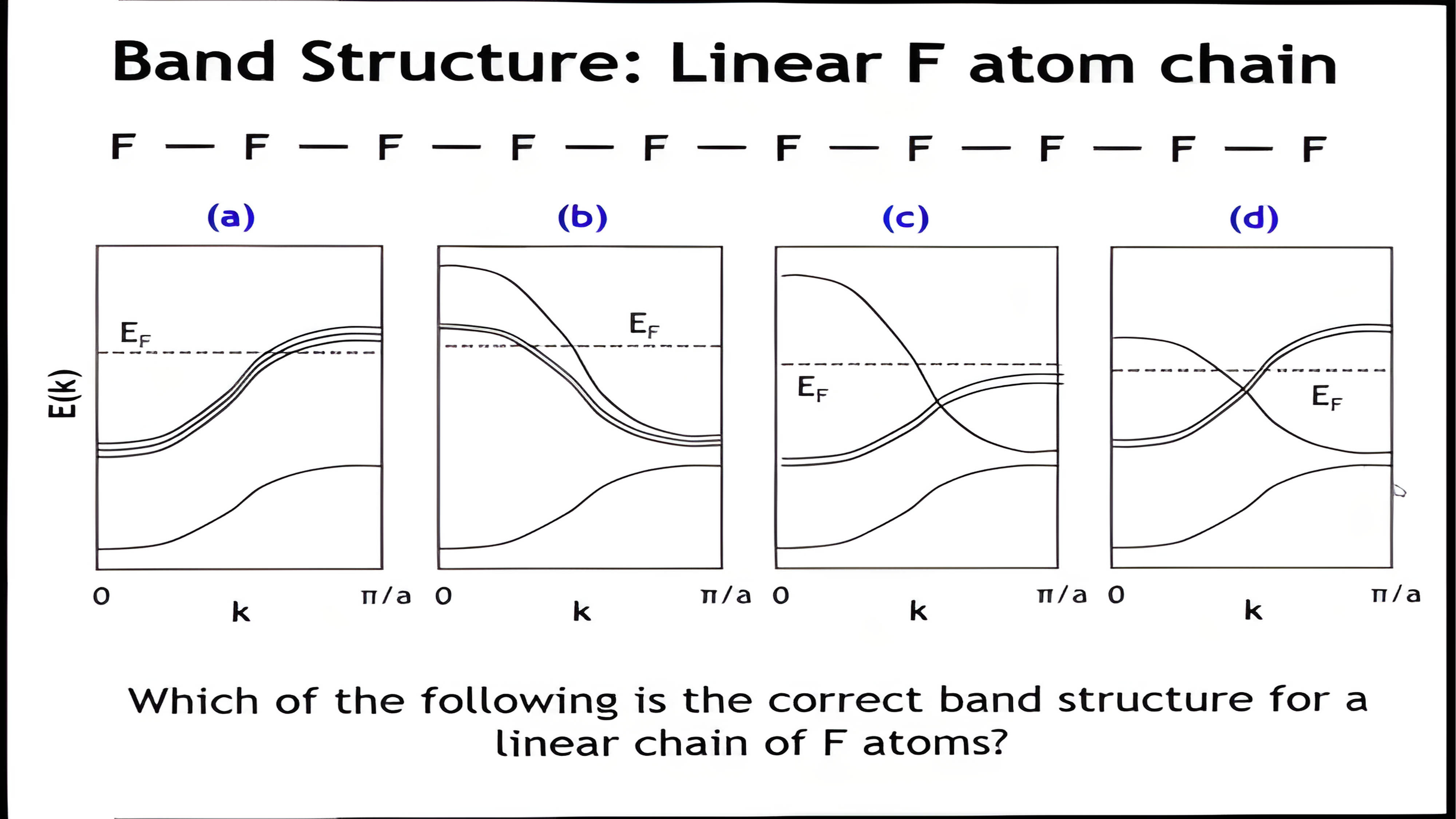
Working the F-Chain Band Structure
Lessons from the Linear F Chain
- There are now 4 orbitals in the unit cell (a single F atom with 1 2s + 3 2p orbitals) giving rise to 4 bands in the band structure.
- The fact that the 2p wavefunction changes sign at the nucleus causes the 2p σ band to run downhill (opposite of the 2s σ band).
- The reduced spatial overlap of the π interaction causes the π bands to be narrower than the σ bands.
- The 2p orbitals start out at a higher energy than the 2s orbitals (because of the atomic orbital energies)
Key Concepts: 1D Band Structures
Band Formation
- Bloch functions: $\psi = e^{ikx}u(x)$ determines phase relationships across unit cells
- Zone boundaries: $k = 0$ (uniform phase) vs $k = \pi/a$ (alternating phase via $e^{i\pi} = -1$)
- Orbital-band rule: Number of orbitals in unit cell = number of bands
- Peierls distortion: Dimerization opens band gap by stabilizing filled states
Material Properties
- Classification: Fermi level cuts band (metal) vs between bands (semiconductor/insulator)
- Direct gap: VBM and CBM at same k → efficient optical transitions (LEDs)
- Indirect gap: Different k-points → requires phonon for momentum (Si solar cells)
- Bandwidth: σ orbitals wider than π orbitals due to stronger overlap
Learning Objectives: 2D Band Structures
By the end of this lecture, you will be able to:
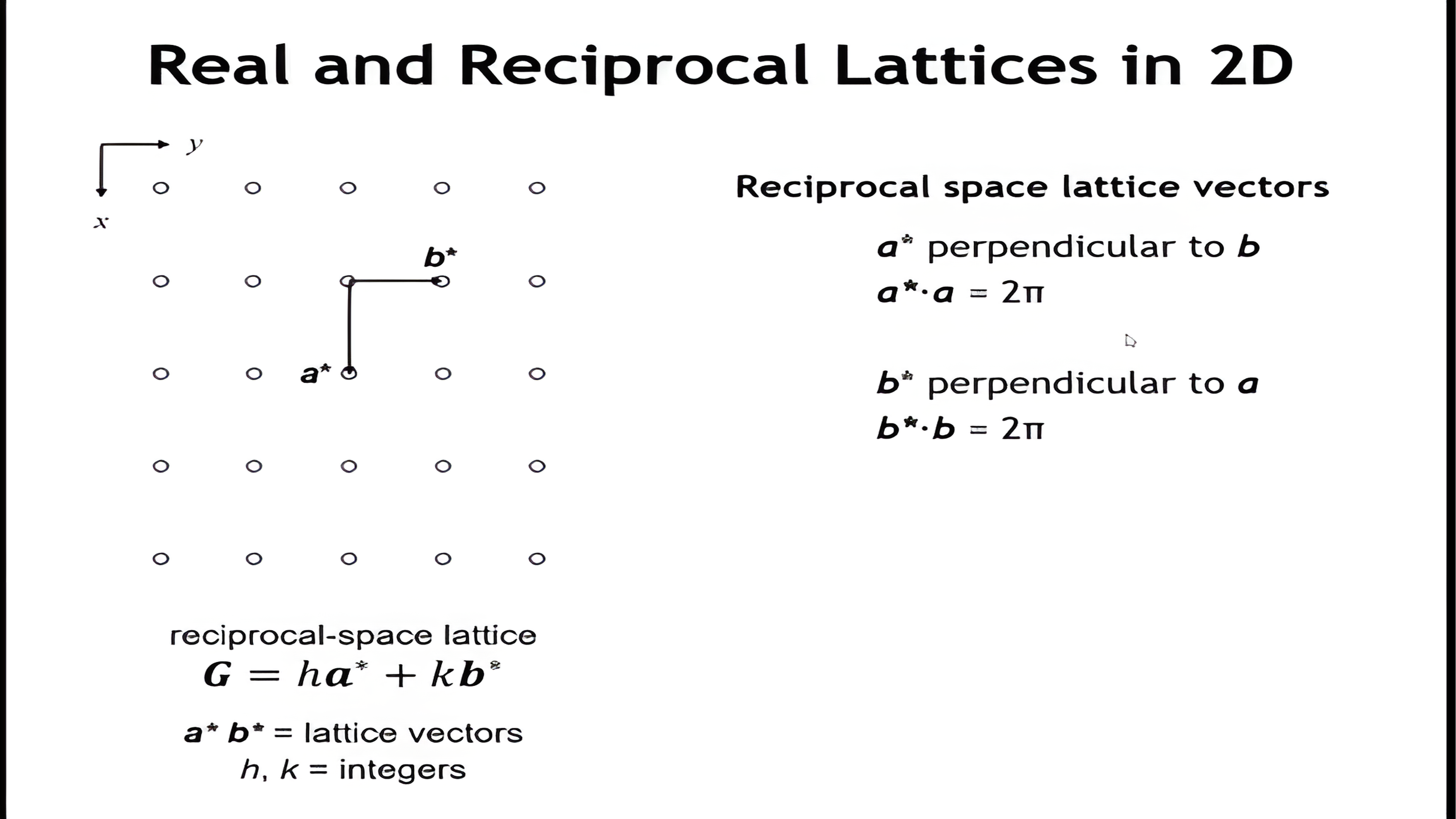
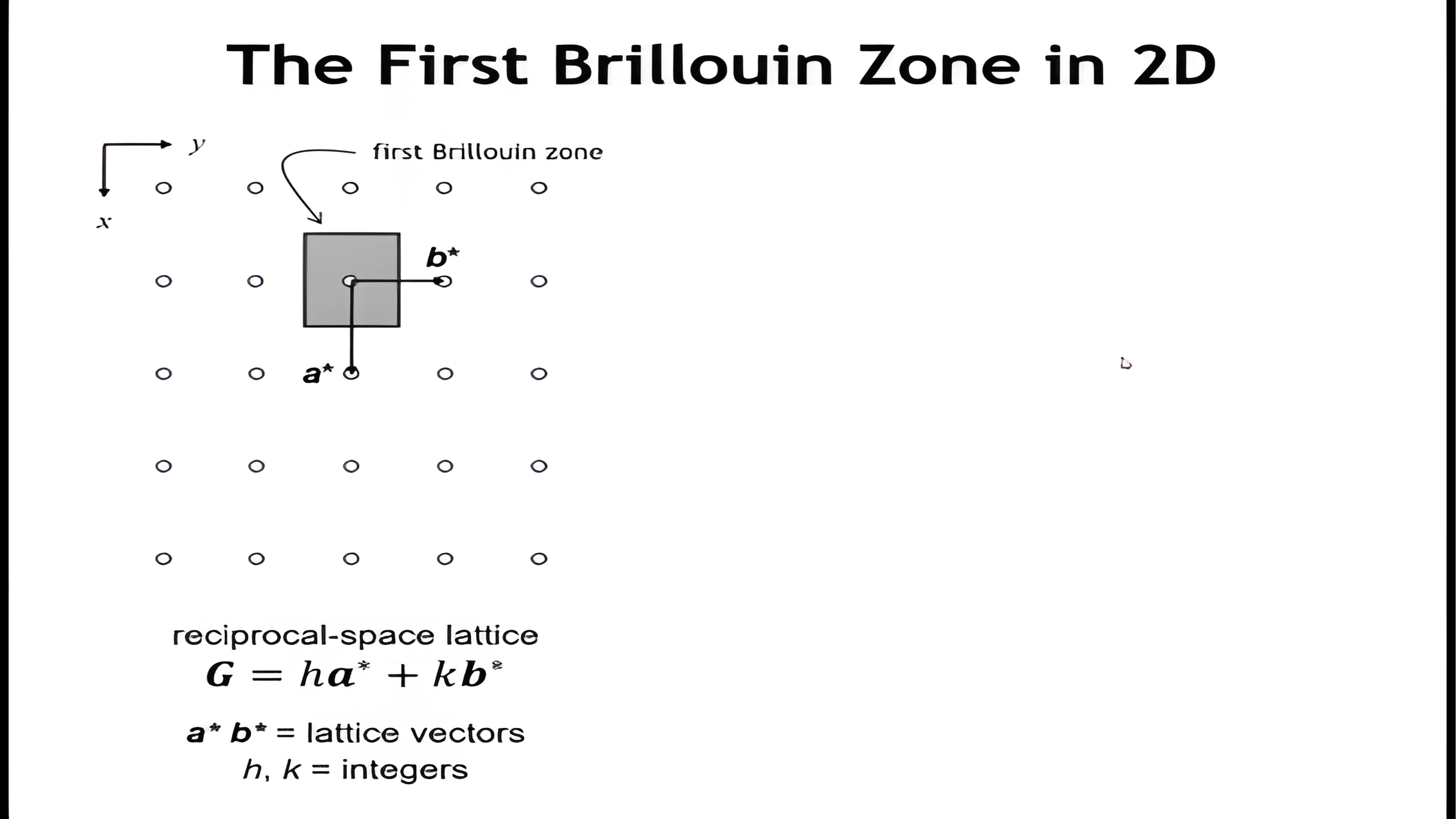
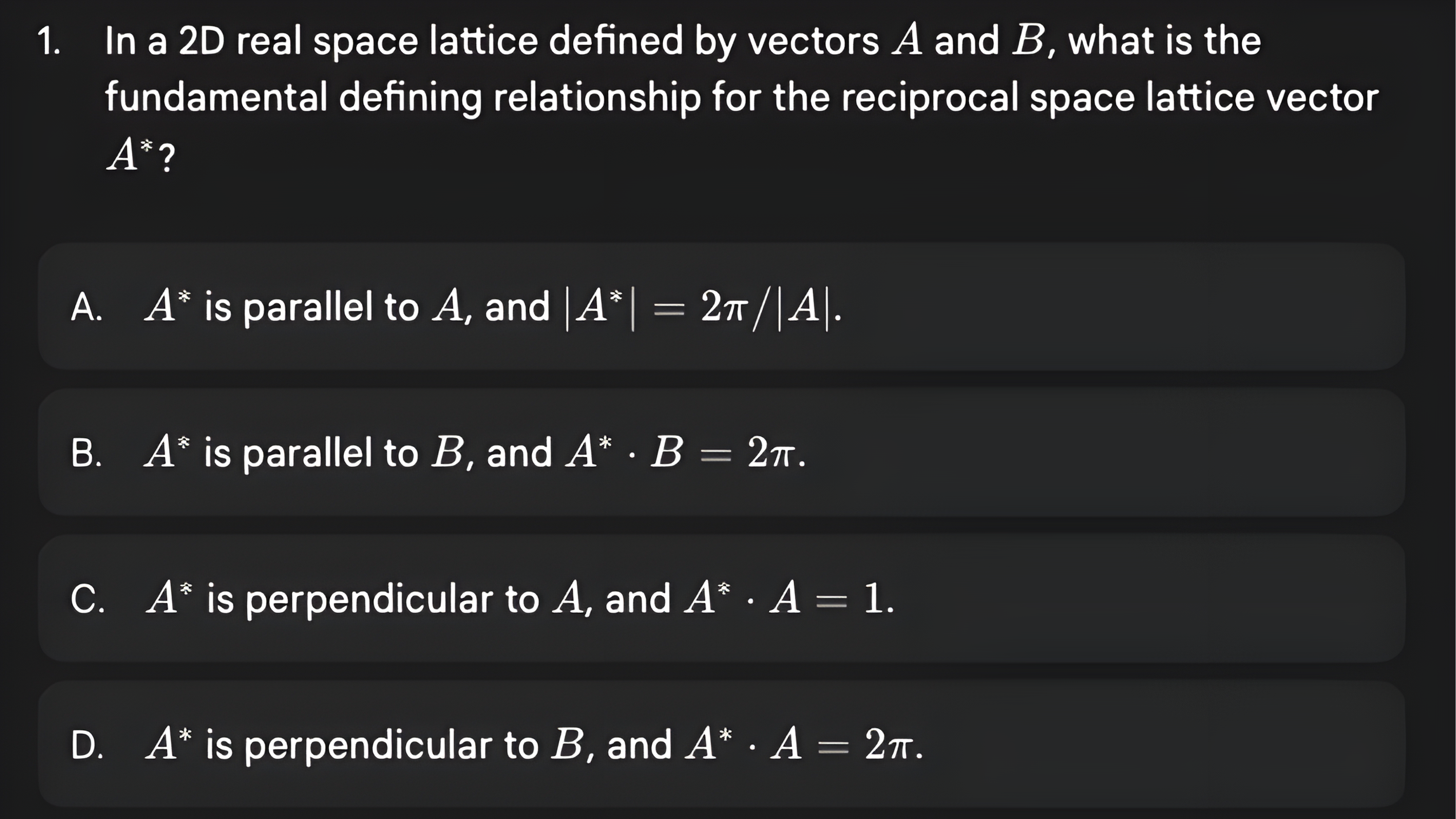
- Construct reciprocal lattice vectors from real space lattice vectors using perpendicularity and length requirements
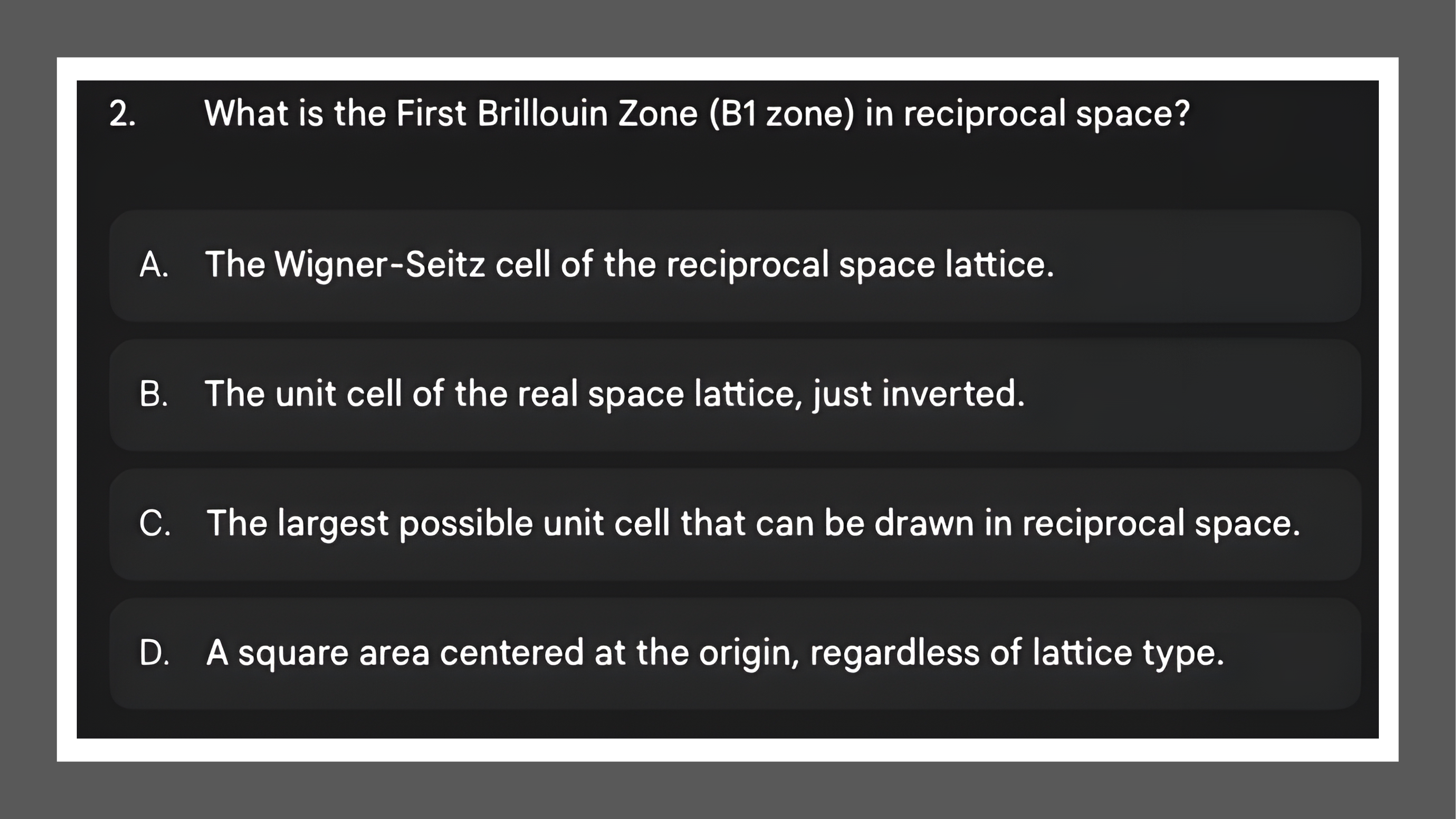
- Identify the first Brillouin zone as the Wigner-Seitz cell of reciprocal space
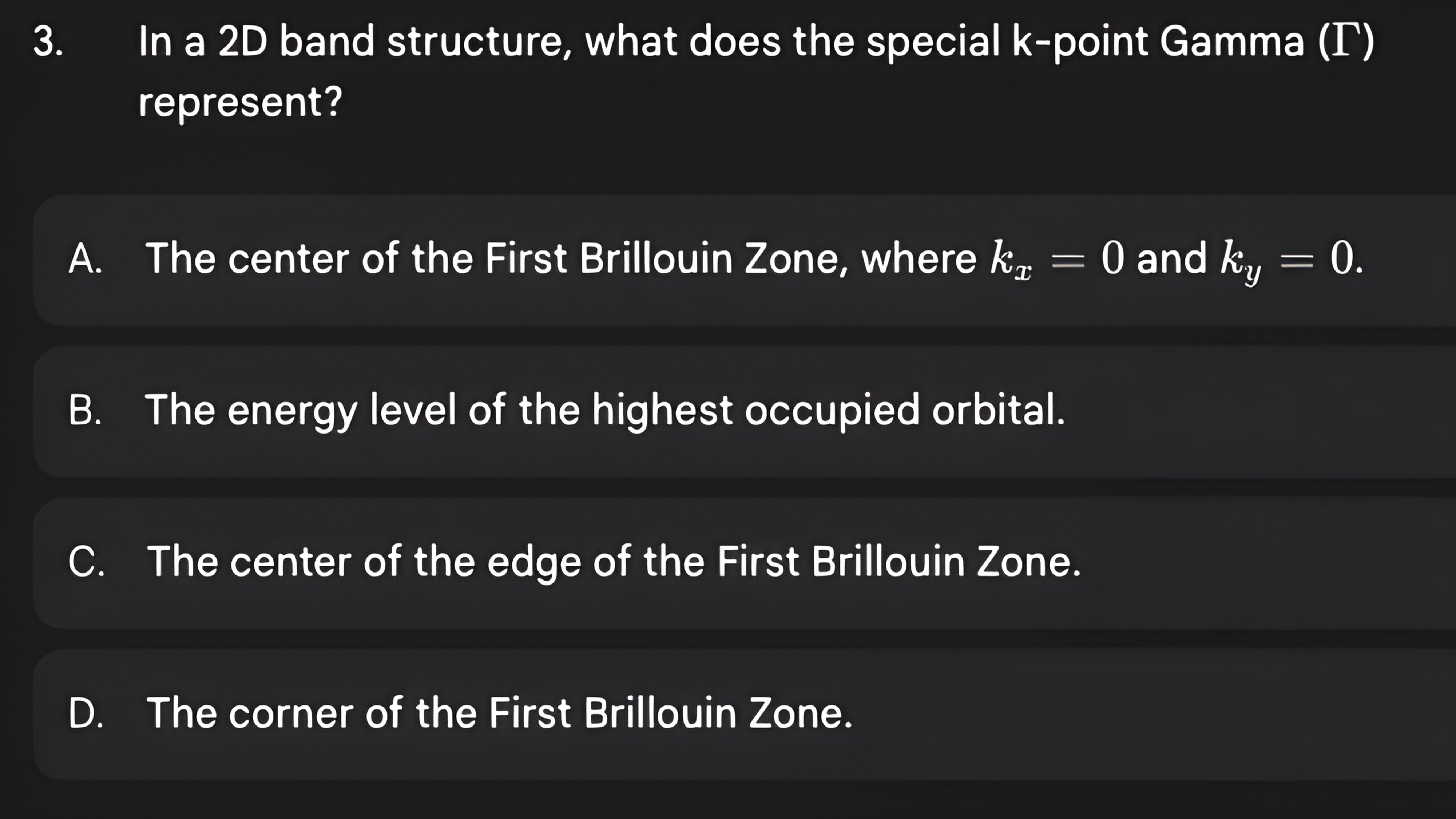
- Locate and interpret special k-points (Γ, X, M) in 2D square lattices
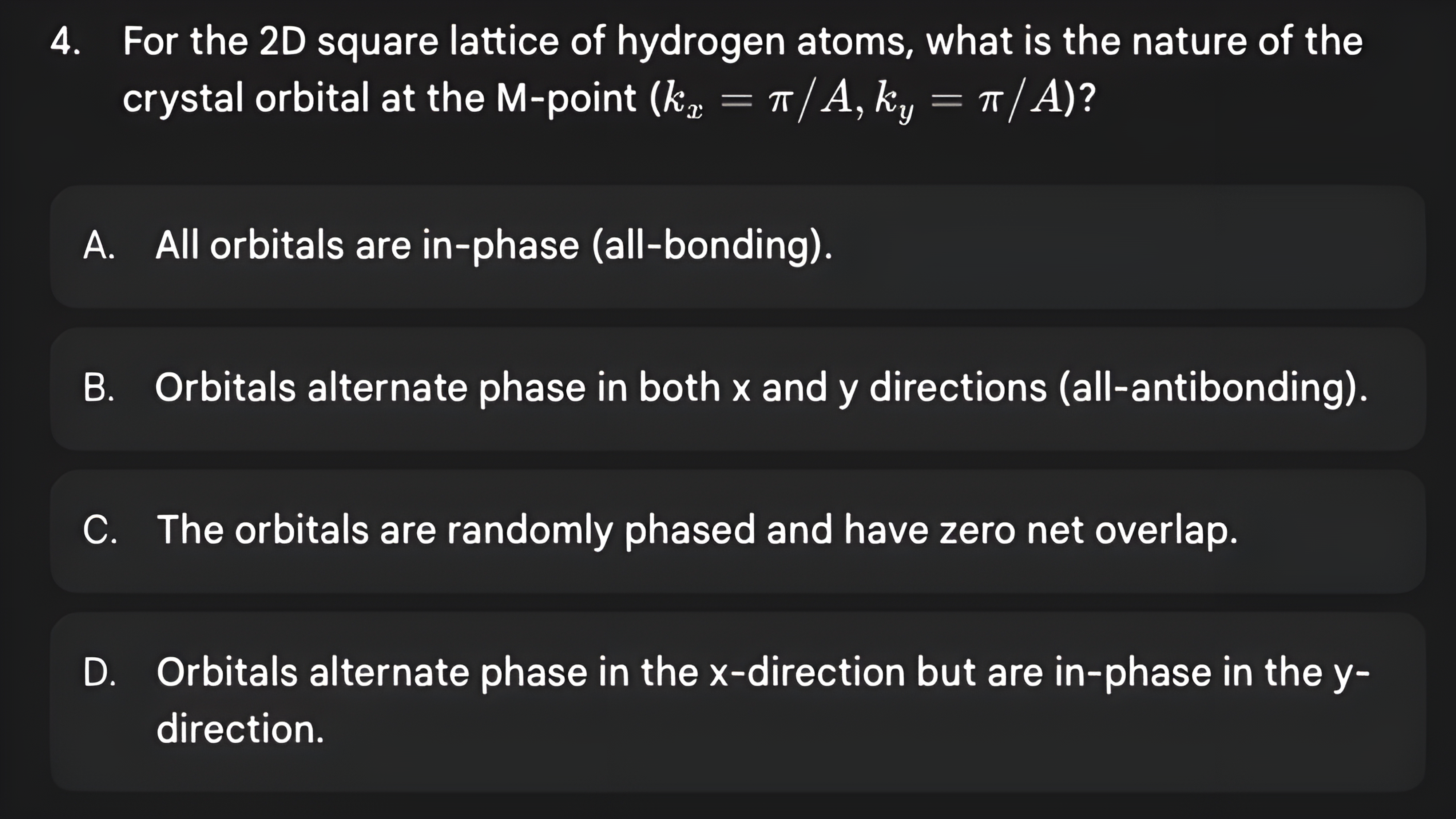
- Predict crystal orbital phase relationships at different k-points in two dimensions
- Read and construct band structure diagrams for 2D materials using cuts through reciprocal space
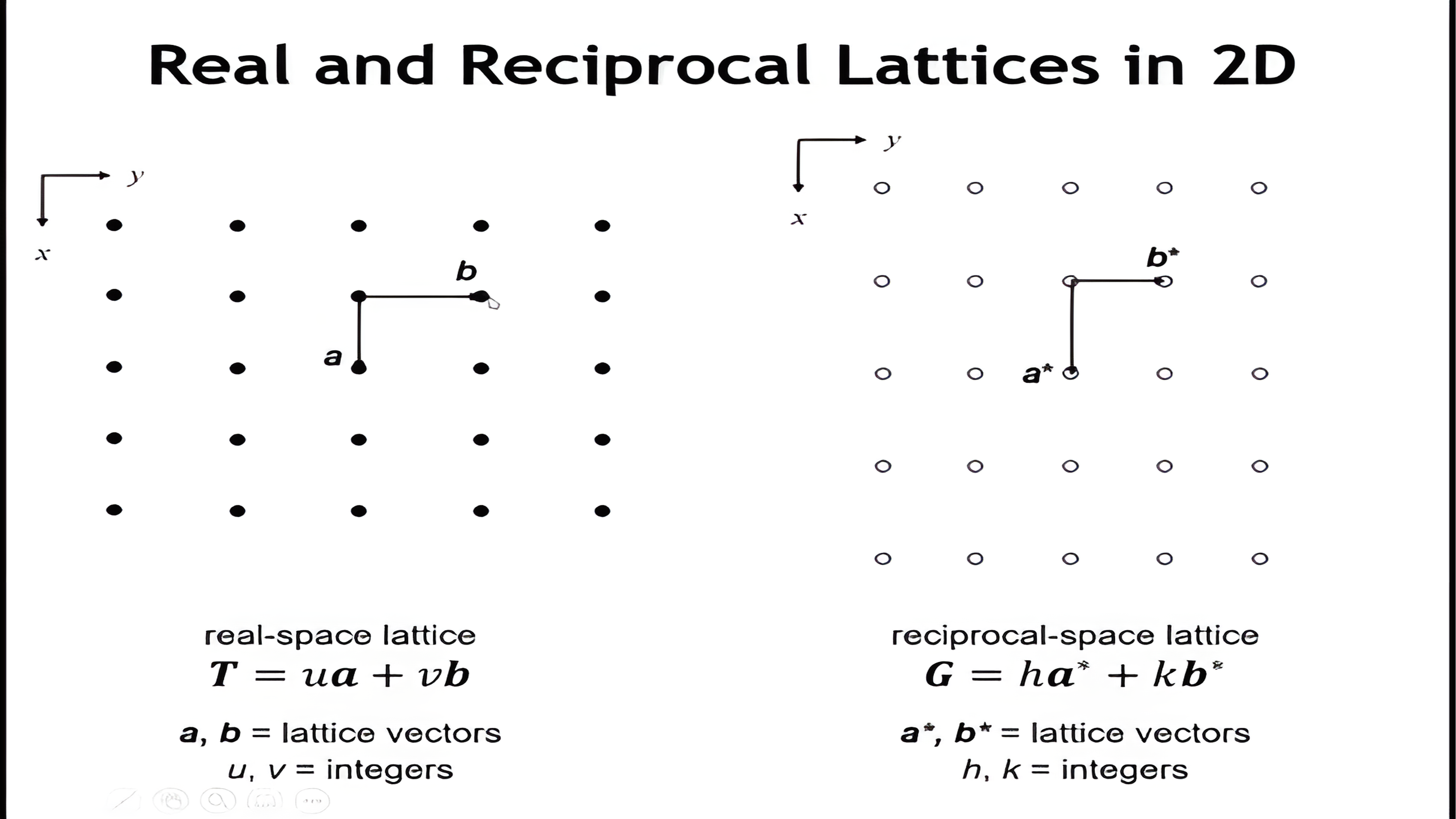
Real and Reciprocal Lattices in 2D
Defining the Reciprocal Lattice Vectors
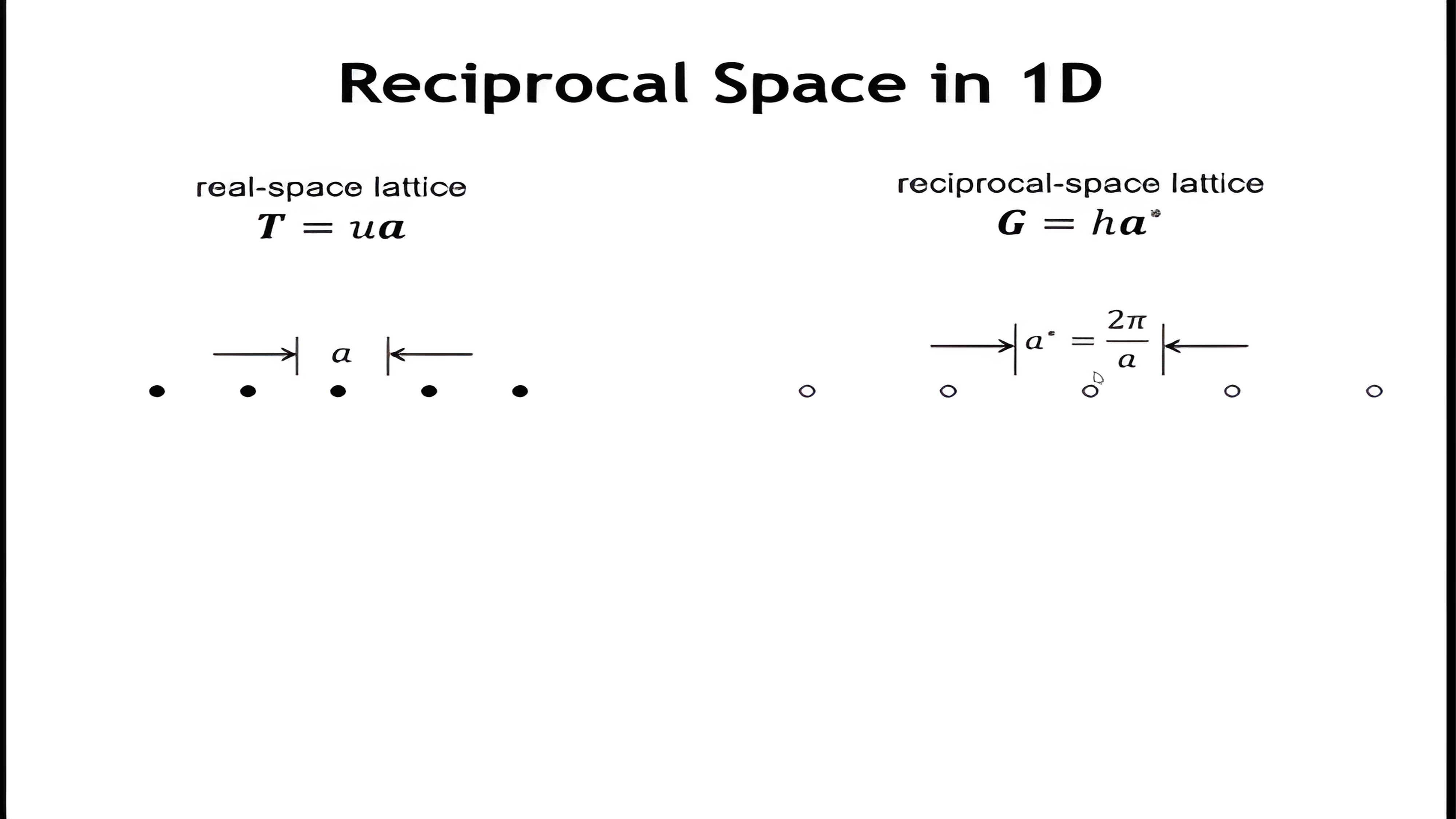
Reciprocal Space in 1D
The First Brillouin Zone in 2D
Special Points in a 2D Square Lattice
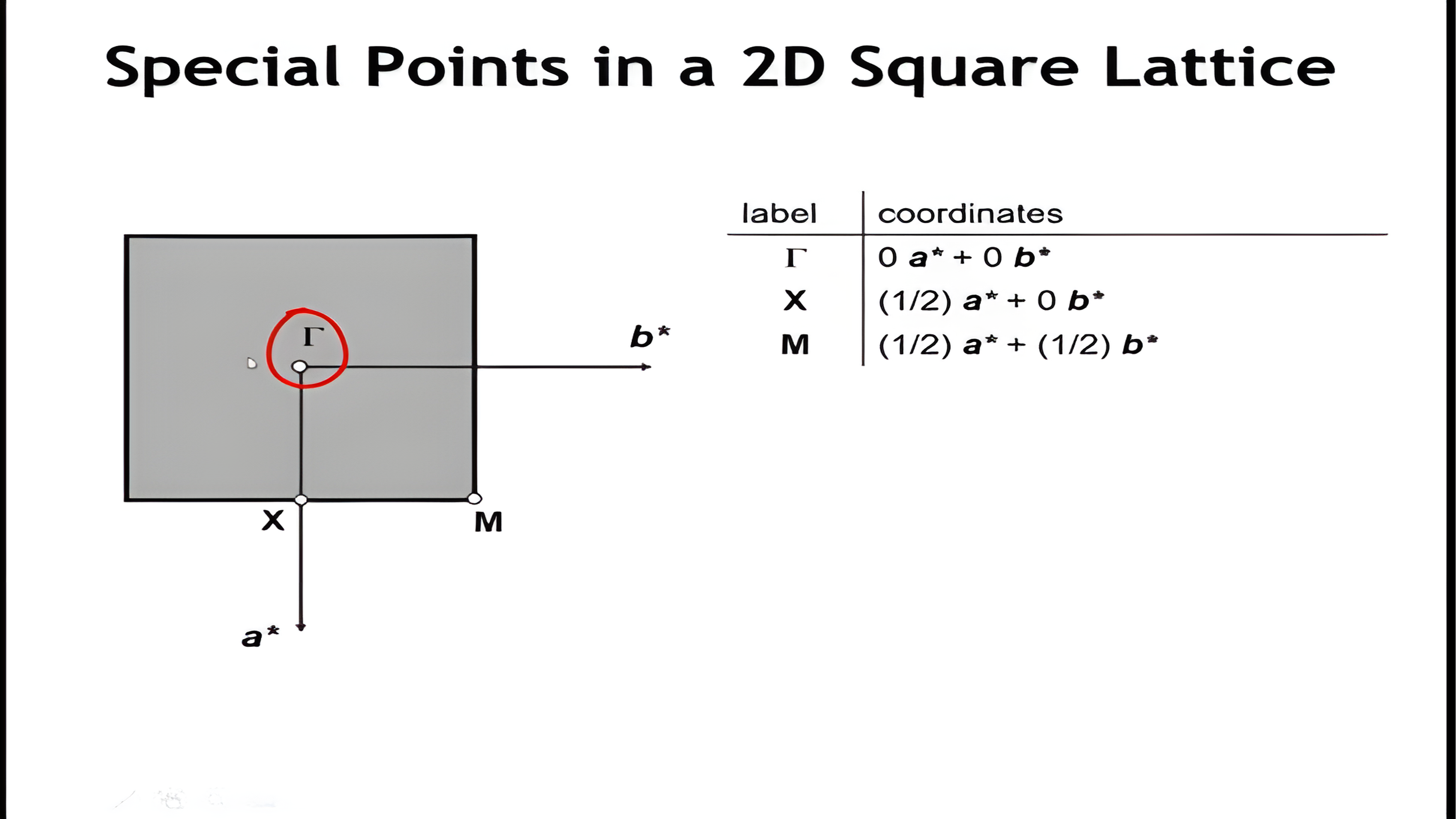
$\mathbf{k}$ is the wave vector; $\mathbf{a}^{*}$, $\mathbf{b}^{*}$ are the reciprocal lattice vectors. Per Solid State Materials Chemistry, §6.4.
Band Structure of a 2D H-Atom Sheet
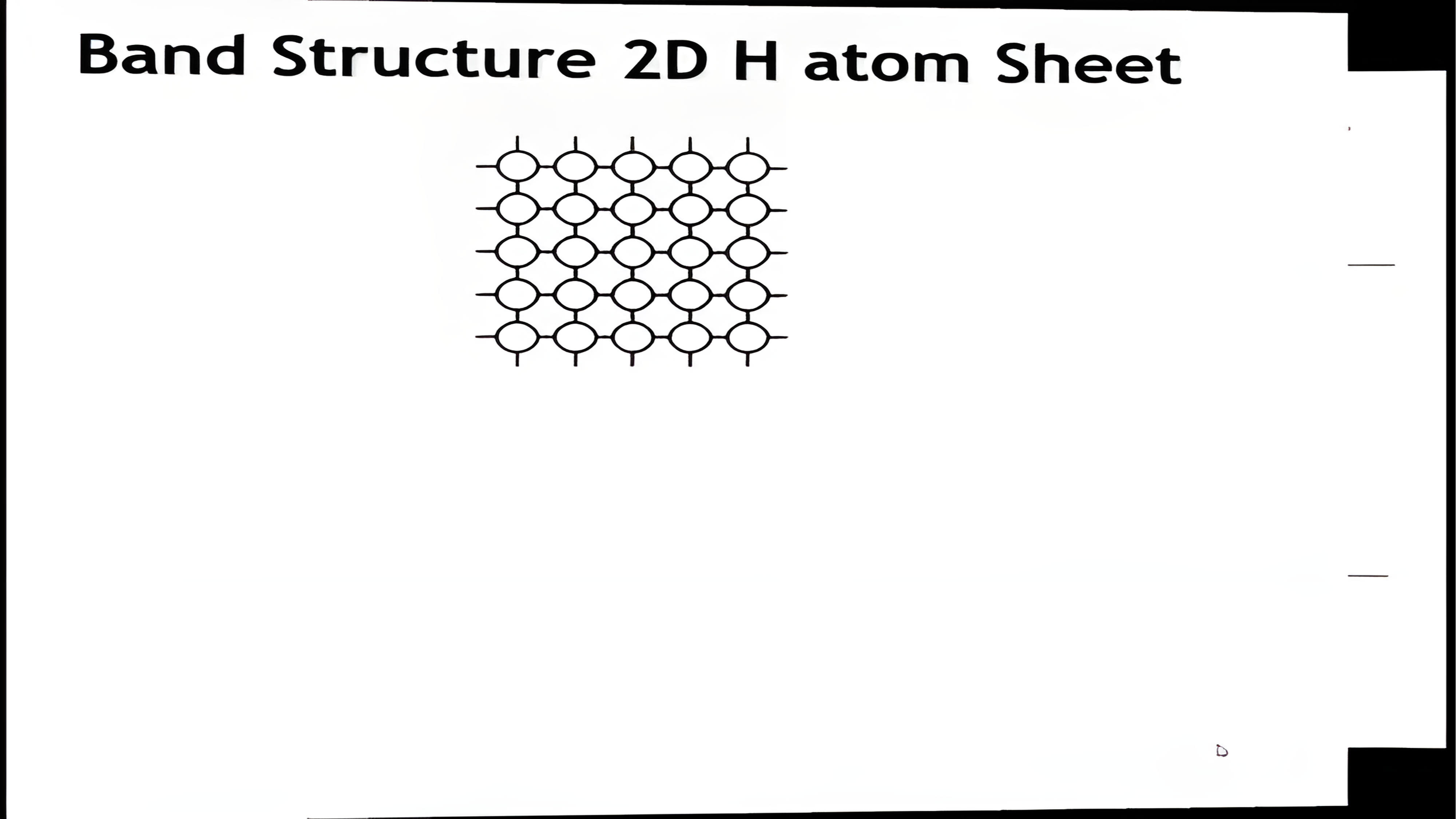
Check Your Understanding: Reciprocal Vectors
Check Your Understanding: The Brillouin Zone
Check Your Understanding: The Γ Point
Check Your Understanding: The M Point
Check Your Understanding: Vector Lengths
Learning Objectives: The CuO₂²⁻ Layer
By the end of this lecture, you will be able to:
- Construct band structures for multi-atom unit cells from molecular orbital diagrams
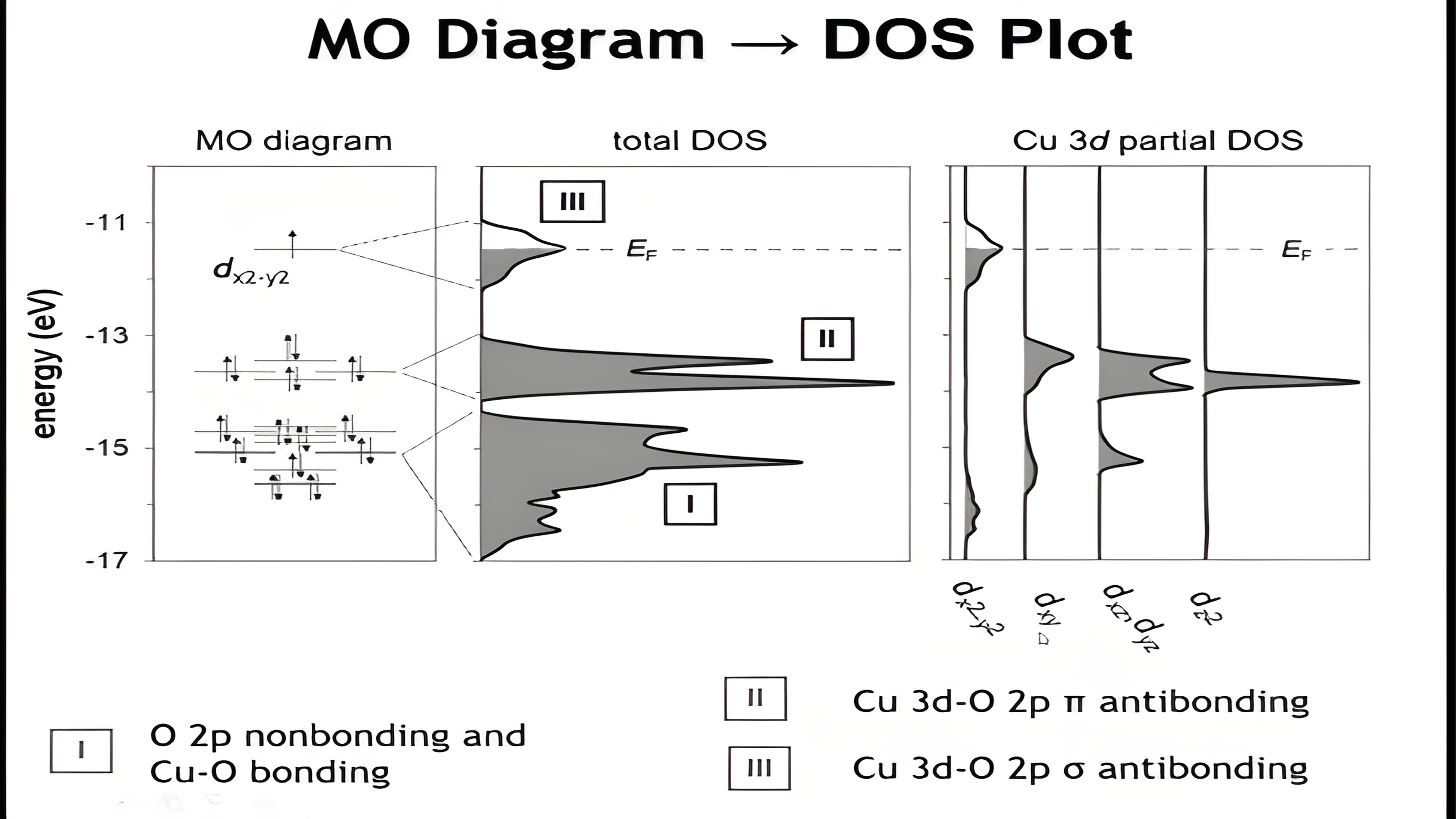
- Interpret density of states (DOS) and partial DOS diagrams to identify orbital contributions
- Predict orbital overlap patterns and symmetry-allowed interactions at different k-points
- Relate band width to orbital overlap strength and electron delocalization
- Extract key properties from band structure diagrams: metallic vs semiconducting behavior, localized vs delocalized electrons
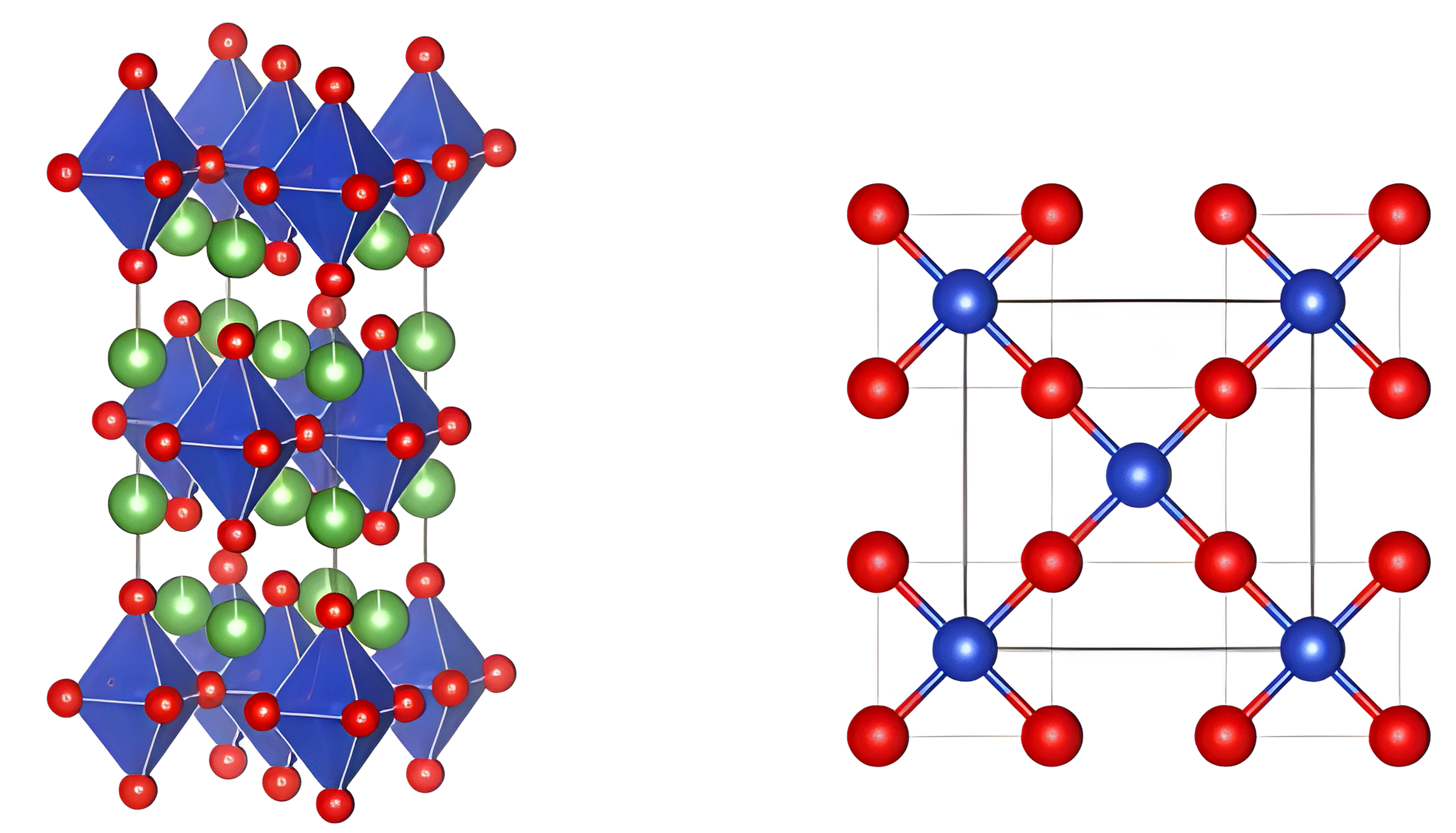
La₂CuO₄: Home of the CuO₂²⁻ Layer
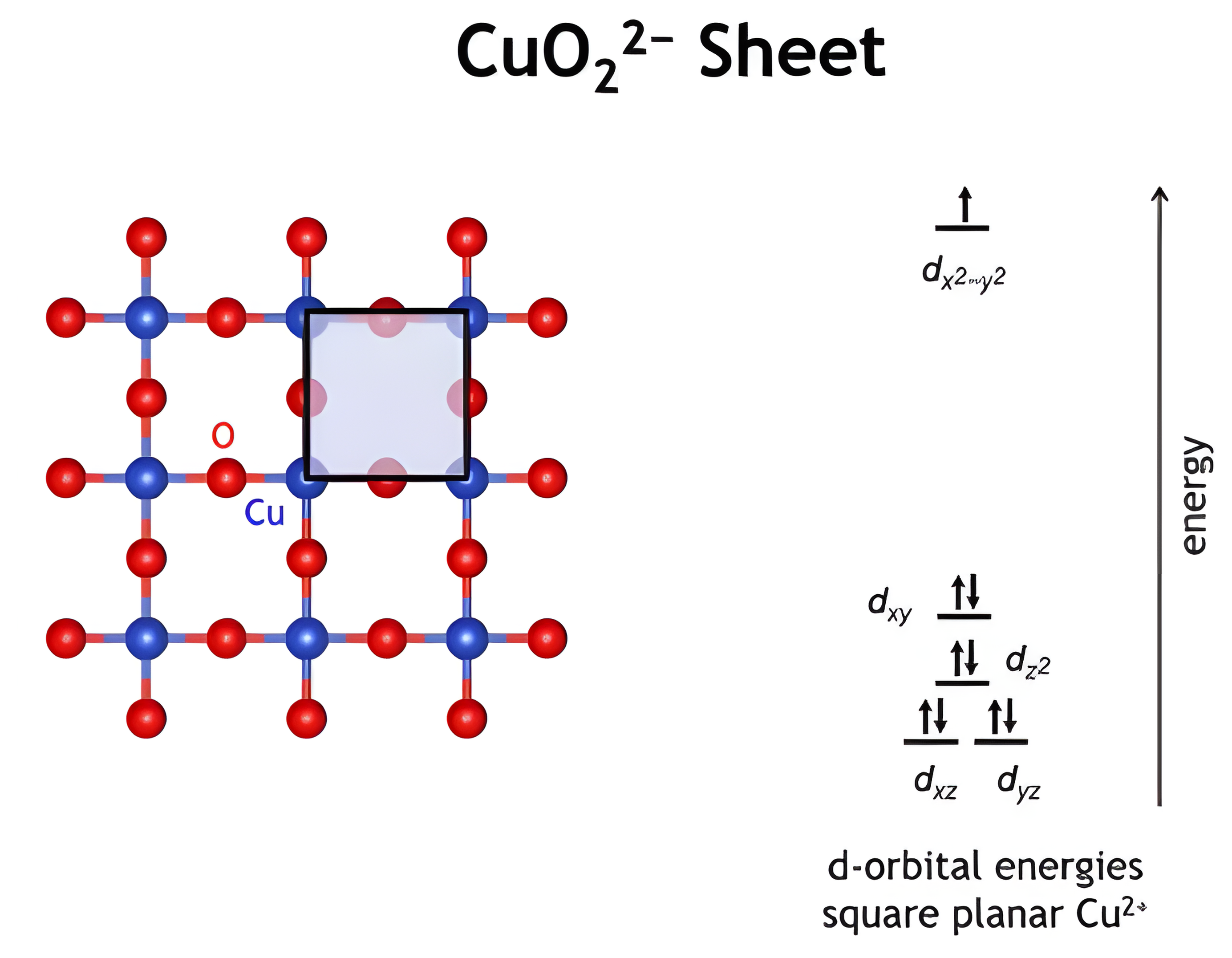
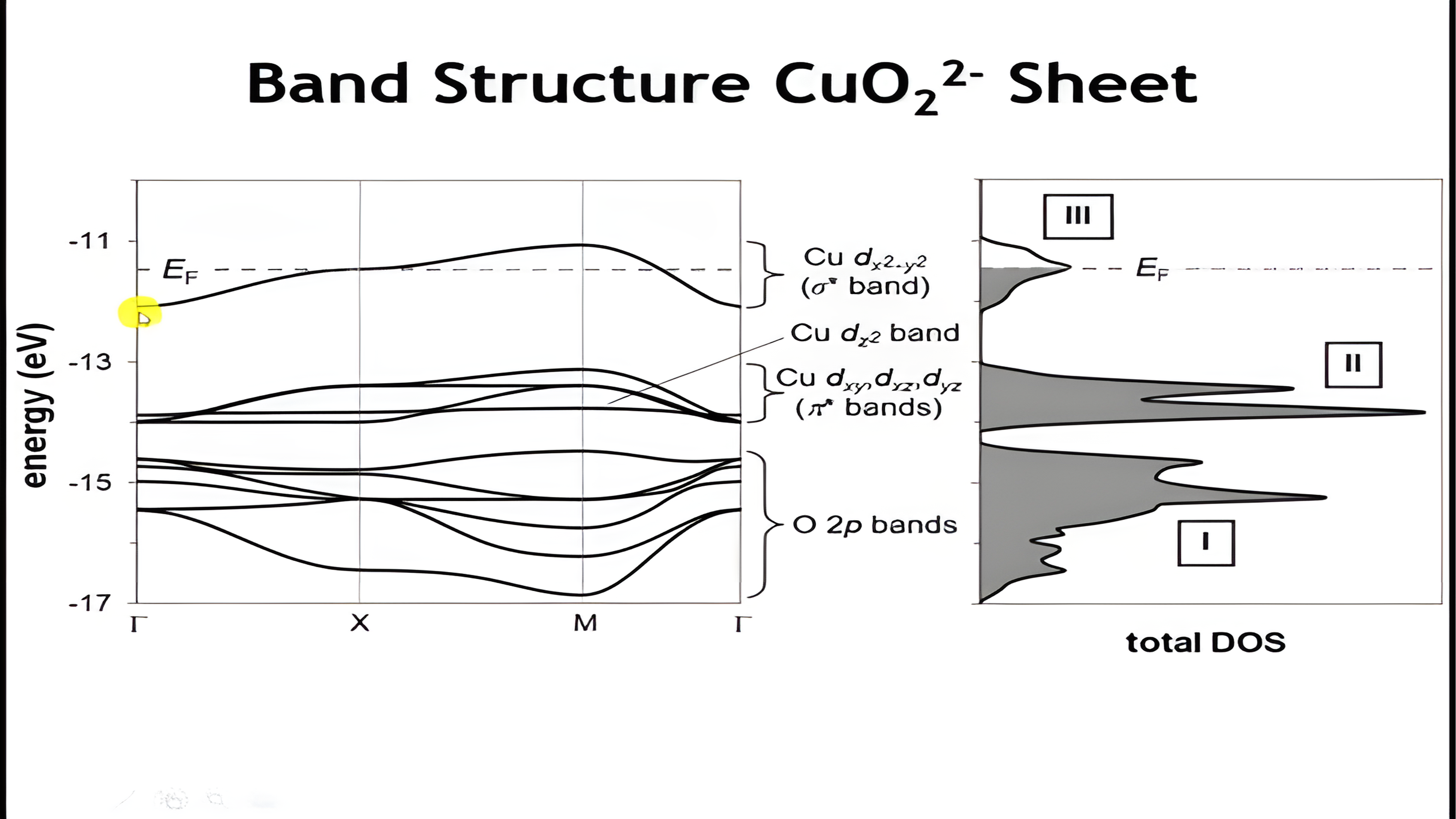
The CuO₂²⁻ Sheet
MO Diagram → DOS Plot
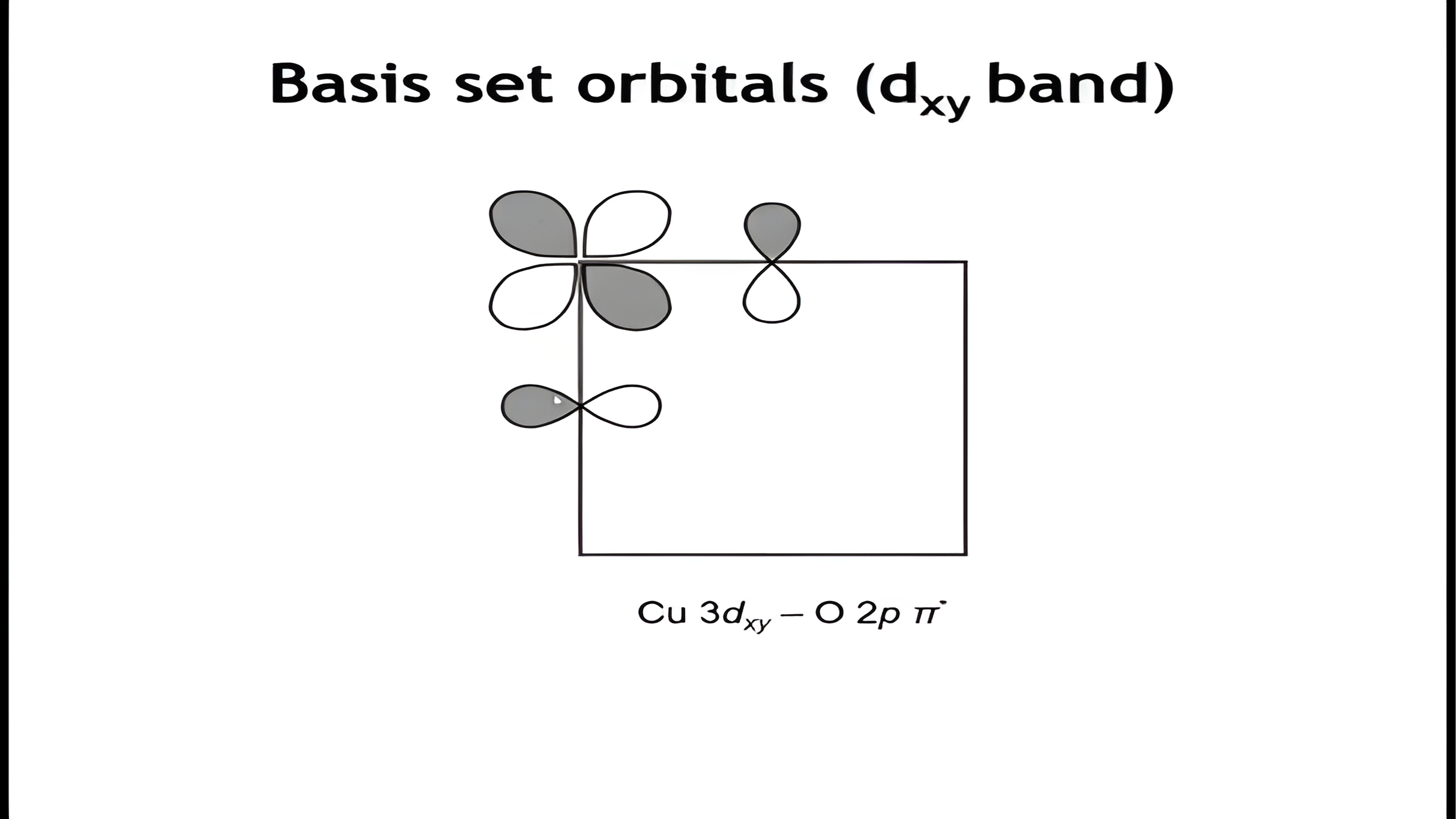
Basis Set Orbitals: the dxy Band
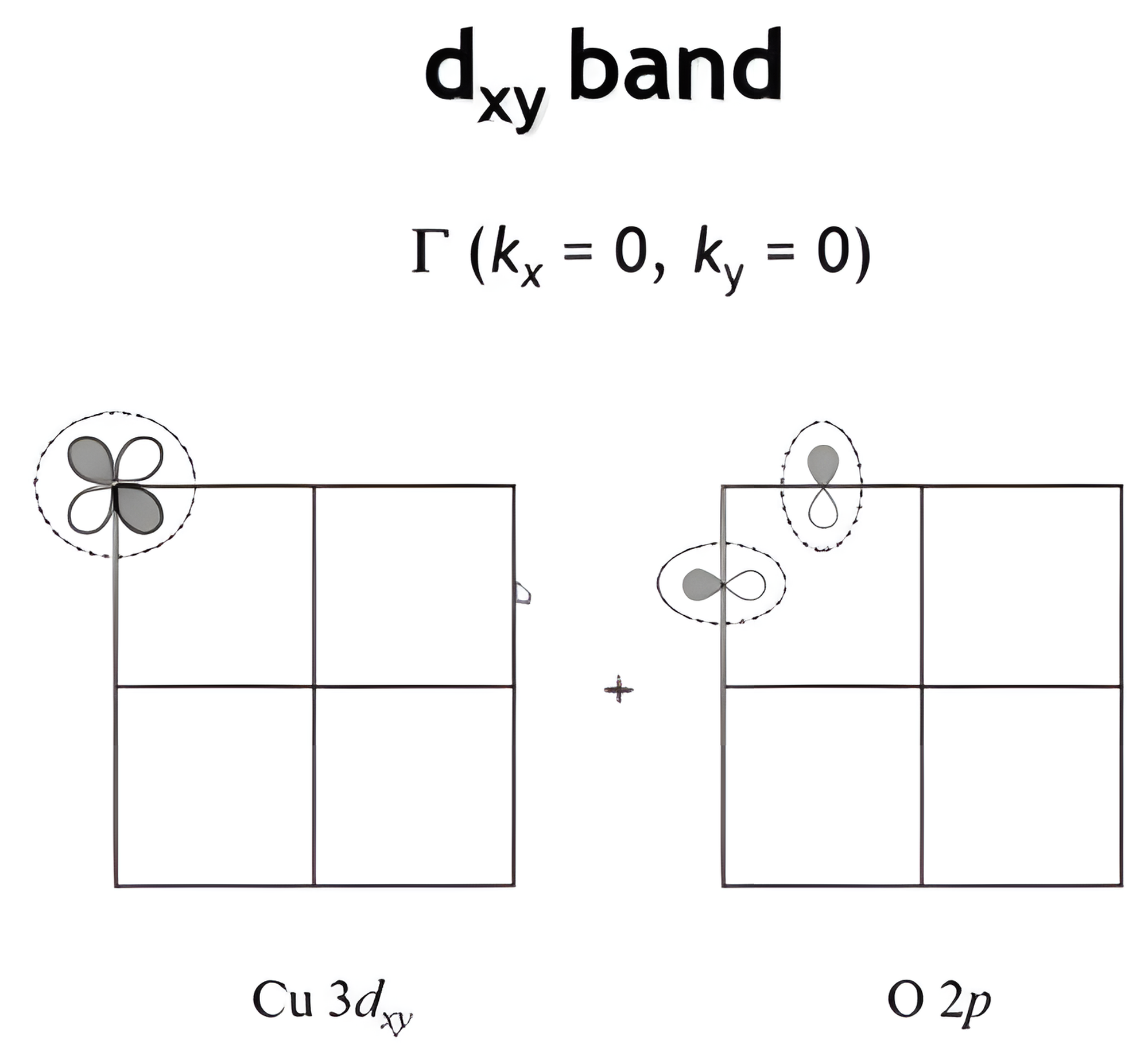
The dxy Band at Γ
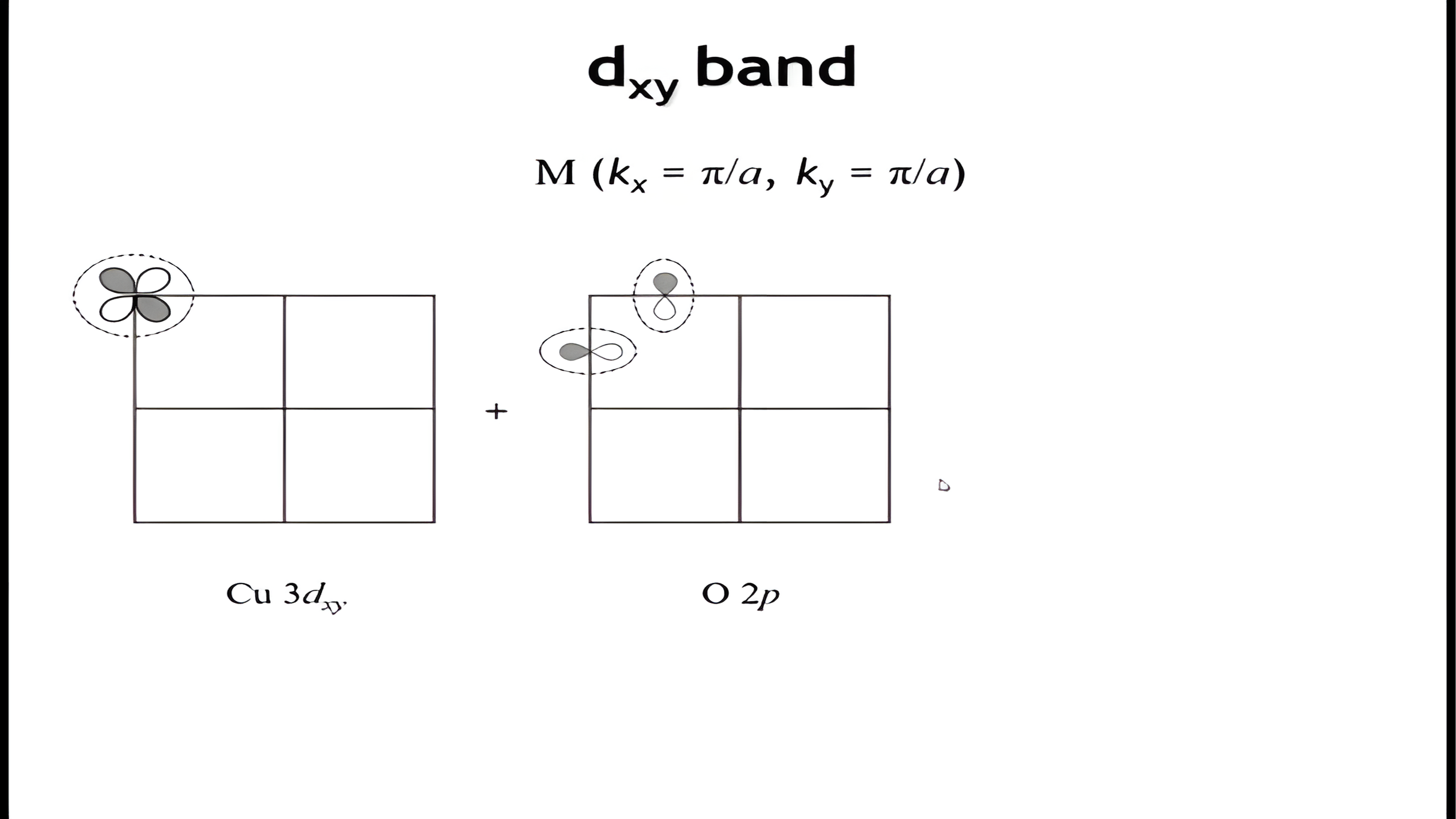
The dxy Band at M
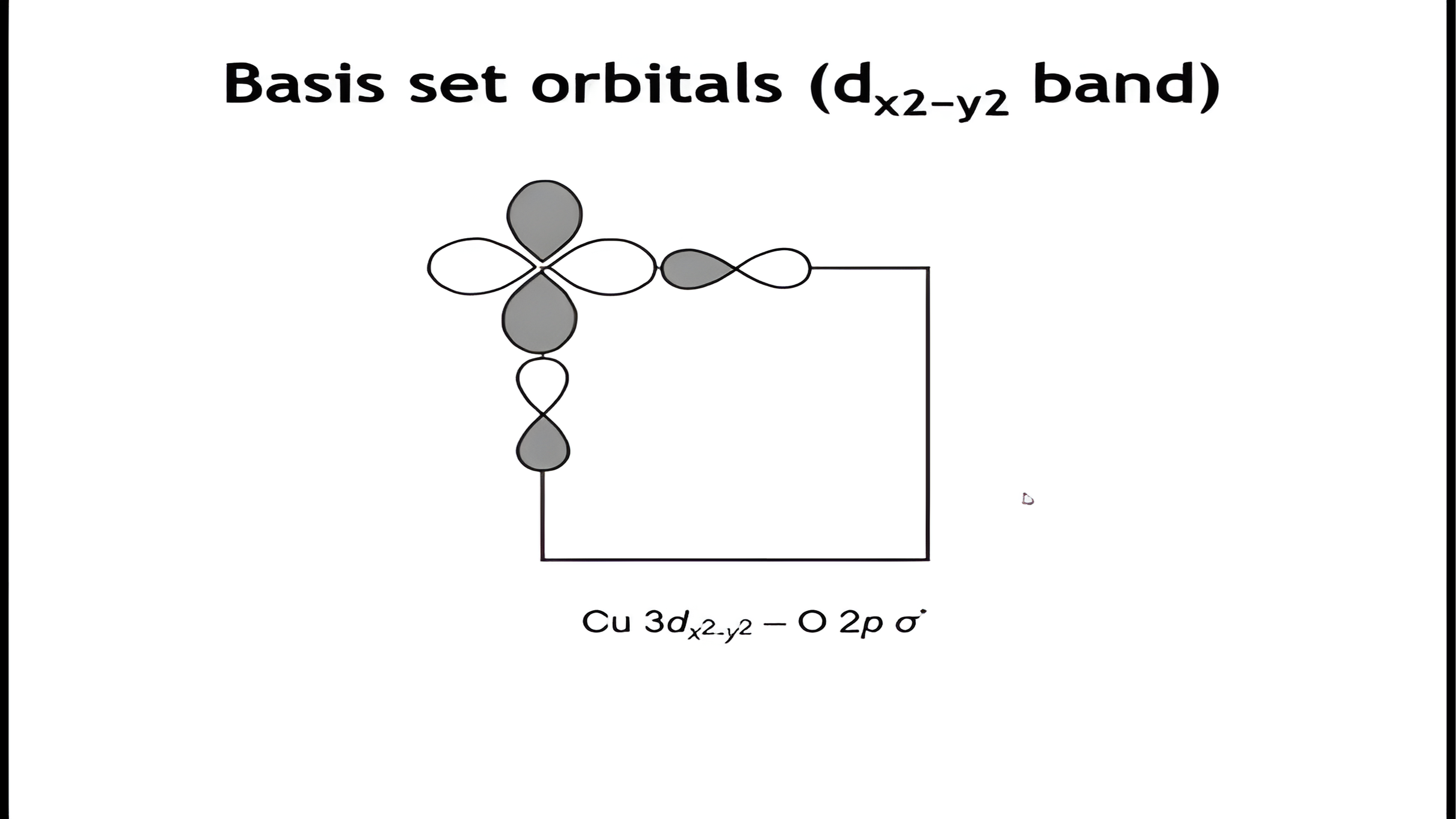
Basis Set Orbitals: the dx²−y² Band
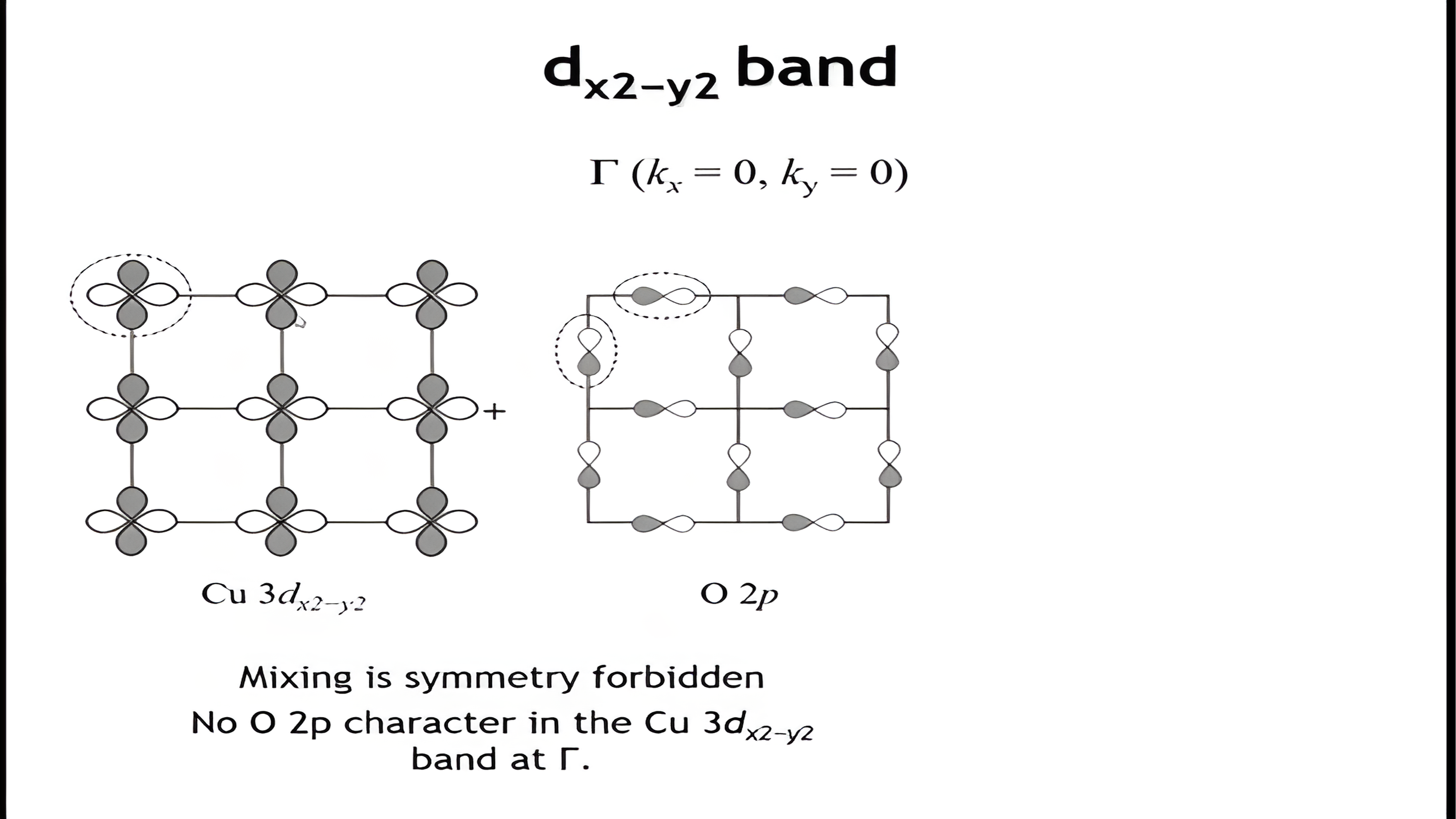
The dx²−y² Band at Γ
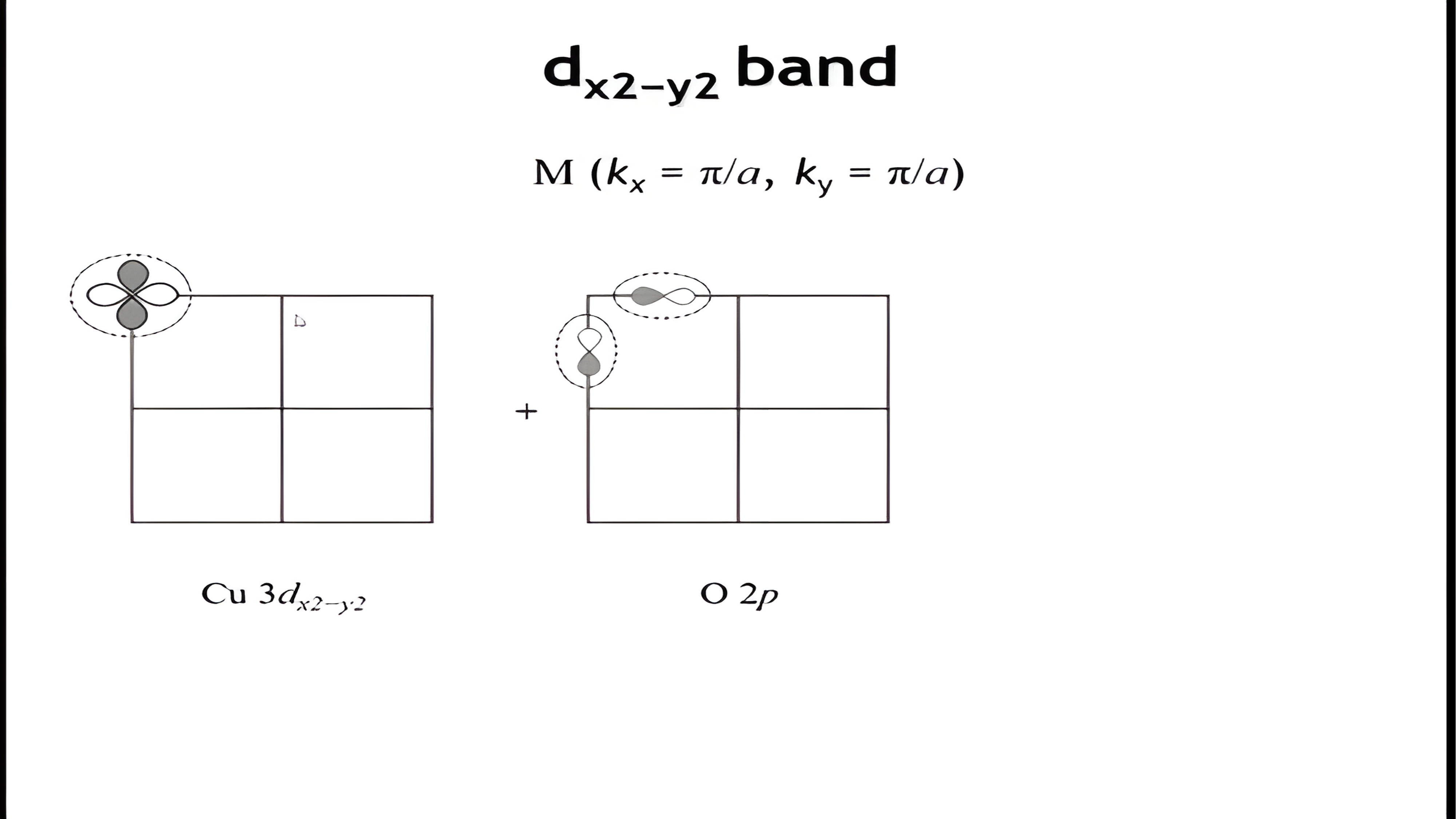
The dx²−y² Band at M
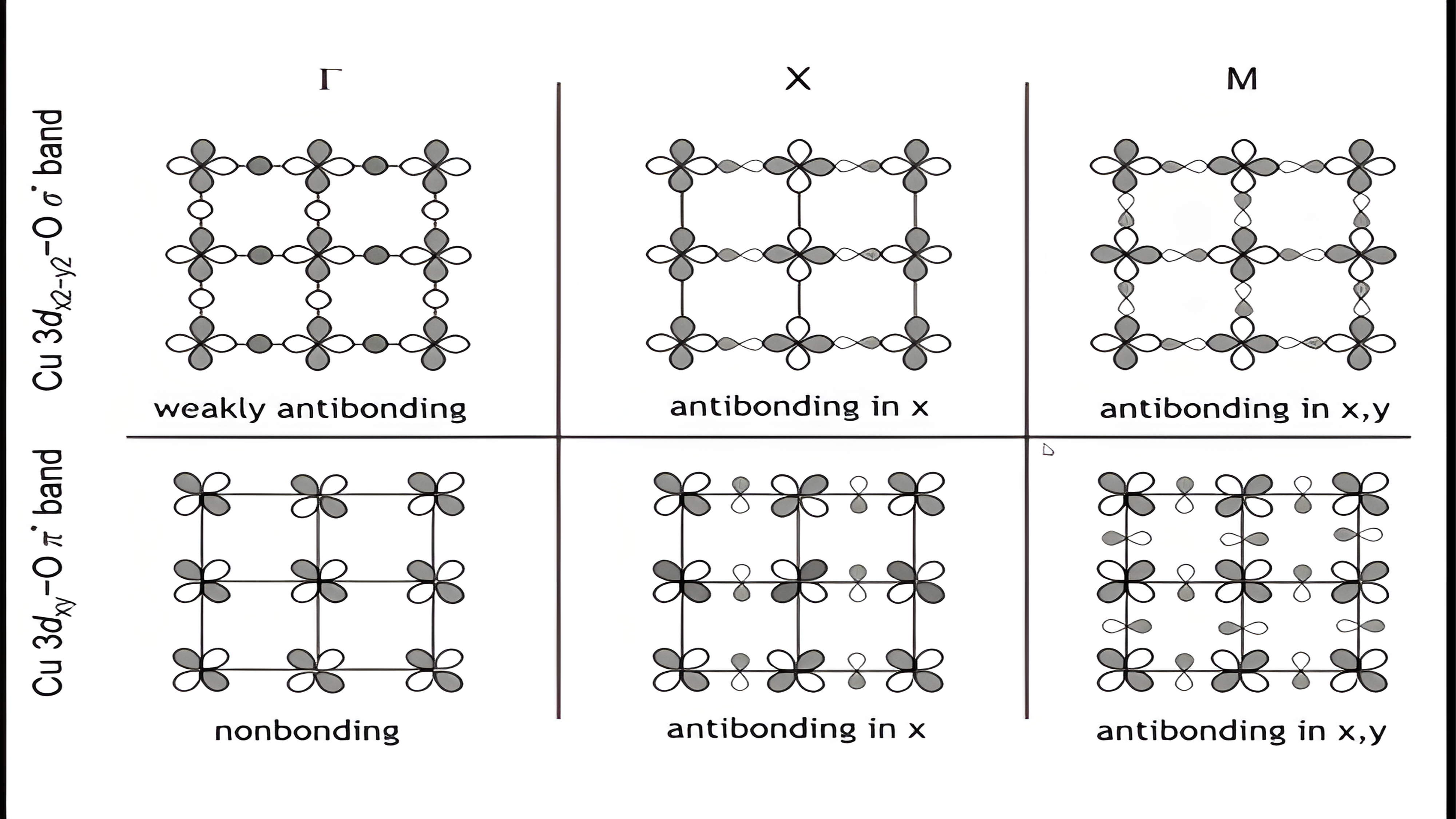
Two Bands at Γ, X, and M
Band Structure of the CuO₂²⁻ Sheet
Key Concepts: Band Structure
What is being plotted? Energy vs. k, where k is the wavevector that gives the phase of the MO’s on moving from one unit cell to the next (as well as the crystal momentum of the electron).
How many lines are there in a band structure diagram? As many as there are atomic orbitals in the unit cell.
How is the center of gravity energy level of each band determined? It usually follows from the MO diagram.
How do we determine whether a band runs uphill or downhill? By comparing the orbital overlap at k=0 and k=π/a.
How do we distinguish metals from semiconductors and insulators? The Fermi level cuts a band in a metal, whereas there is a gap between the filled and empty states in a semiconductor.
Why are some bands flat and others steep? This depends on the degree of orbital overlap between building units.
Wide bands → Large intermolecular overlap → delocalized e⁻
Narrow bands → Weak intermolecular overlap → localized e⁻
Practice questions
Work the Lecture 16 practice questions before the next class. They cover the band structure of a linear fluorine atom chain, reciprocal lattice vectors and the first Brillouin zone, the special k-points of a square lattice, the band structure of a 2D hydrogen sheet, and the CuO₂²⁻ layer from its density of states through the dxy and dx²−y² bands.
Open the Lecture 16 practice questions
Every question carries a worked explanation, so you can check your reasoning as you go.