CHEM 548: Materials Chemistry
Lecture 14: Spin States, Jahn-Teller Distortions, and Bond Valence
Reading: Woodward, Karen, Evans, and Vogt, Solid State Materials Chemistry
Ch. 5 §§5.3.9–5.3.10, §5.4
Learning Objectives: Spin States & Jahn–Teller
Spin States & Jahn–Teller Distortions
- Explain spin-state configurations
- Define high-spin and low-spin complexes.
- Relate crystal field splitting energy (Δ) and spin pairing energy (P).
- Predict spin states from ligand type (spectrochemical series) and metal identity (3d vs 4d/5d).
- Compare structural preferences of d⁸ ions
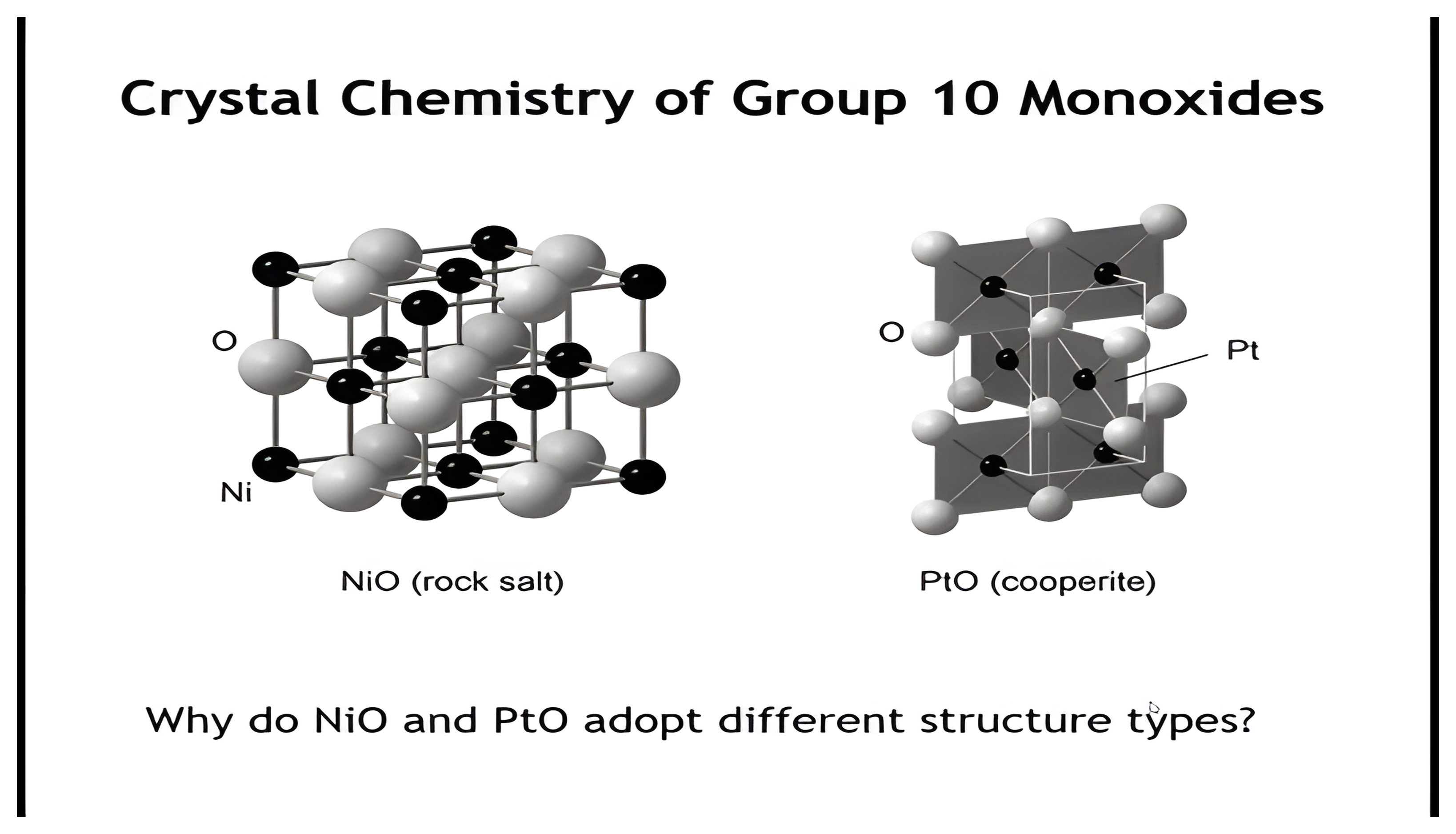
- Describe why Ni²⁺ forms octahedral (rock salt) structures while Pt²⁺ forms square planar (Cooperite-type).
- Interpret orbital splitting diagrams for square planar fields.
- Apply the Jahn–Teller theorem
- Identify cases where electronic degeneracy causes structural distortion (e.g., high-spin d⁴, d⁹).
- Distinguish between elongated and compressed octahedra and the electronic rationale for each.
- Describe second-order Jahn–Teller distortions
- Explain how HOMO–LUMO mixing stabilizes asymmetric geometries (e.g., NH₃, PbO).
- Recognize “stereoactive lone pair” distortions in s² cations (Pb²⁺, Bi³⁺).
Low-Spin and High-Spin Configurations
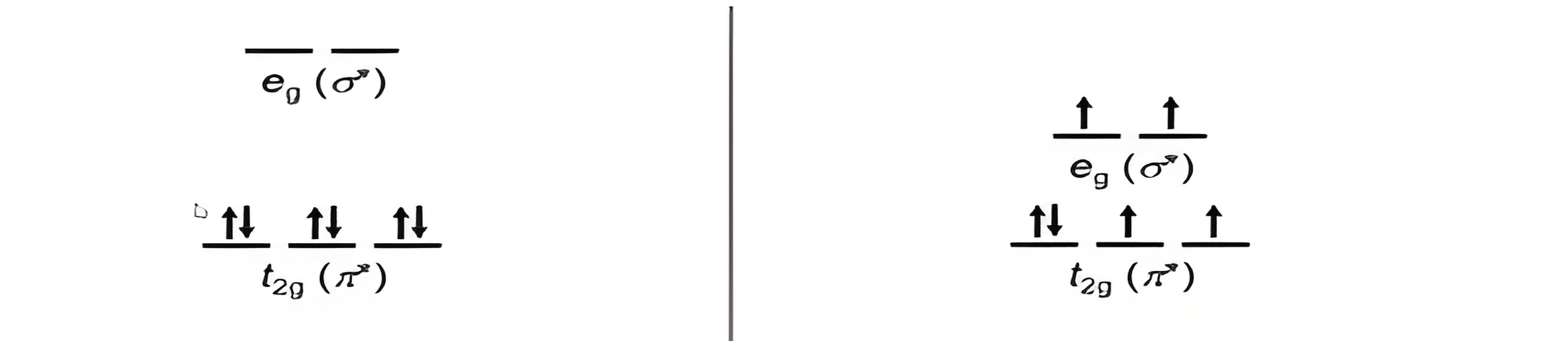
low-spin configuration (P < Δ) · high-spin configuration (P > Δ)
Δ = Crystal field splitting energy
Favors filling lower energy set (t2g) of orbitals completely before adding electrons to higher energy set (eg)
P = Spin pairing energy
Favors spreading the electrons out across all five d-orbitals before placing two electrons in the same orbital (strong Hunds rule coupling)
High Spin vs. Low Spin: The Trends
High spin vs. Low spin
- 2nd and 3rd row transition-metal ions adopt LS configurations
- The 4d and 5d orbitals interact more strongly with the ligands, increasing Δ, plus their larger size decreases P.
- Increasing the covalency of the metal–ligand bonds increases Δ thereby favoring LS configurations
- Either by increasing the metal oxidation state or by moving from left to right across the transition-metal series
- Tetrahedrally coordinated ions are nearly always high spin
- Δtetr < Δoct
- High field ligands (see spectrochemical series) favor LS configurations
I⁻ < Br⁻ < S²⁻ < Cl⁻ < F⁻ < C₂O₄²⁻ < H₂O < NH₃ < CN⁻ < CO
weak fieldstrong field
Crystal Chemistry of Group 10 Monoxides
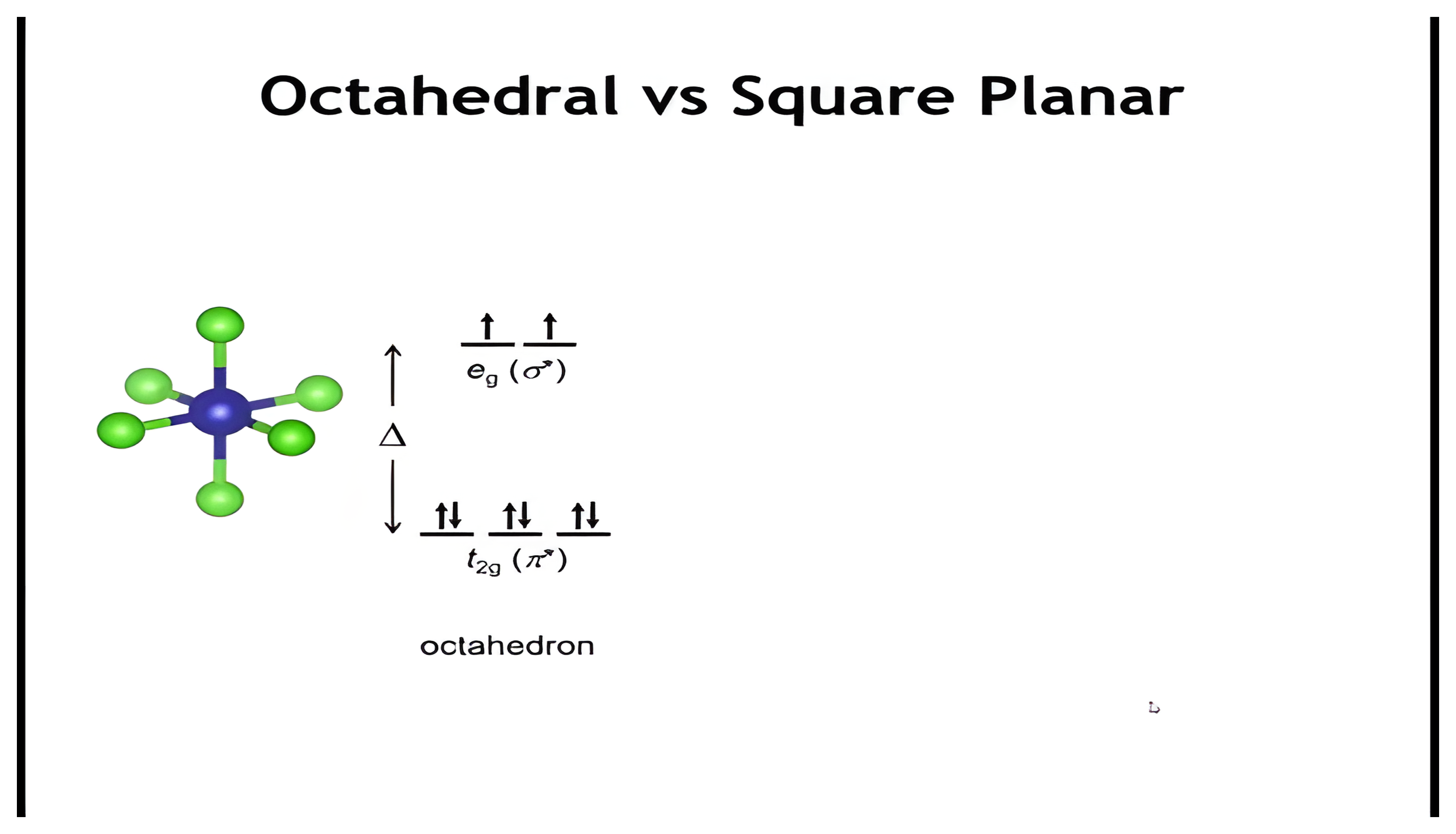
Octahedral vs. Square Planar
Jahn–Teller Distortions
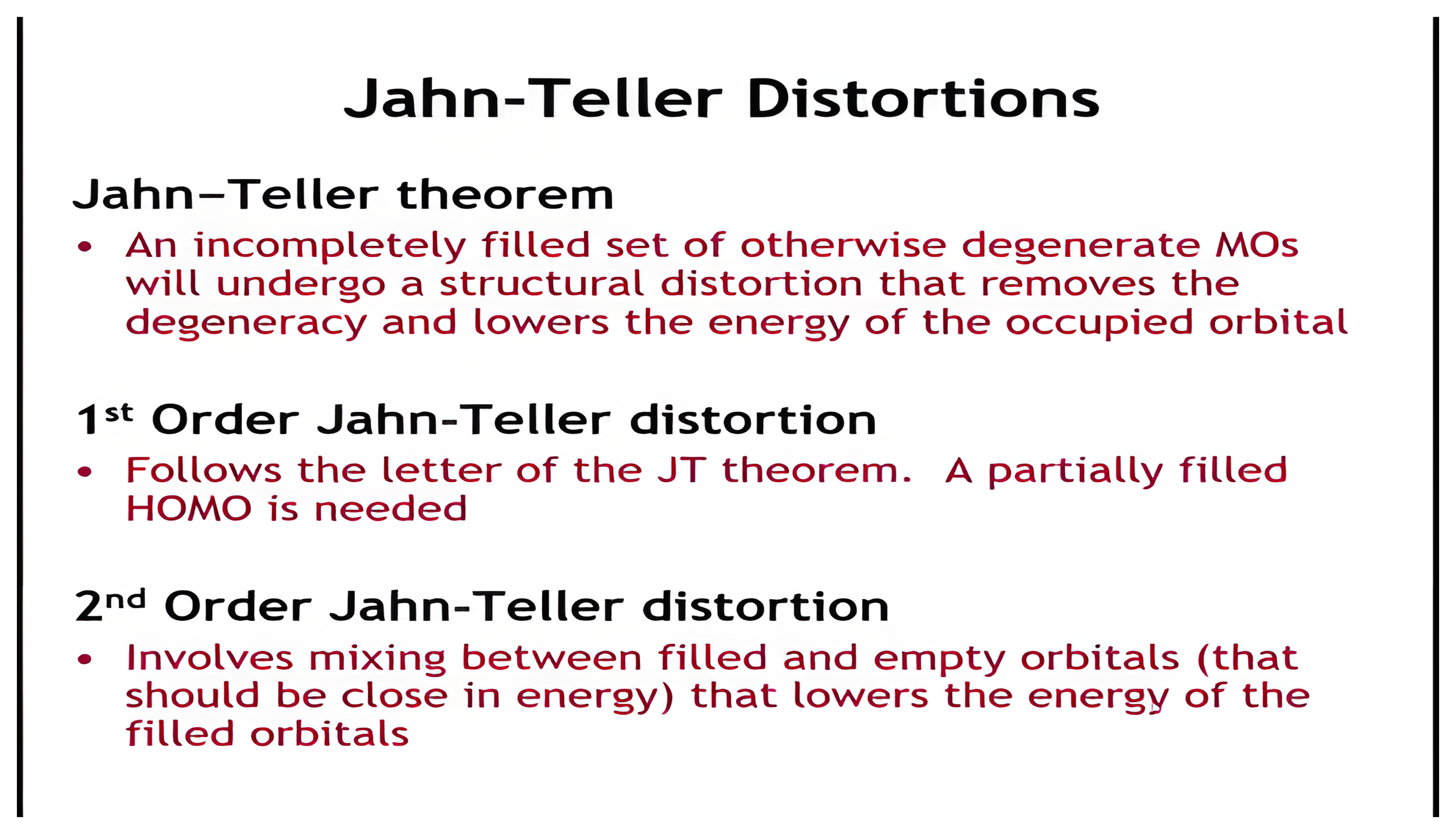
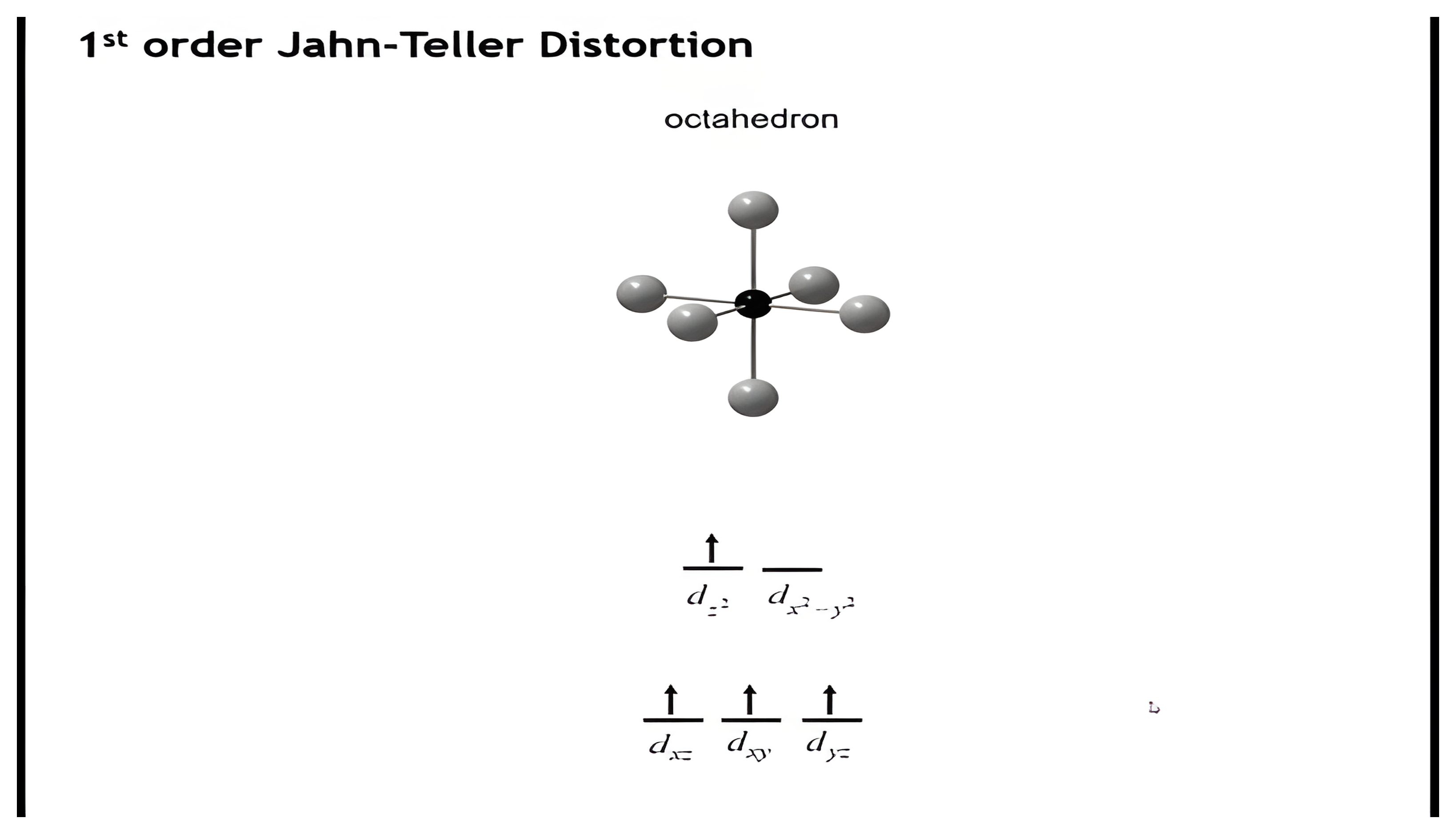
First-Order Jahn–Teller Distortion
Distortions in d⁹ and d¹⁰ Halides
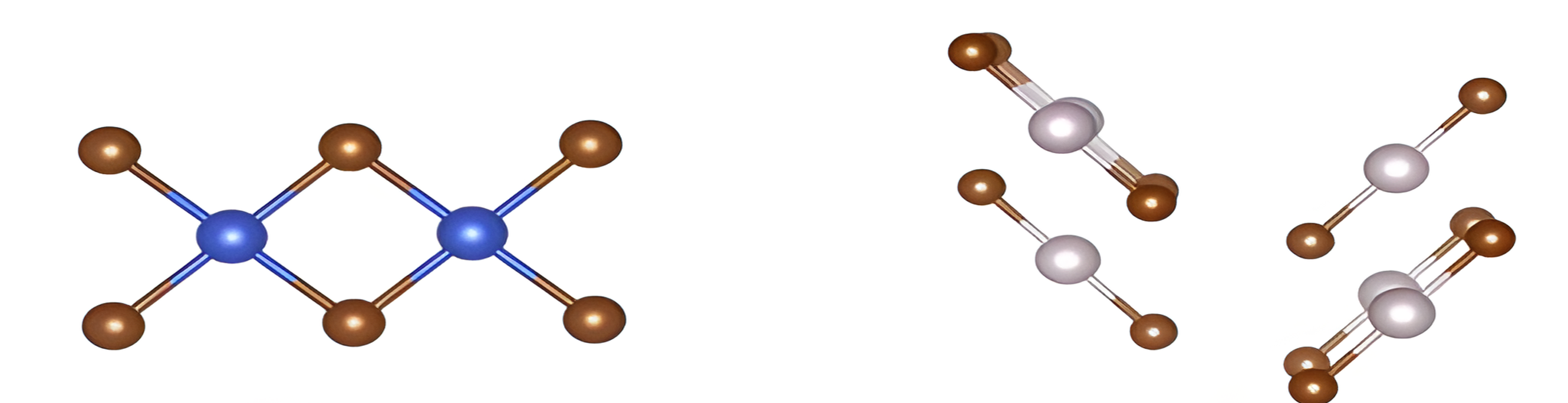
CuBr₂ distances
4×2.41 Å, 2×3.15 Å
HgBr₂ distances
2×2.45 Å, 4×3.24 Å
Cu²⁺ (d⁹) ions almost always take the 2 long + 4 short distortion (elongated octahedron)
d¹⁰ ions, such as Hg²⁺ adopt very large 2 short + 4 long distortions (compressed octahedron).
Why is this so? Why do d¹⁰ ions distort at all?
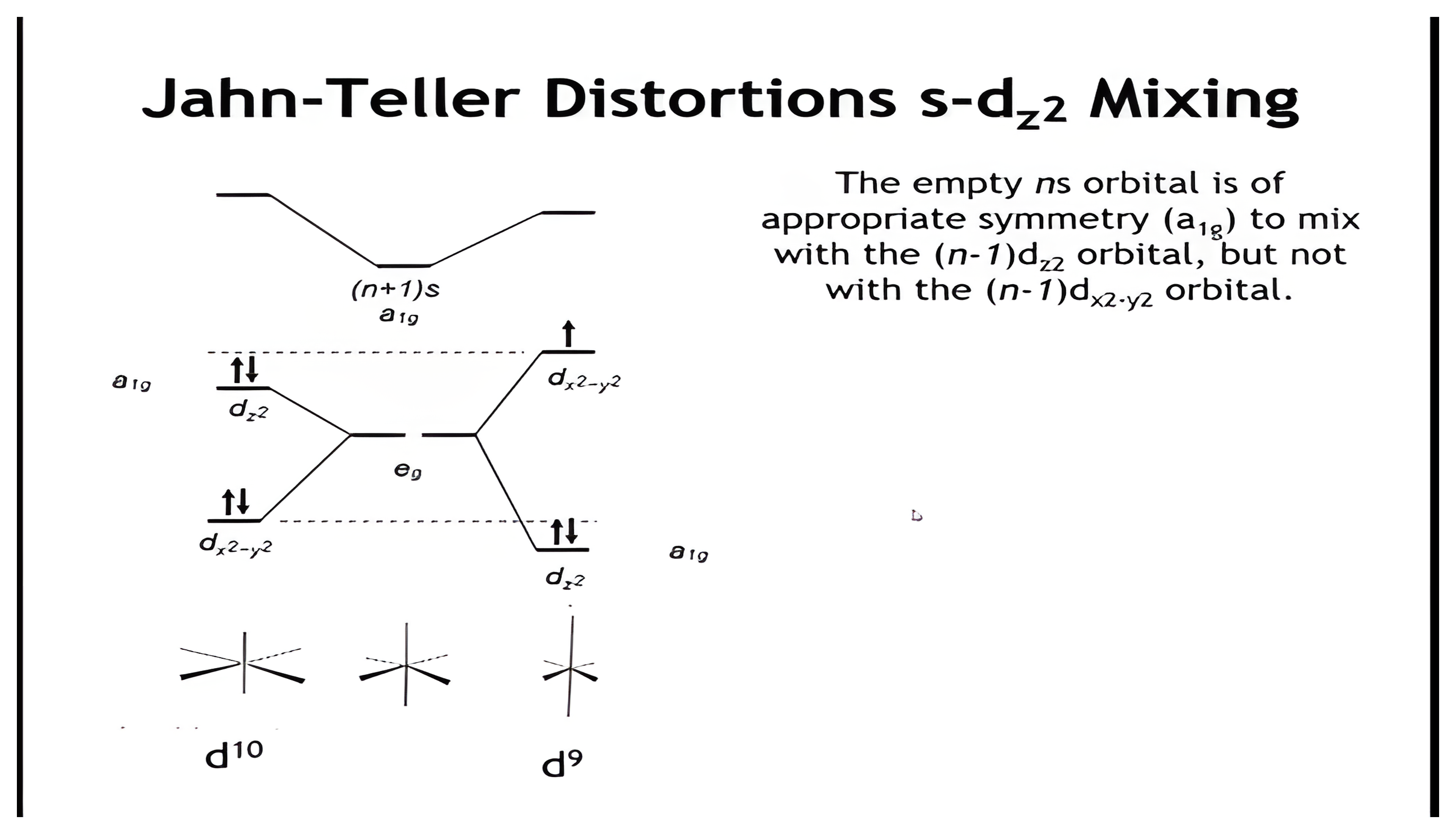
Jahn–Teller Distortions: s–dz² Mixing
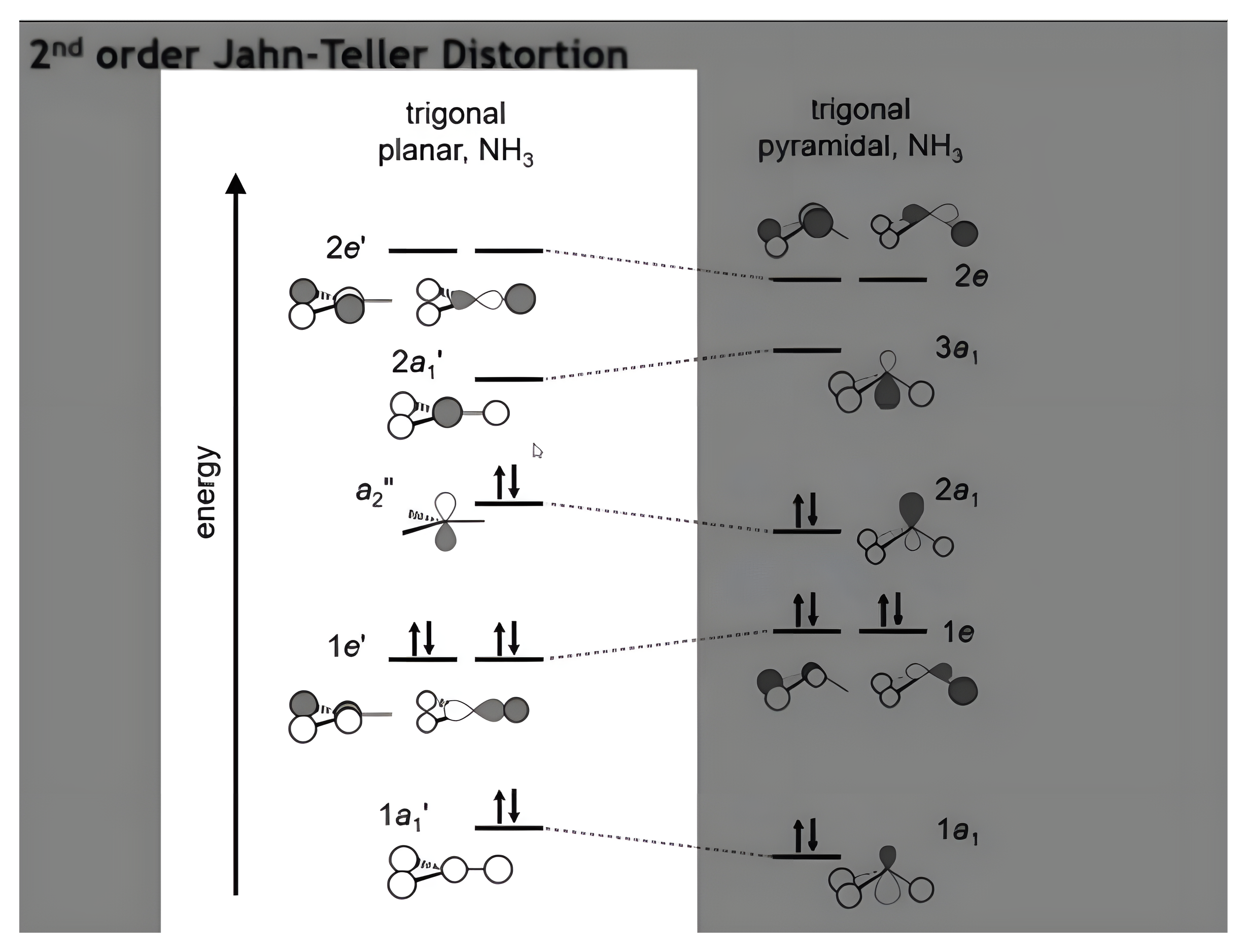
Second-Order Jahn–Teller: NH₃
Pb²⁺ in an Octahedral Field
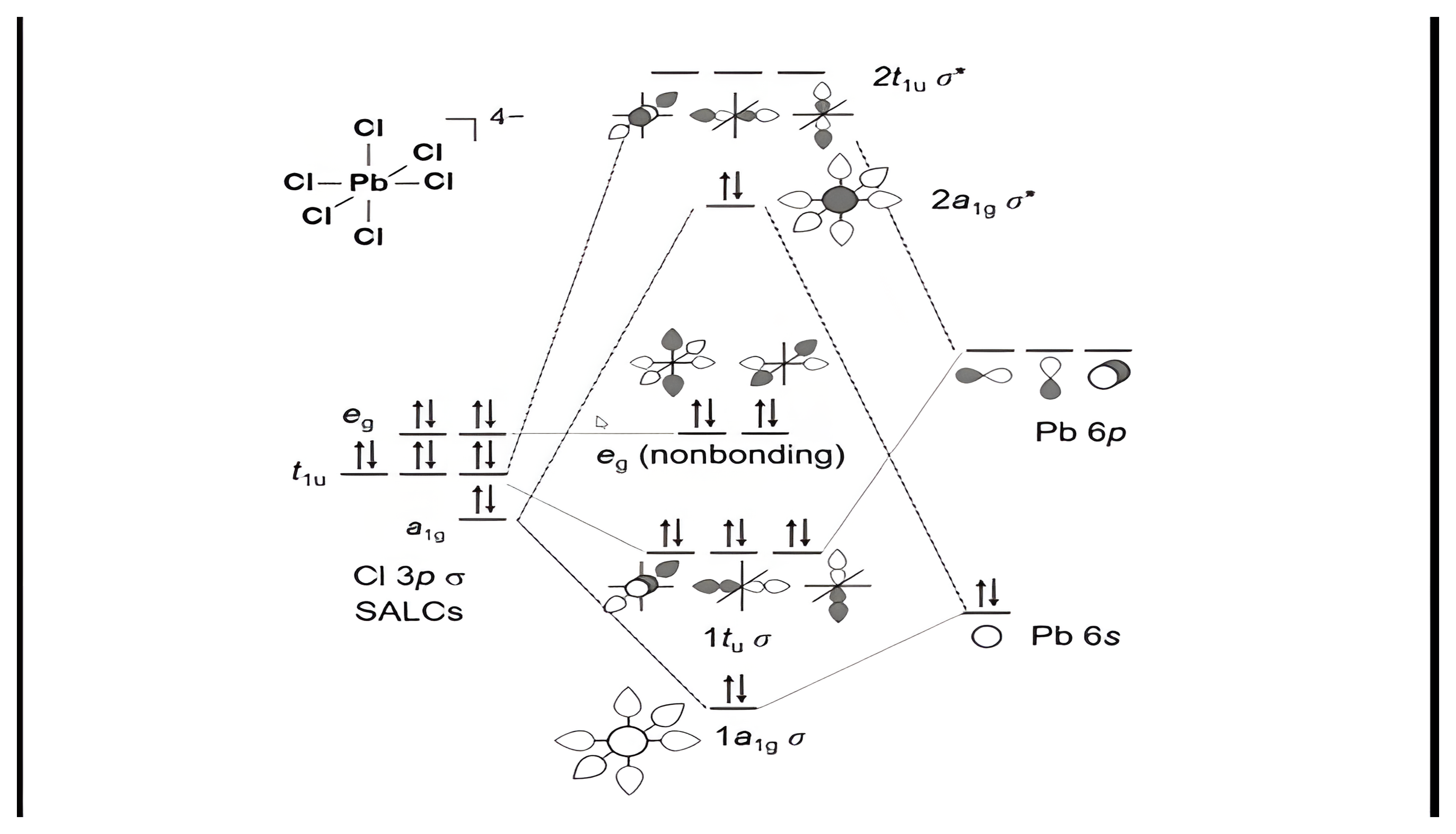
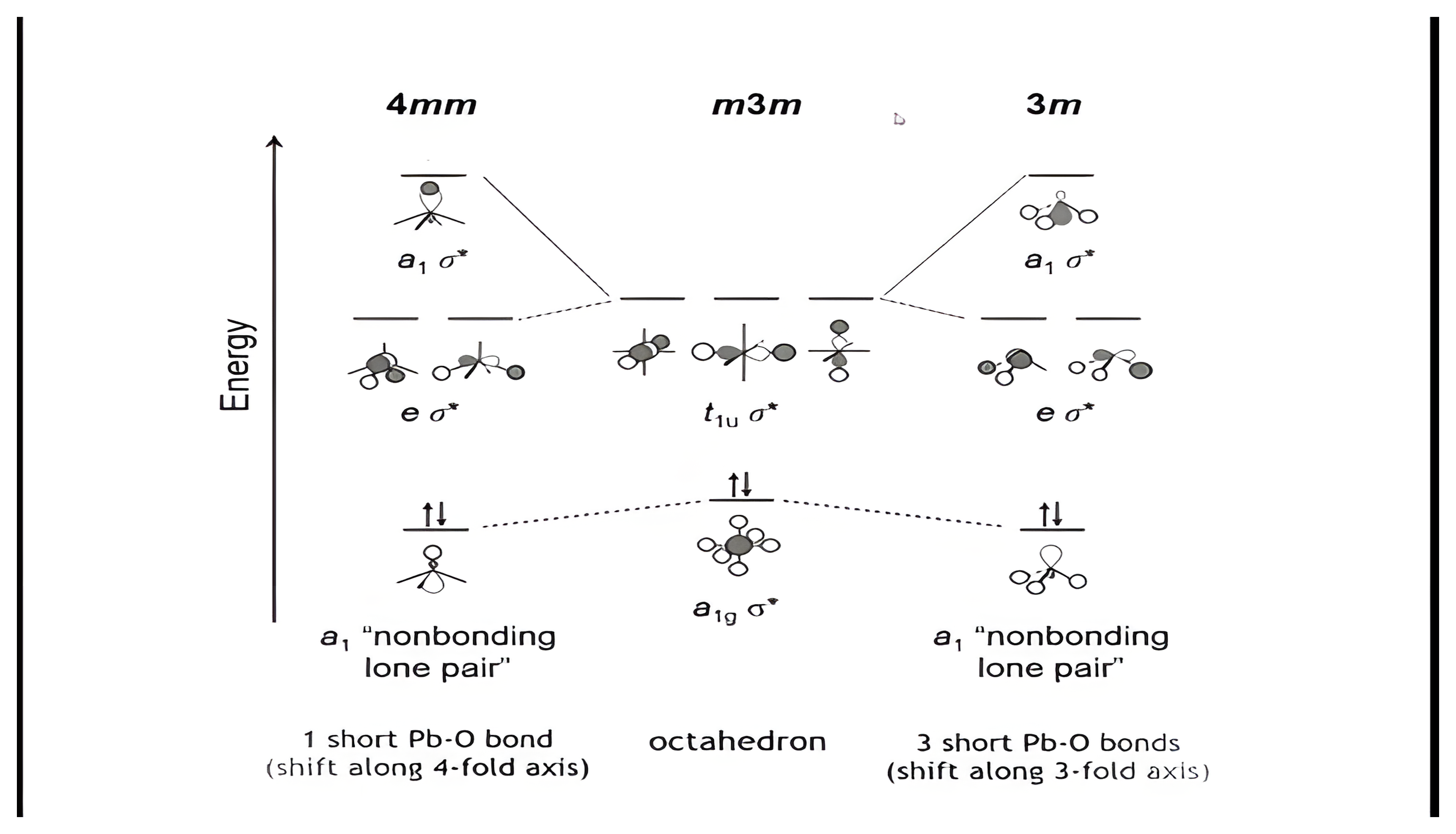
The Stereoactive Lone Pair
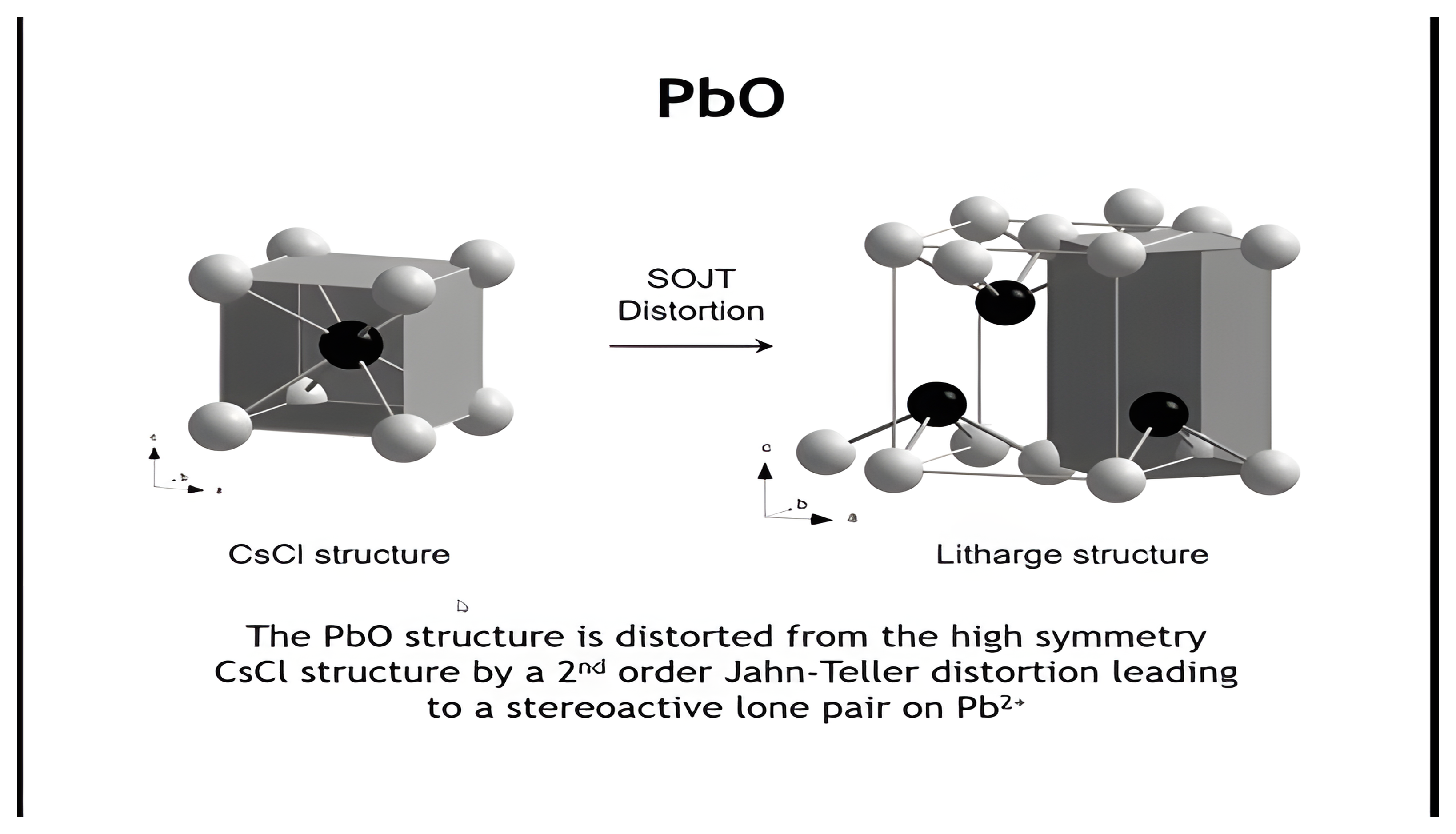
PbO: From CsCl to Litharge
Summary: Spin States & Jahn–Teller
Spin States & Jahn–Teller Distortions
Spin States
- Δ = crystal-field splitting; P = spin-pairing energy.
- Low spin (Δ > P): electrons pair in T₂g.
- High spin (Δ < P): electrons spread across all d orbitals.
- Δ↑ for 4d/5d metals, short/covalent bonds, strong-field ligands (CO > NH₃ > H₂O > Cl⁻).
- Tetrahedral fields ≈ ½ Δoh → almost always high spin.
Octahedral → Square Planar (d⁸)
- Ni²⁺ (3d⁸): weak field → octahedral (high spin).
- Pt²⁺ (5d⁸): strong field → square planar (low spin).
- Large Δ stabilizes dz², empties dx²–y².
Octahedral → Square Planar (d⁸)
- Ni²⁺ (3d⁸): weak field → octahedral (high spin).
- Pt²⁺ (5d⁸): strong field → square planar (low spin).
- Large Δ stabilizes dz², empties dx²–y².
Jahn–Teller Distortion (1st Order)
- Partially filled degenerate HOMO → symmetry lowering.
- Seen in high-spin d⁴ (Mn³⁺) and d⁹ (Cu²⁺).
- Elongated octahedra (4 short + 2 long bonds) most stable.
- Compression rare.
2nd Order / Pseudo Jahn–Teller
- Mixing between filled HOMO and nearby empty LUMO of same symmetry.
- Examples:
- NH₃ – pz ↔ 2s mix → trigonal pyramidal.
- Pb²⁺, Sn²⁺ – 6s/6p mix → off-center “stereoactive lone pair.”
- d⁰ ions (Ti⁴⁺, Nb⁵⁺, Mo⁶⁺) – cation shifts off-center.
Core Idea: Electronic degeneracy and Δ vs P competition drive spin state and geometry distortions.
Check Your Understanding: Spin States

Check Your Understanding: Jahn–Teller

Learning Objectives: Bond Valence Method
Learning Objectives
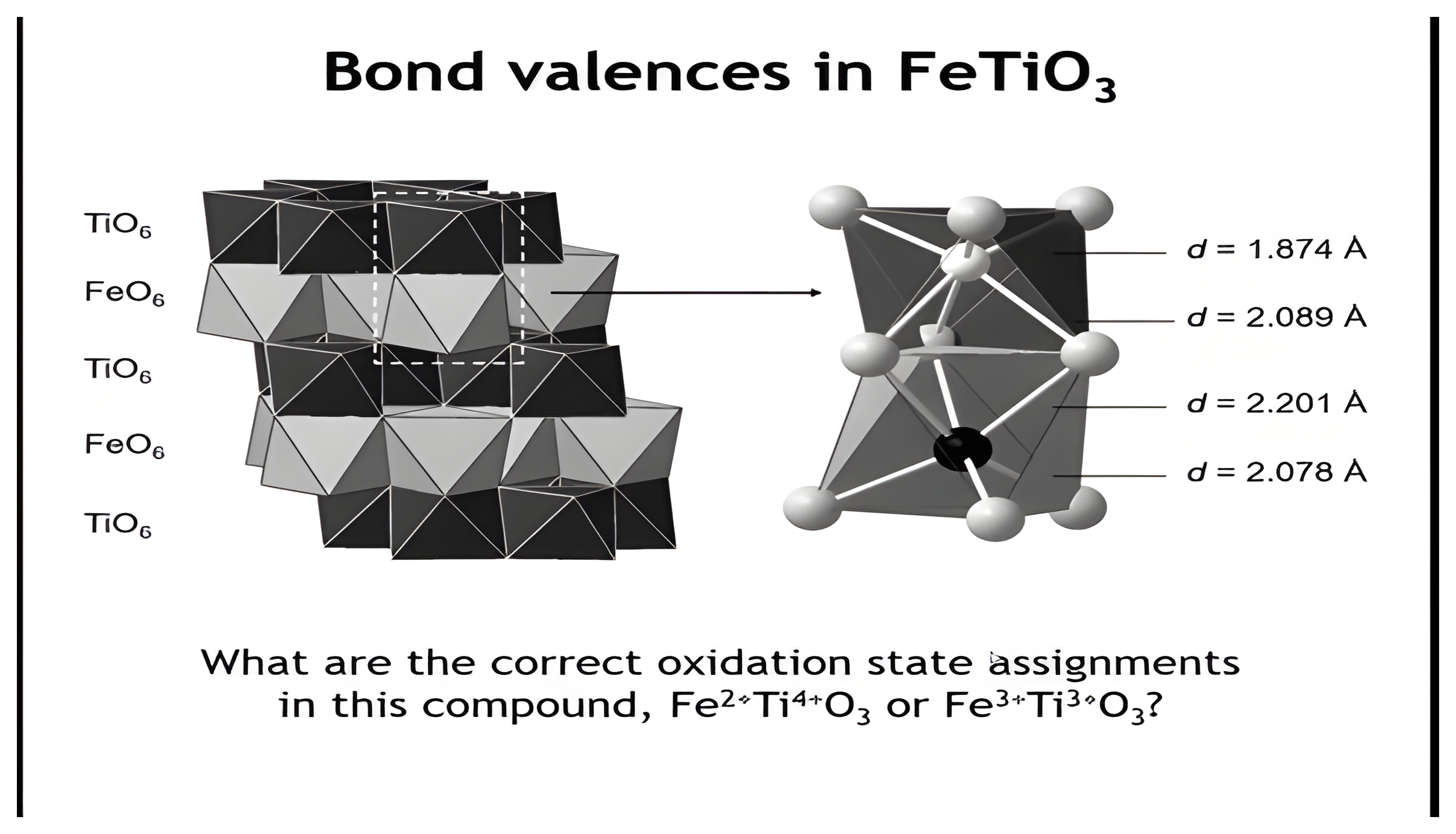
- Define bond valence and compute from distances: $s = \exp[(R_0 − R)/B]$ with $B = 0.37$; use tabulated $R_0$
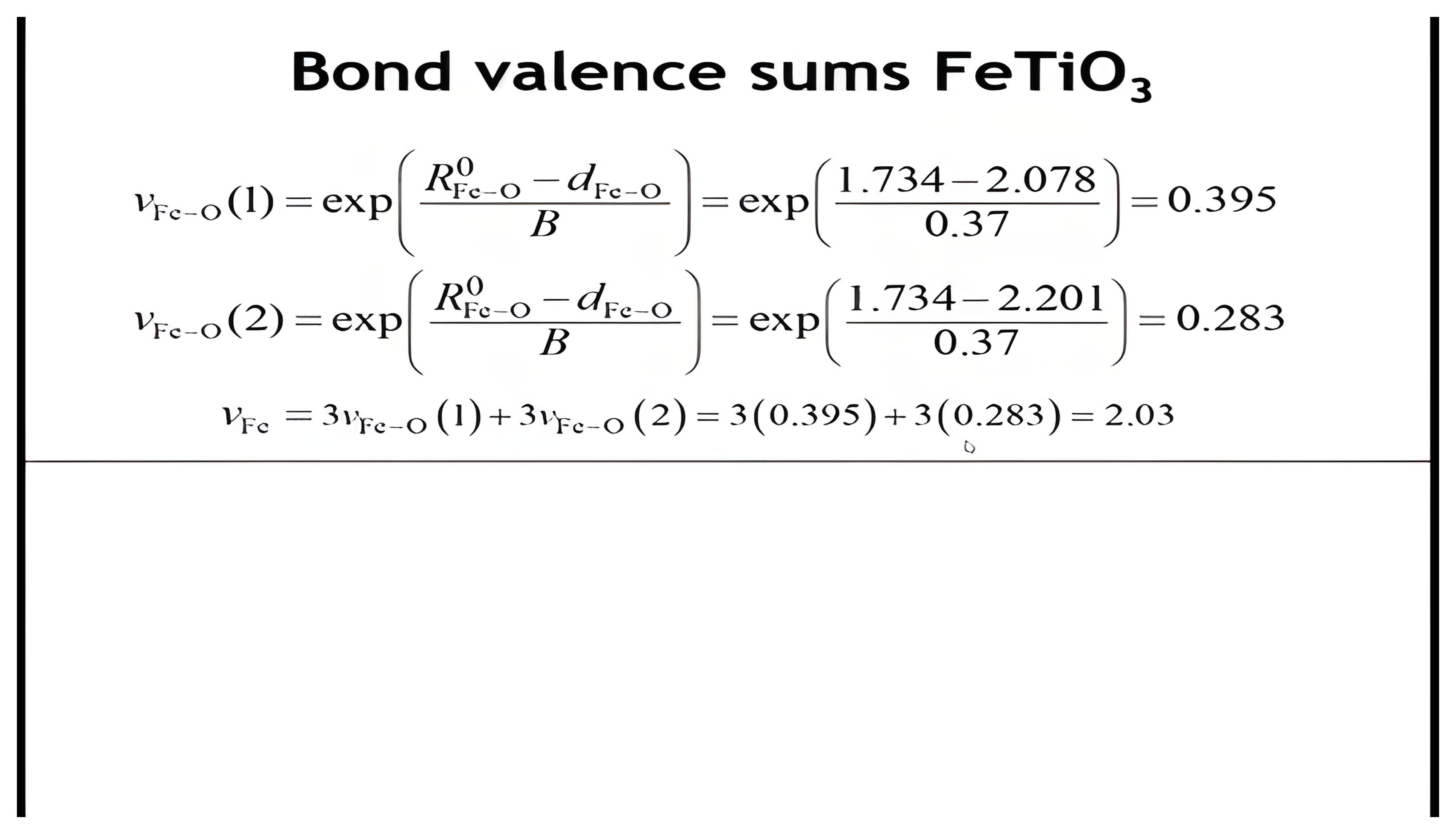
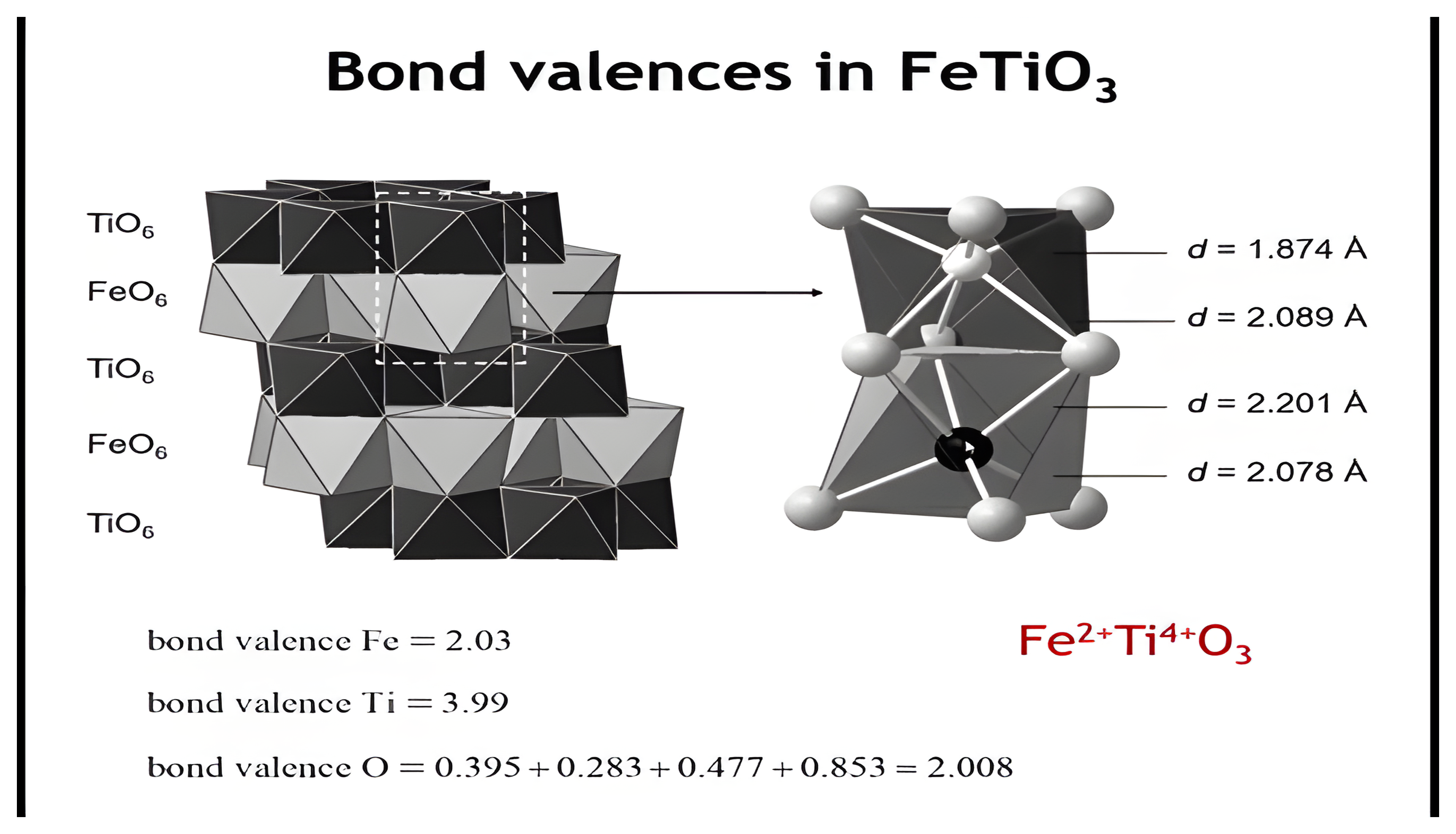
- Enforce the valence-sum rule $\sum s_i \approx$ oxidation state to assign oxidation states and validate structures
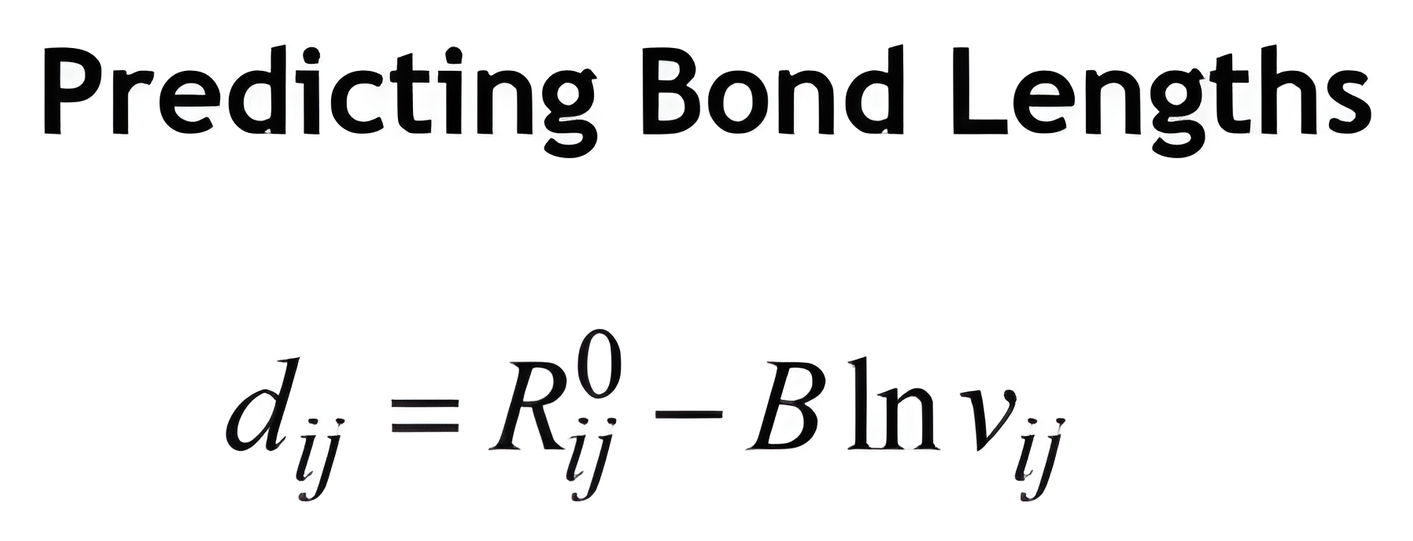
- Convert valence↔distance to predict/compare lengths: $R = R_0 − B \ln s$ (e.g., SrTiO₃, Cr⁶⁺O₄)
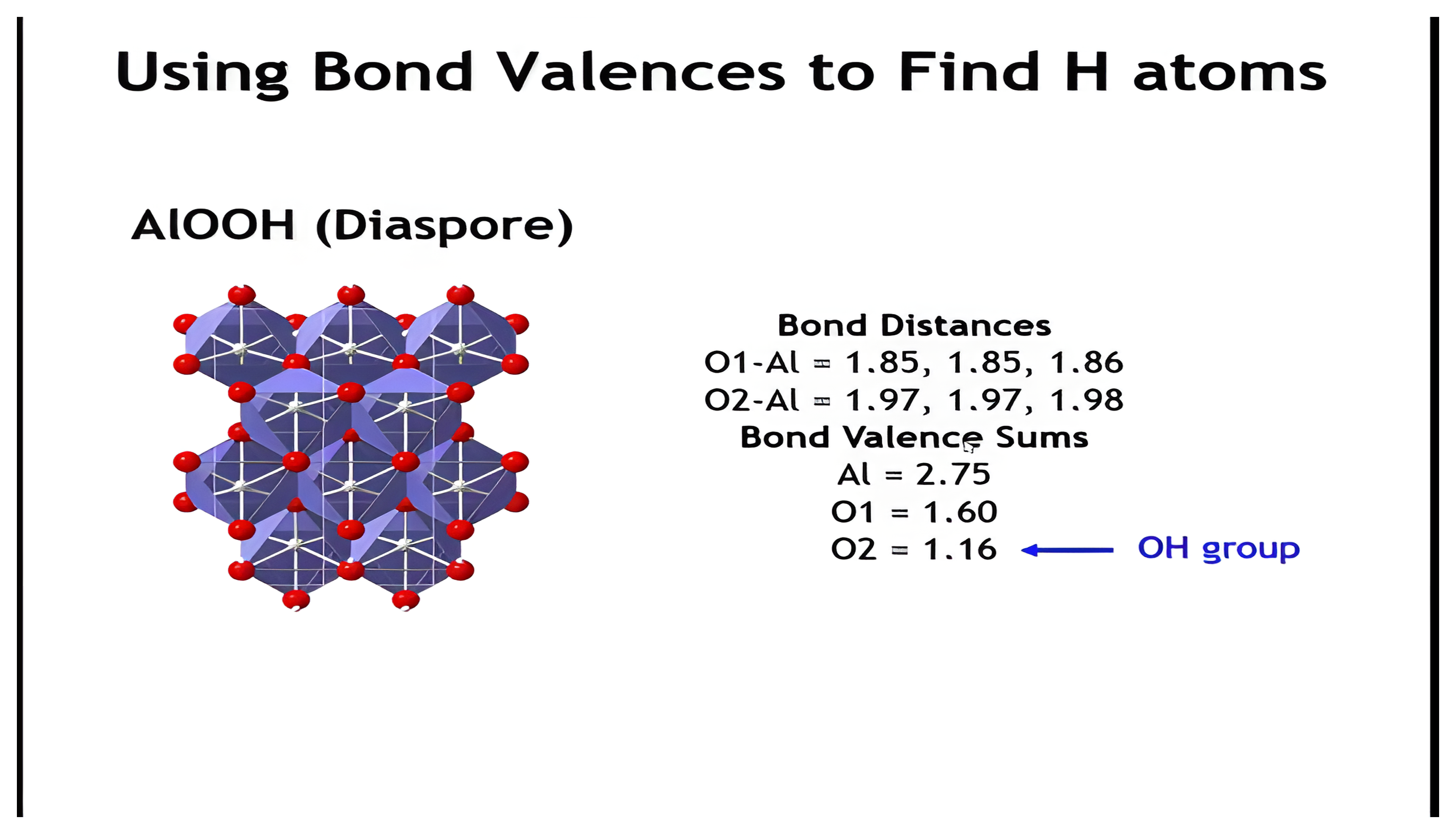
- Apply to distorted/mixed coordination and locate light atoms via valence deficits
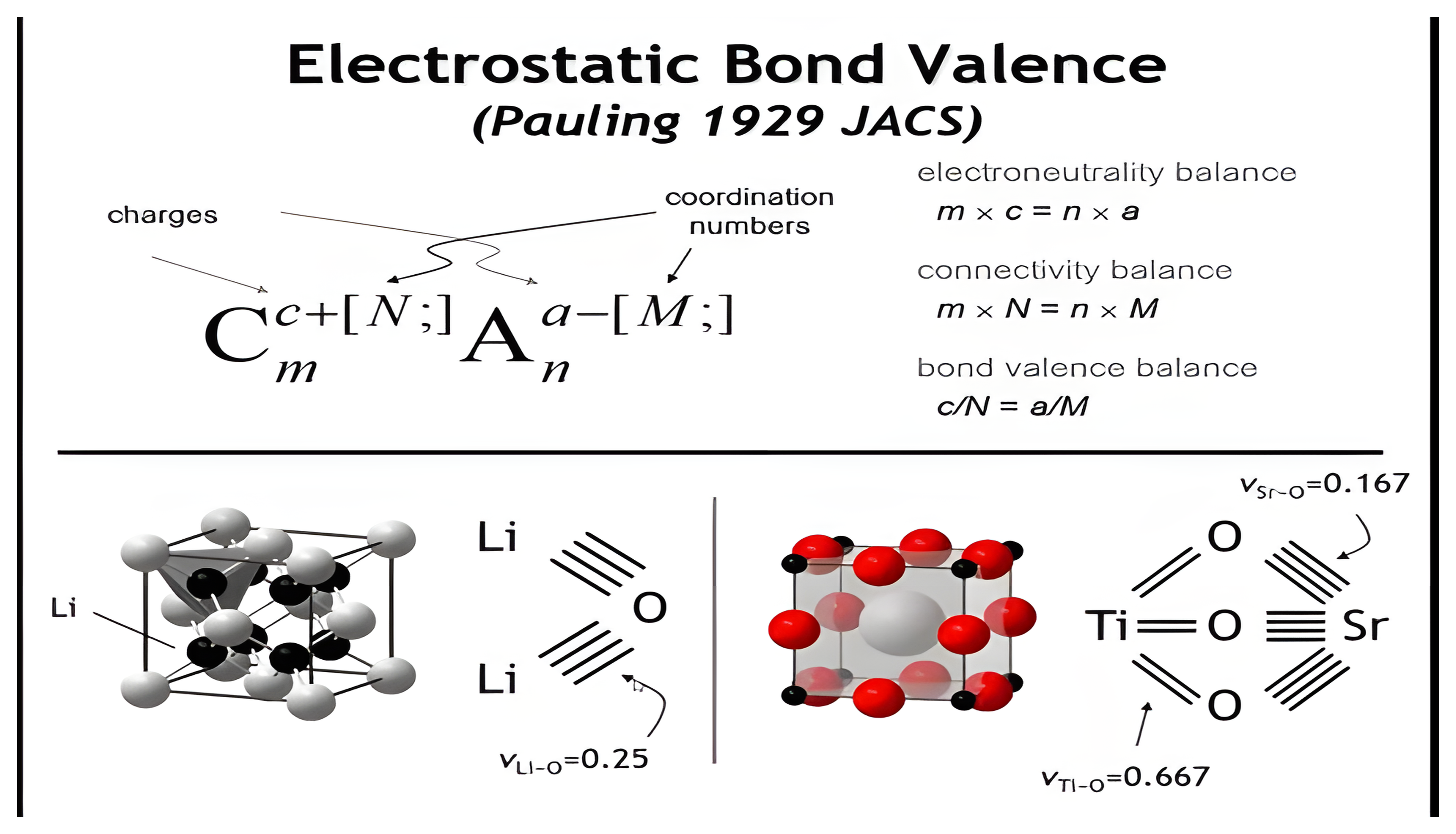
Electrostatic Bond Valence
Bond Order in Organic Molecules
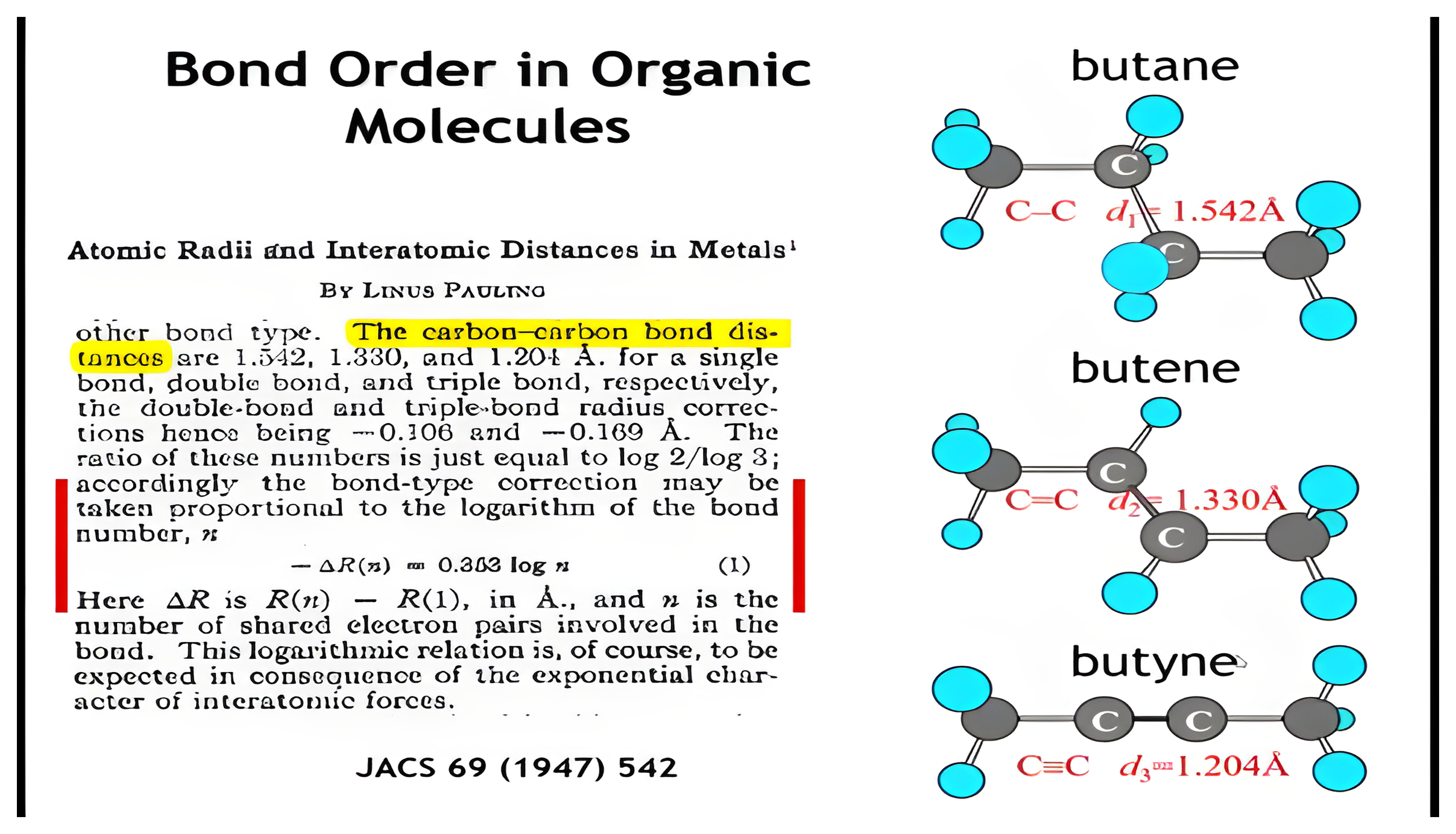
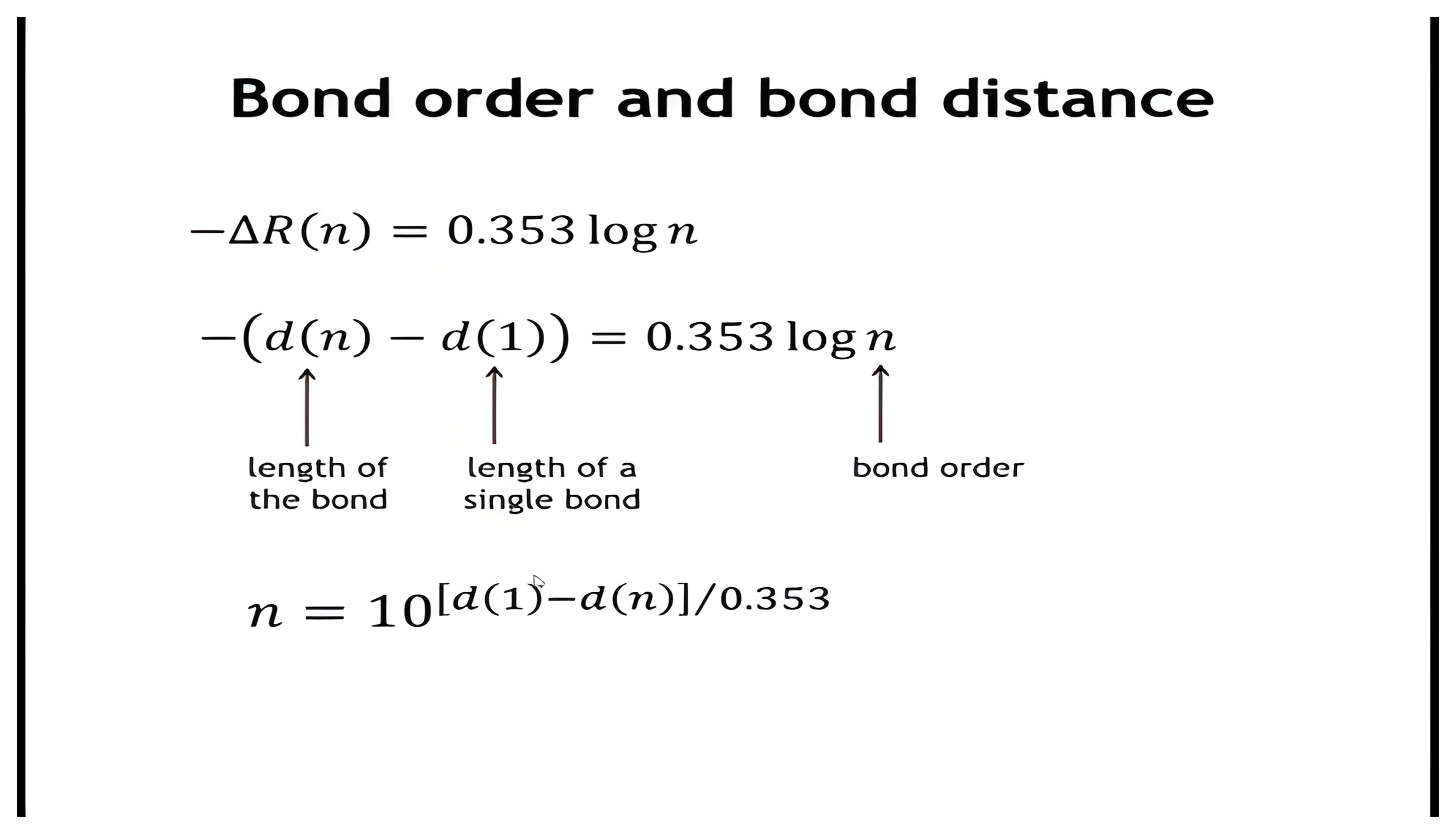
Bond Order and Bond Distance
Bond Valences, Quantitative
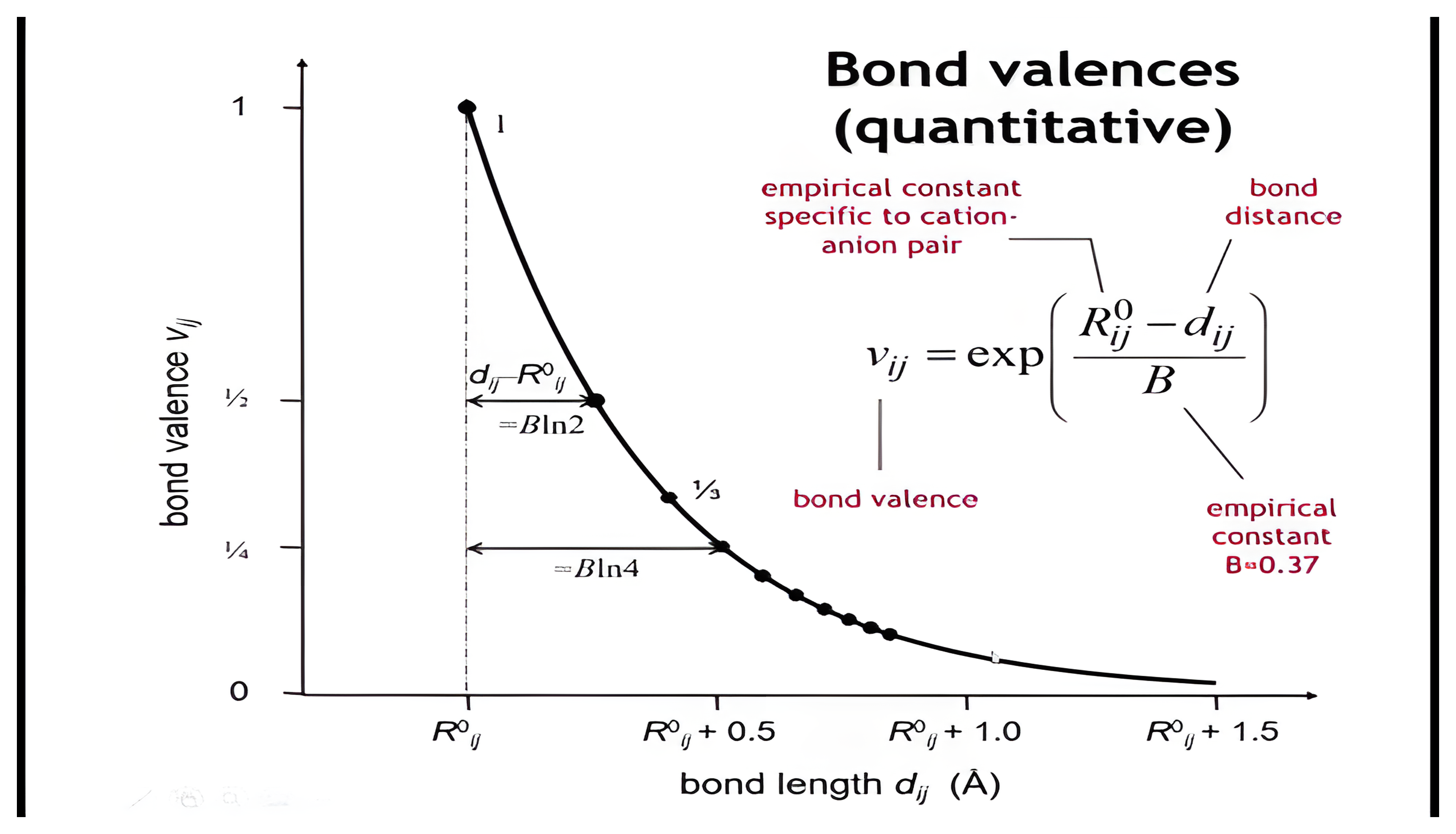
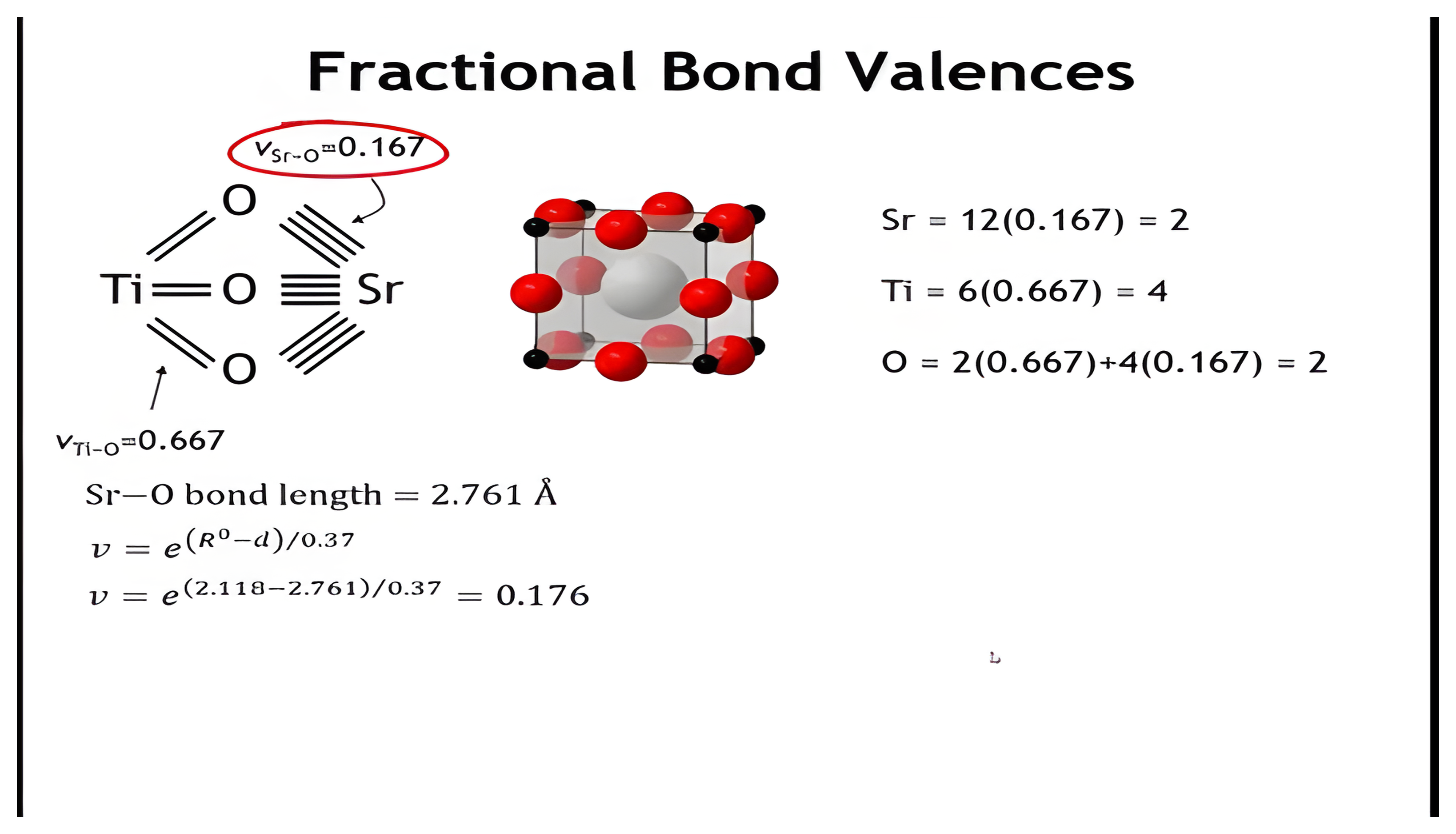
$v_{ij} = \exp\!\left[(R^{0}_{ij} - d_{ij})/B\right]$, $B = 0.37$ Å. Per Solid State Materials Chemistry, §5.4.
The Valence Sum Rule
Valence sum rule
$v_i = \sum_j v_{ij}$
The valence sum $v_i$ of an atom is equal to the sum of bond valences $v_{ij}$ around it
The valence sum of each atom, $v_i$, should be equal to the oxidation state of the atom
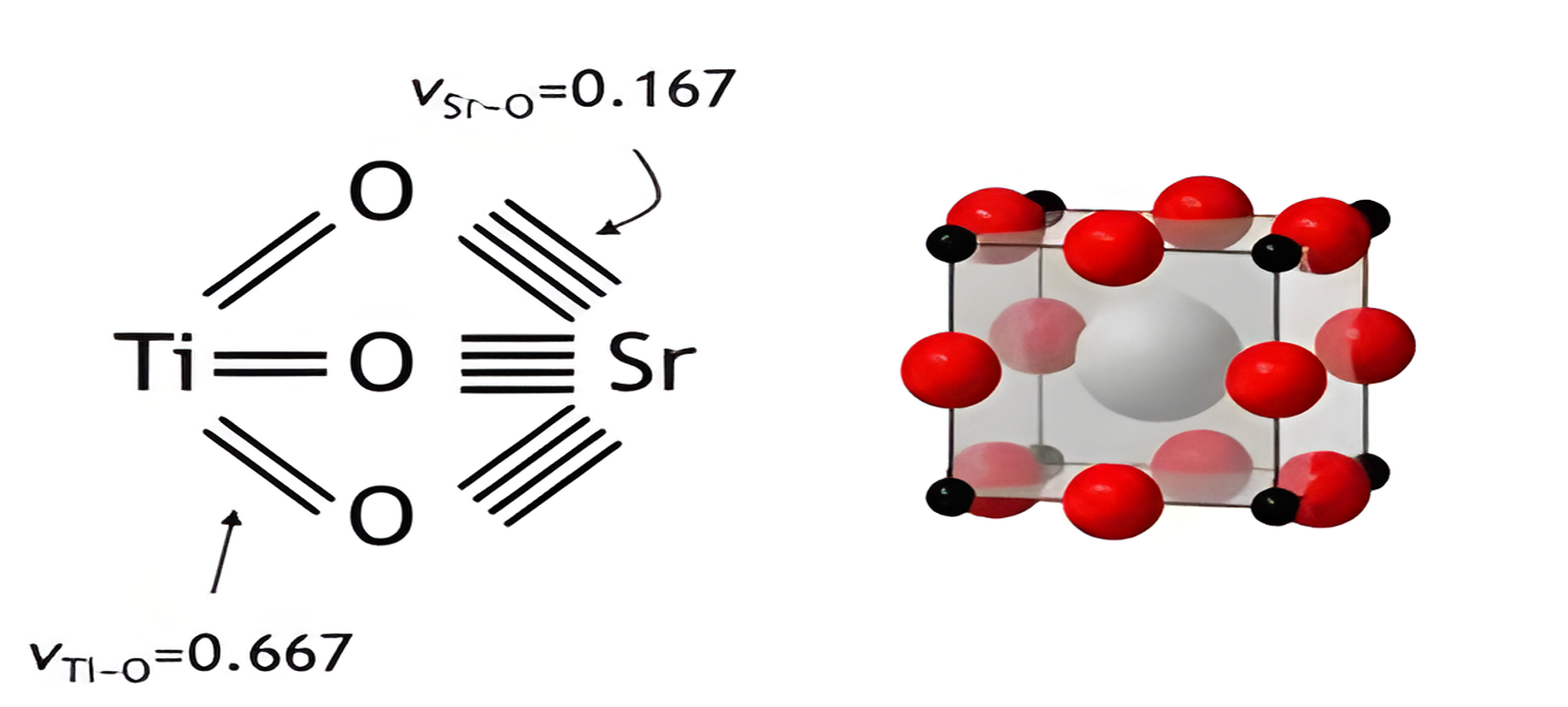
Sr = 12(0.167) = 2Ti = 6(0.667) = 4O = 2(0.667)+4(0.167) = 2
Fractional Bond Valences
Bond Valences in FeTiO₃
Bond Valence Sums in FeTiO₃
FeTiO₃: The Verdict
Using Bond Valences to Find H Atoms
Predicting Bond Lengths
Bond Valences Predictively: CrO₃
Bond Valences Predictively
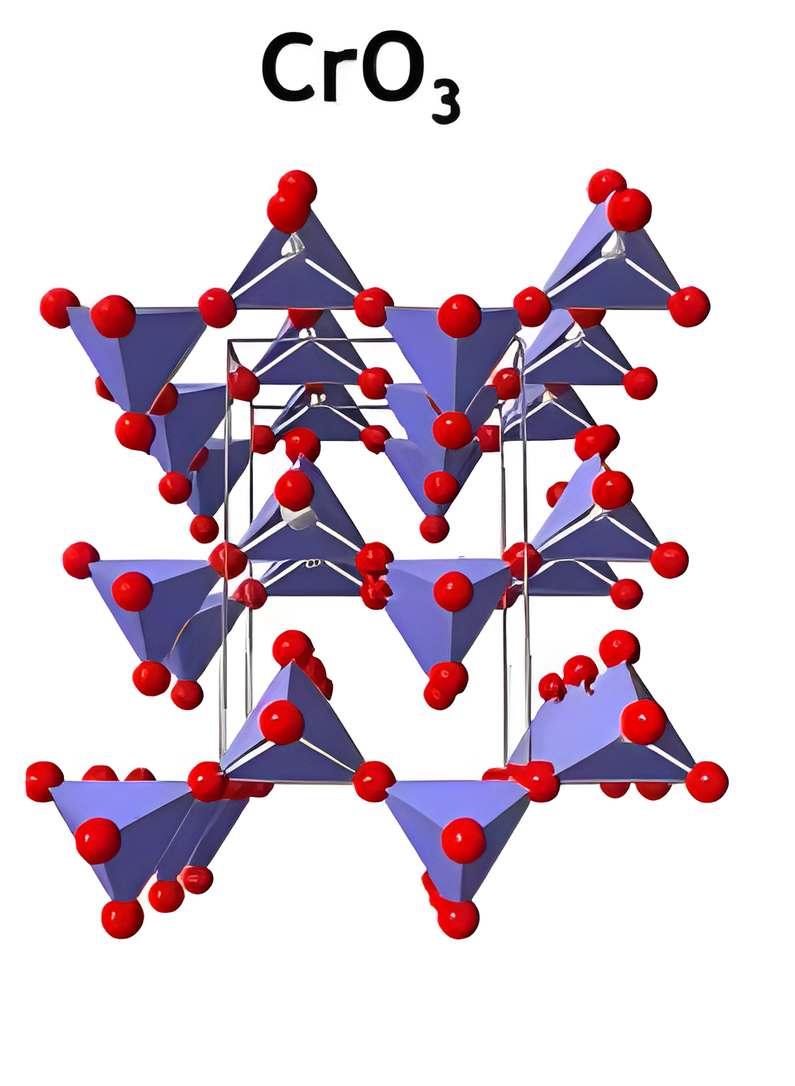
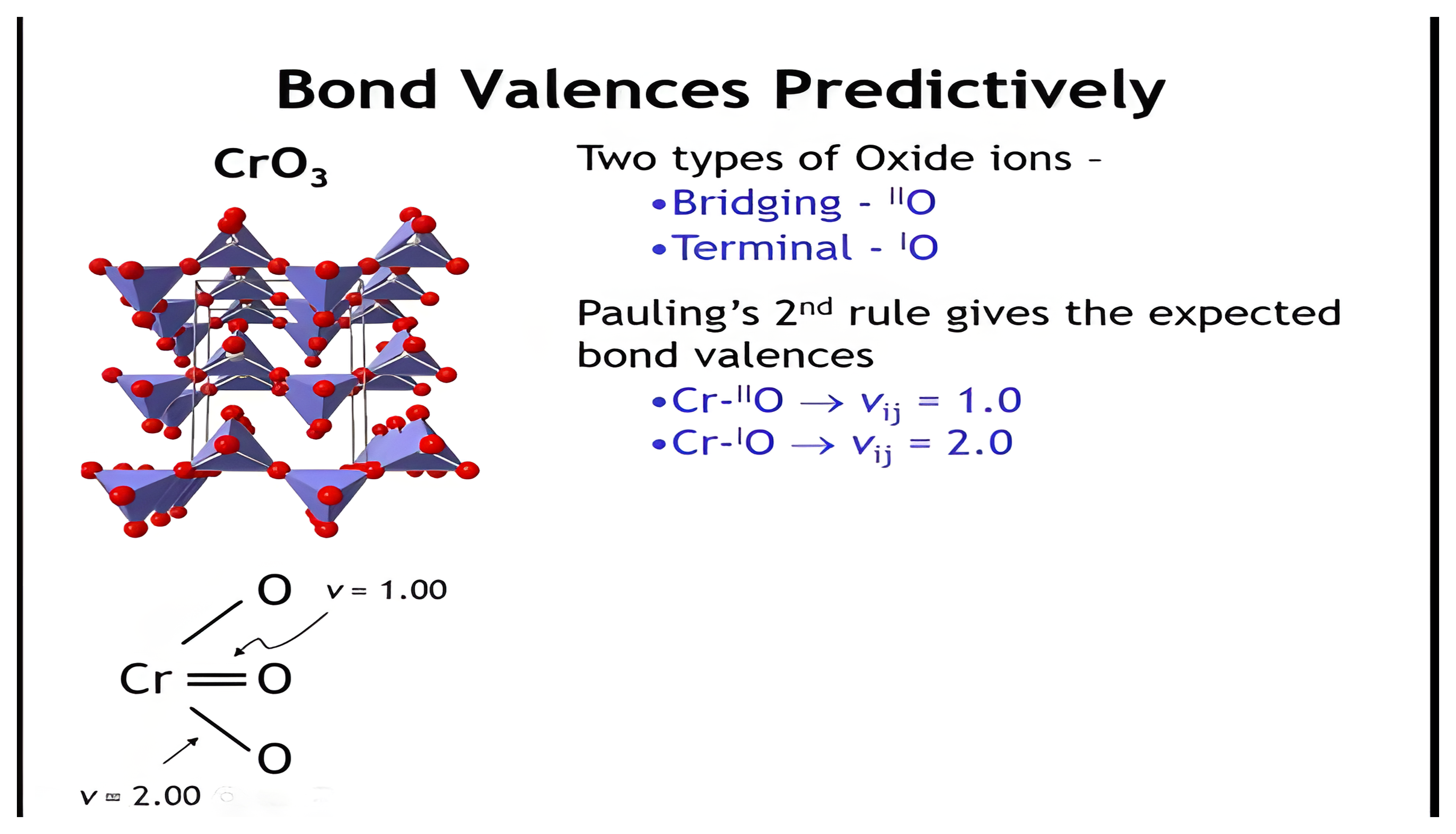
The structure of CrO₃ consists of infinite chains of corner connected tetrahedra.
(a) Use either a bond graph or a Niggli formula to determine the number of bonds to each chemically distinct atom.
(b) Use the bond valence balance to assign ideal valences to each type of bond.
(c) Given the Cr(VI)–O bond valence parameters R₀ = 1.79 Å and b = 0.37 Å estimate the Cr–O bond lengths in this compound.
CrO₃: The Worked Answer
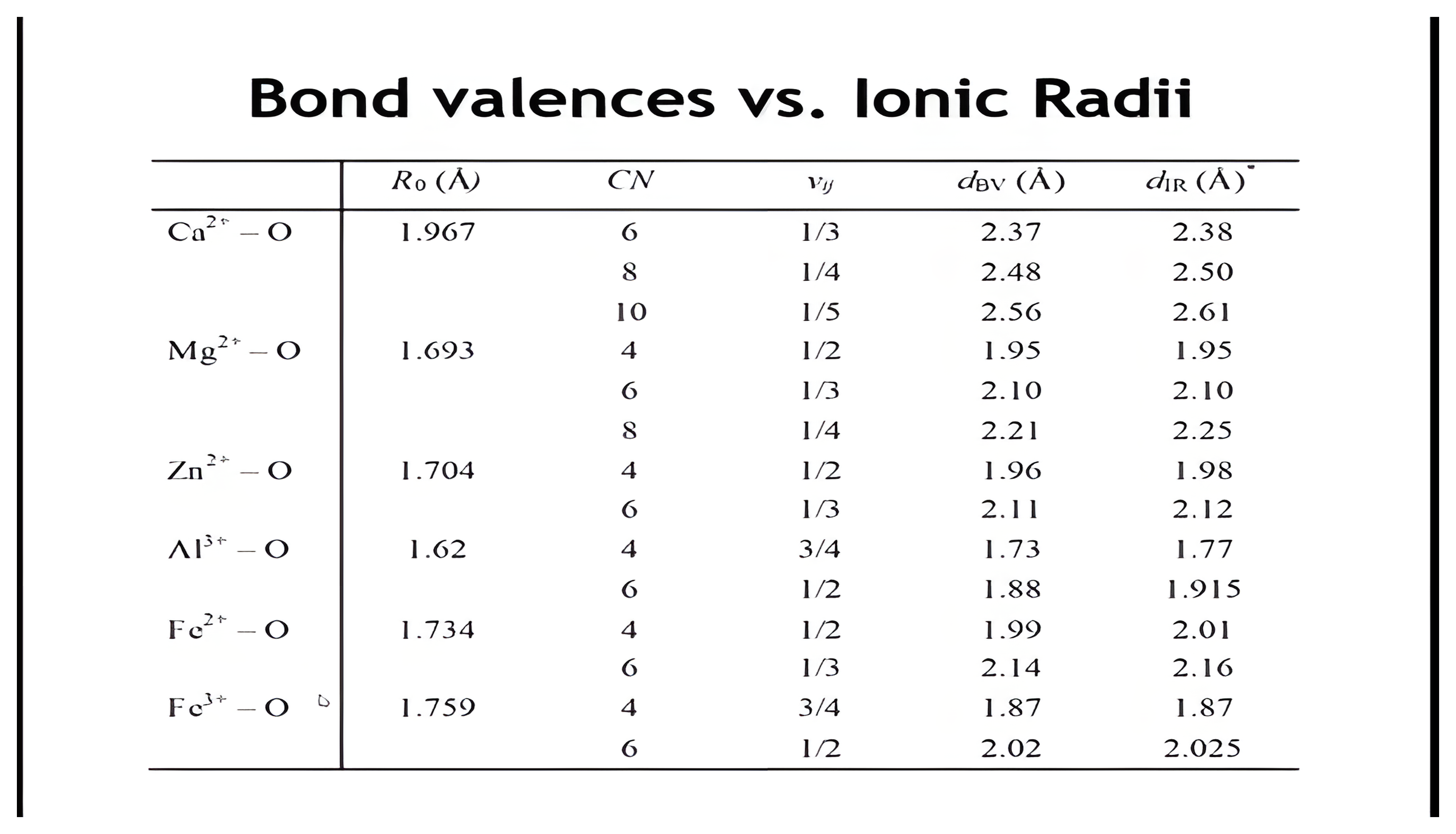
Bond Valences vs. Ionic Radii
Summary: The Bond Valence Method
Bond Valence Method — Summary
Core rule:
$s_{ij} = \exp[(R_0 − d_{ij})/b], \quad \sum s_{ij} = V_i$
Purpose:
Links bond lengths ↔ oxidation states; works with distorted structures.
Advantages:
- One $R_0$ per atom pair covers all coordination numbers.
- Handles mixed bond lengths; ionic radii cannot.
Uses:
- Verify oxidation states.
- Predict reasonable bond distances.
- Locate light atoms (e.g., H).
Practice questions
Work the Lecture 14 practice questions on spin states, the Jahn-Teller theorem, second-order Jahn-Teller distortions, and the bond valence method.
Open the Lecture 14 practice questions
Every question carries a worked explanation, so you can check your reasoning as you go.