CHEM 548: Materials Chemistry
Lecture 12: Atomic Orbitals and Molecular Orbital Theory
Reading: Woodward, Karen, Evans, and Vogt, Solid State Materials Chemistry
Ch. 5, §§5.2–5.3
Learning Objectives: Atomic Orbitals
Atomic Orbitals
- Recognize the wave nature of electrons and the structure of atomic orbitals.
- Identify and interpret the four quantum numbers (n, l, ml, ms).
- Apply Pauli’s exclusion principle and Hund’s rule to electron configurations.
- Distinguish between radial and angular nodes.
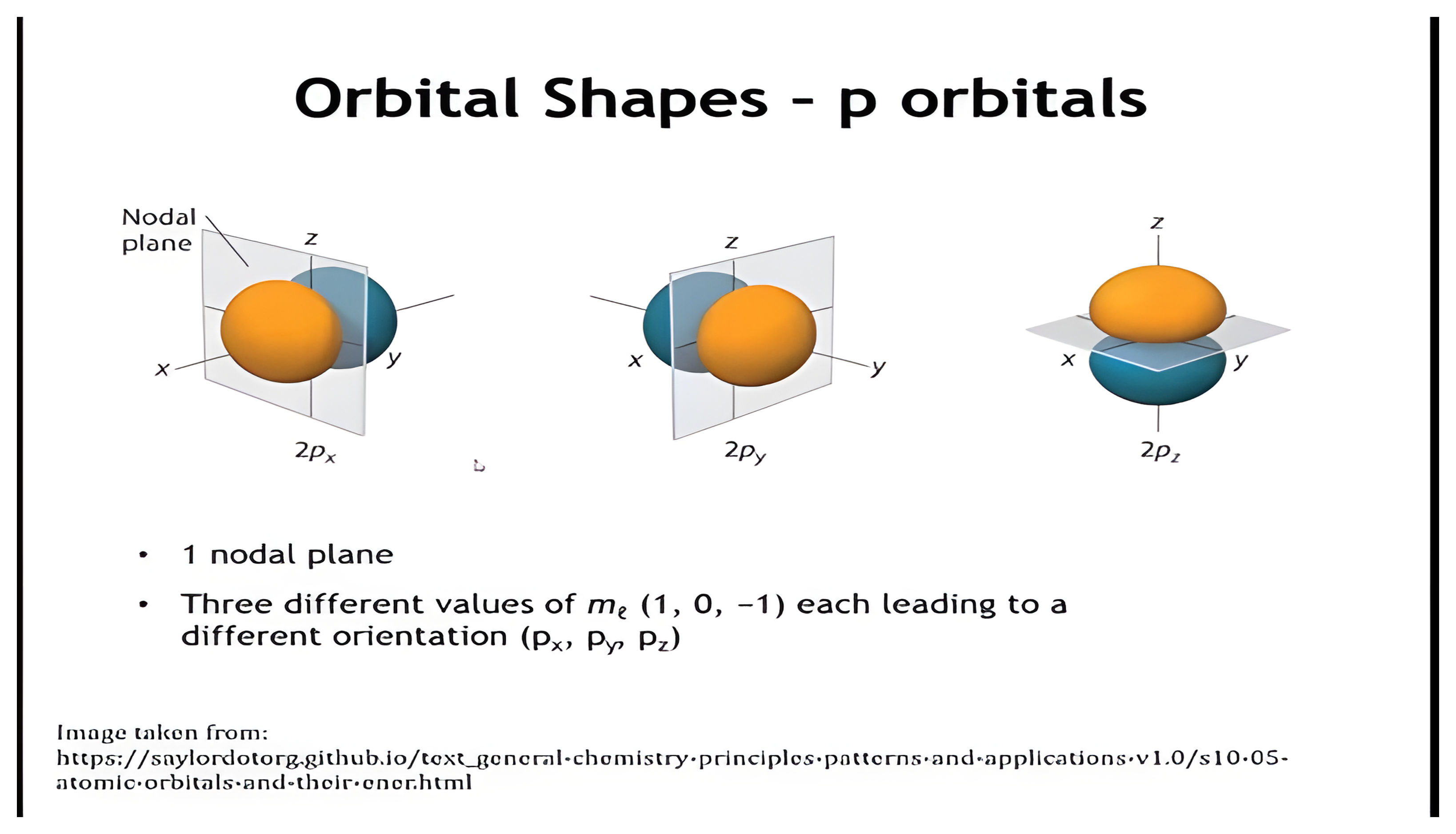
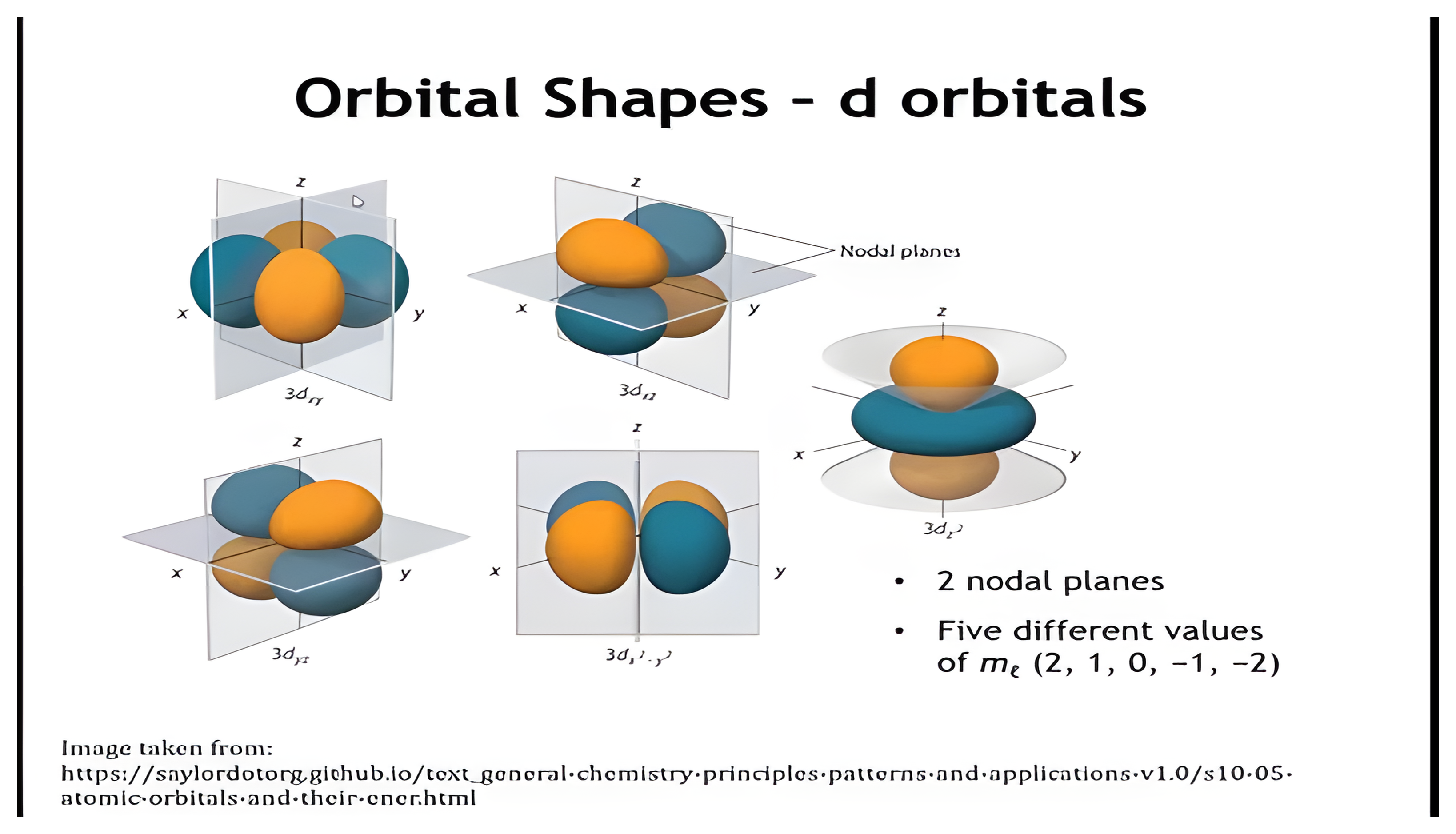
- Relate orbital type (s, p, d, f) to shape, orientation, and nodal structure.
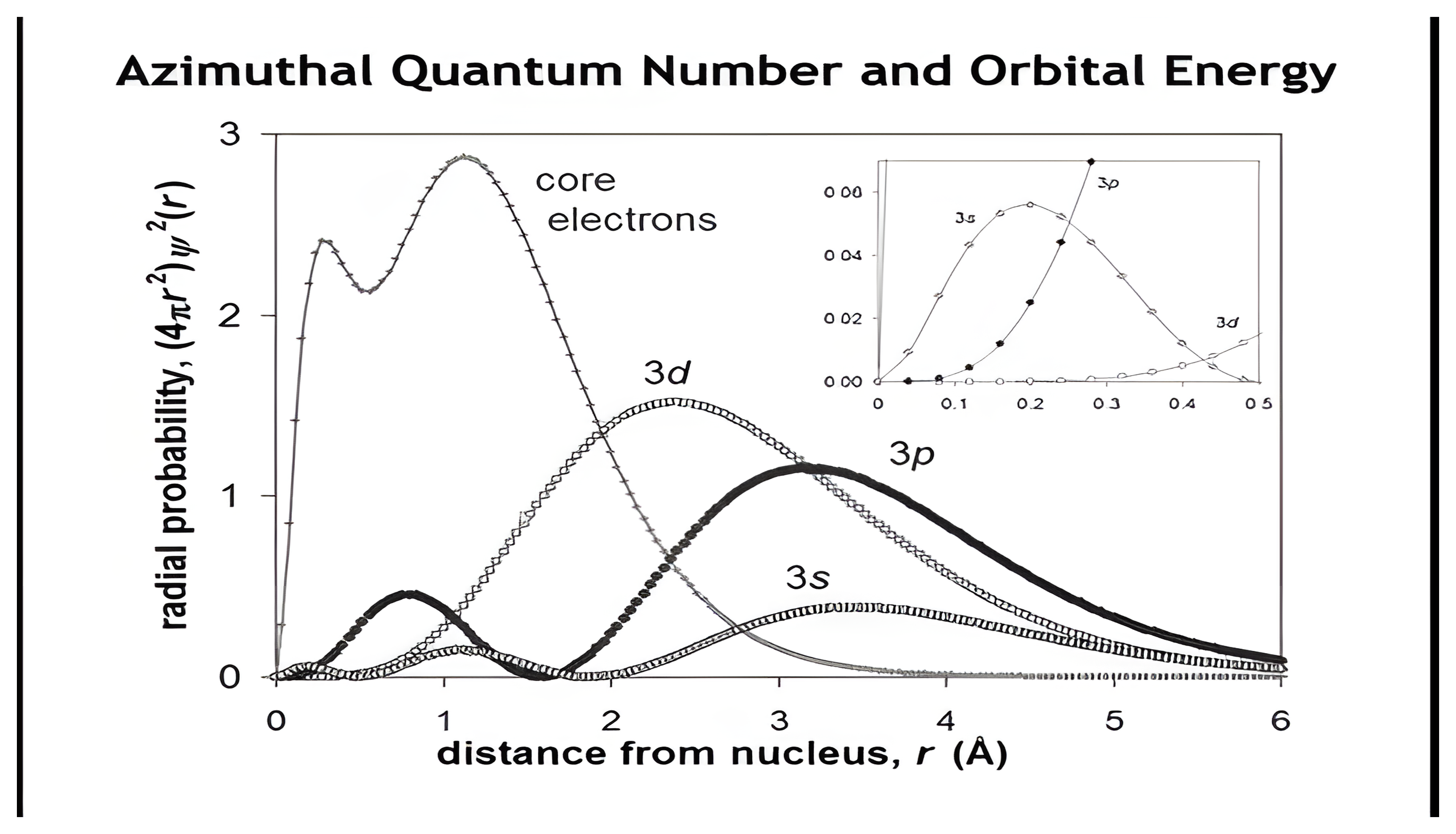
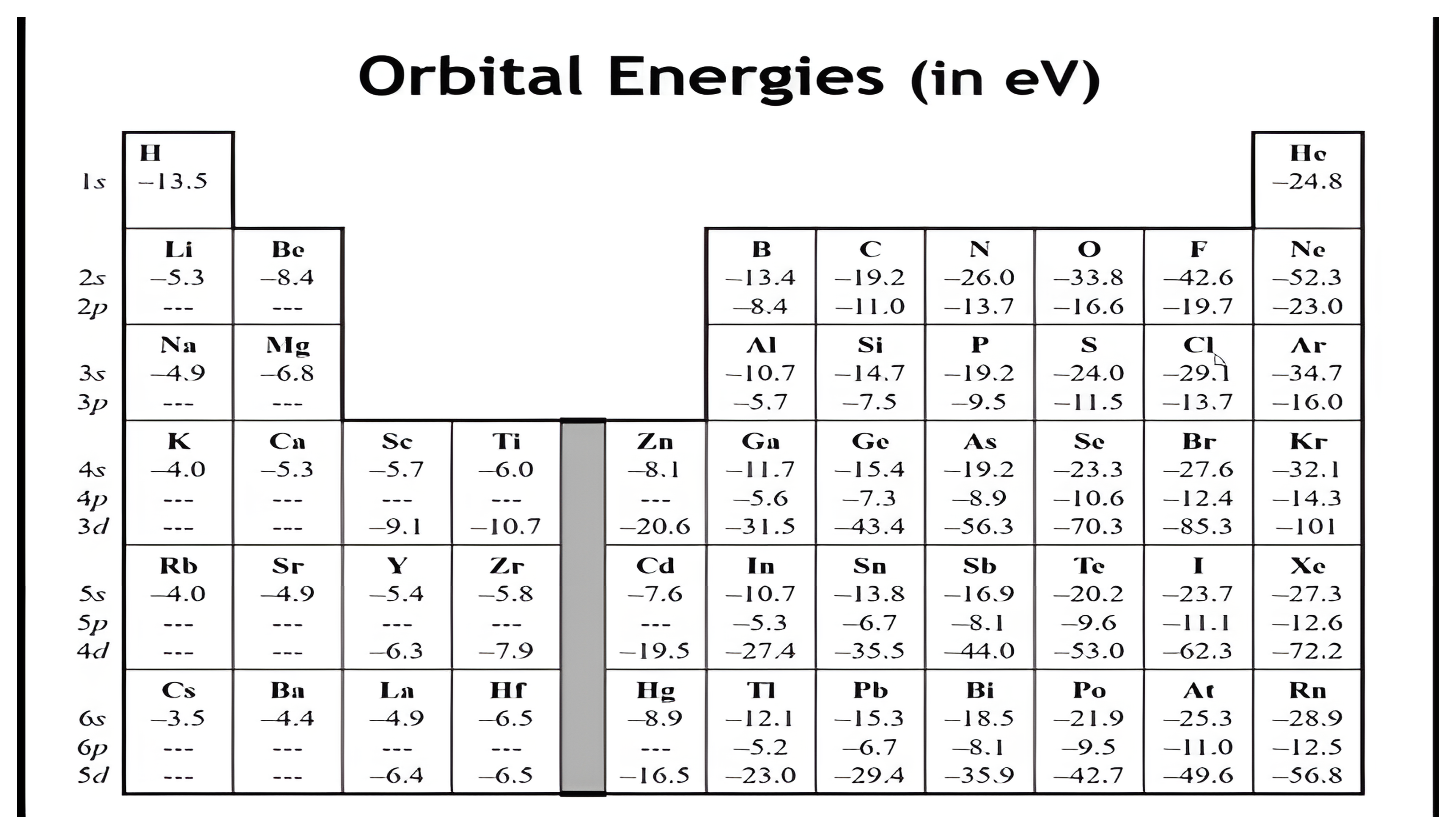
- Explain how orbital energies vary with n, l, and atomic number.
Orbital Wavefunctions
$\Psi_{n,l,m_l} = R_{n,l}(r)\,Y_{l,m_l}(\theta,\varphi)$
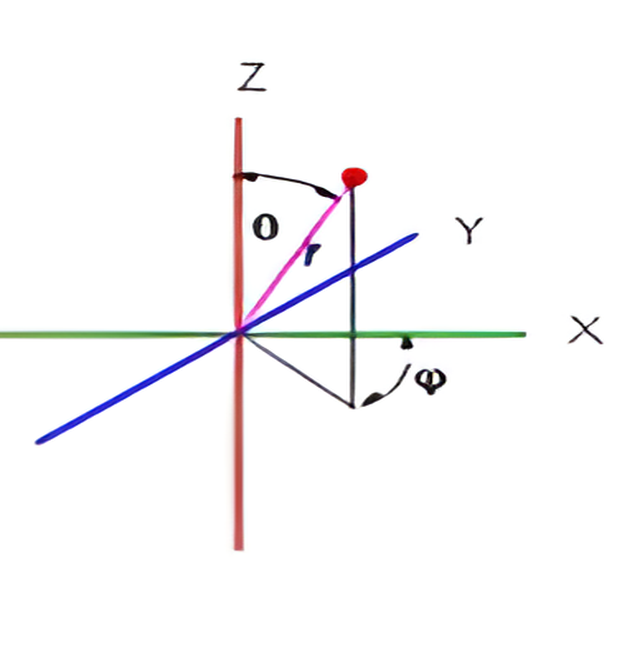
| Radial part | Angular part |
|---|---|
| Defines the size of the orbital | Defines the shape of the orbital |
Quantum Numbers
- Principle quantum # (n = 1,2,3,…)
- Largely defines the size and energy of the orbital
- Orbital angular momentum quantum # (ℓ = 0, 1, … n−1)
- Defines the shape of the orbital
- Magnetic quantum # (mℓ = −ℓ to ℓ)
- Defines the orientation of the orbital
- Spin quantum # (ms = +½, −½)
- Defines the spin of the electron
Quantum Mechanics and Orbitals
- Pauli Exclusion Principle
- No two electrons can have the same set of quantum numbers, this limits each orbital to holding two electrons
- Hund’s 1st Rule
- For degenerate orbitals the lowest energy configuration maximizes the electron spin
- Nodes
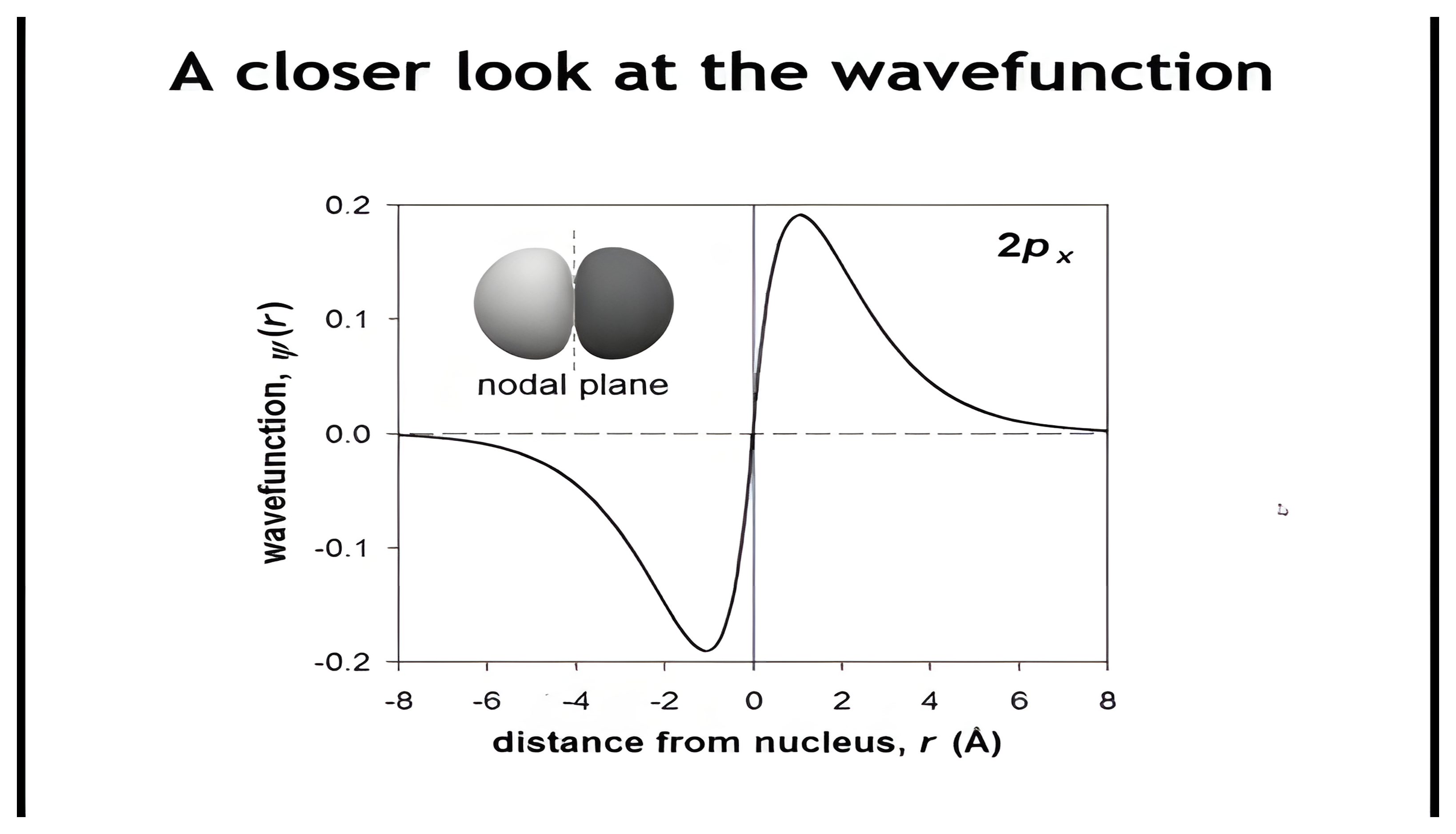
- A node is a place where the wavefunction changes sign
- The value of the wavefunction is 0 at a node
- The probability density is 0 at a node
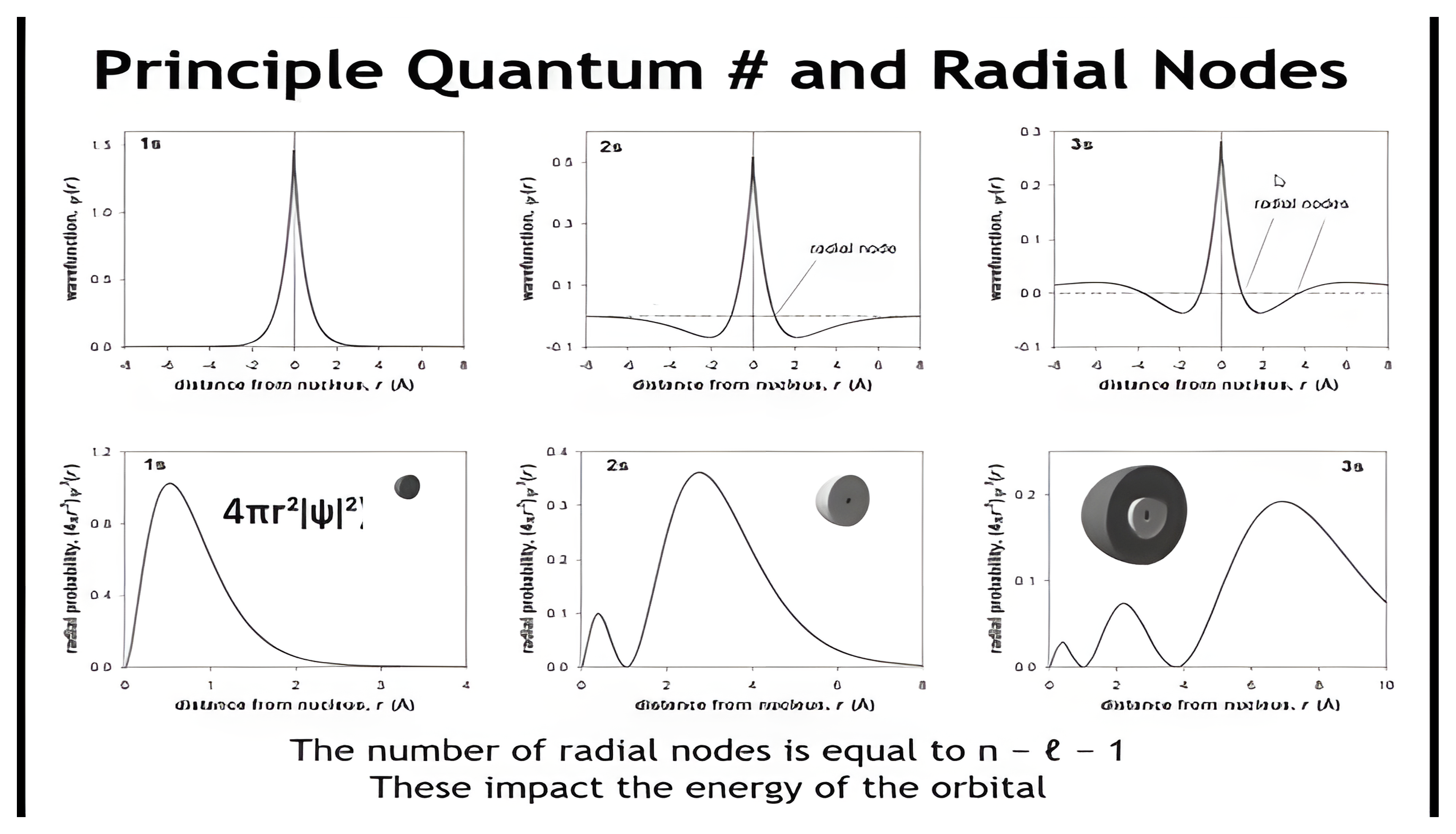
- Radial nodes, R = 0
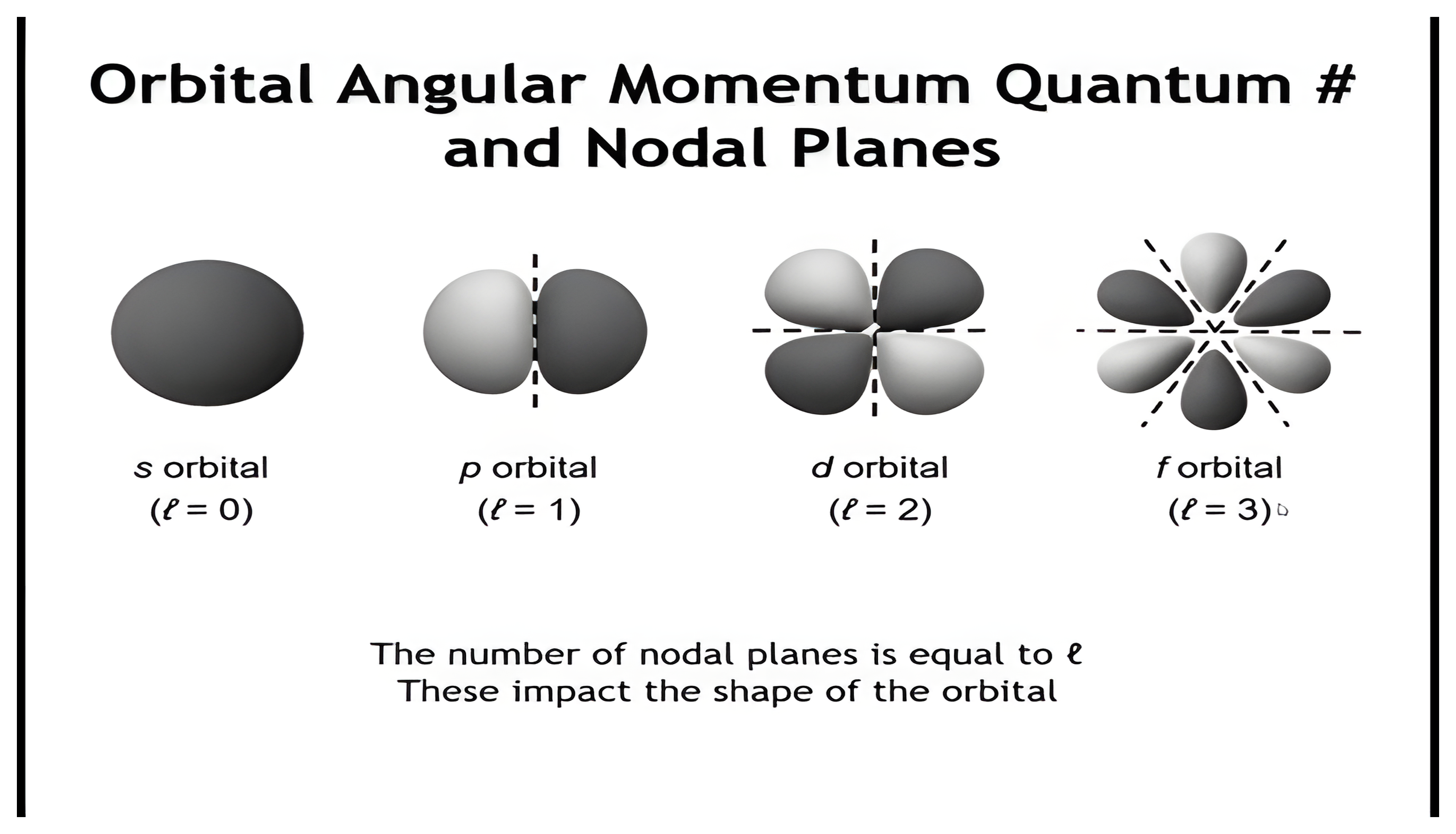
- Nodal planes, Y = 0
Principal Quantum Number and Radial Nodes
Angular Momentum and Nodal Planes
A Closer Look at the Wavefunction
Orbital Shapes: p Orbitals
Orbital Shapes: d Orbitals
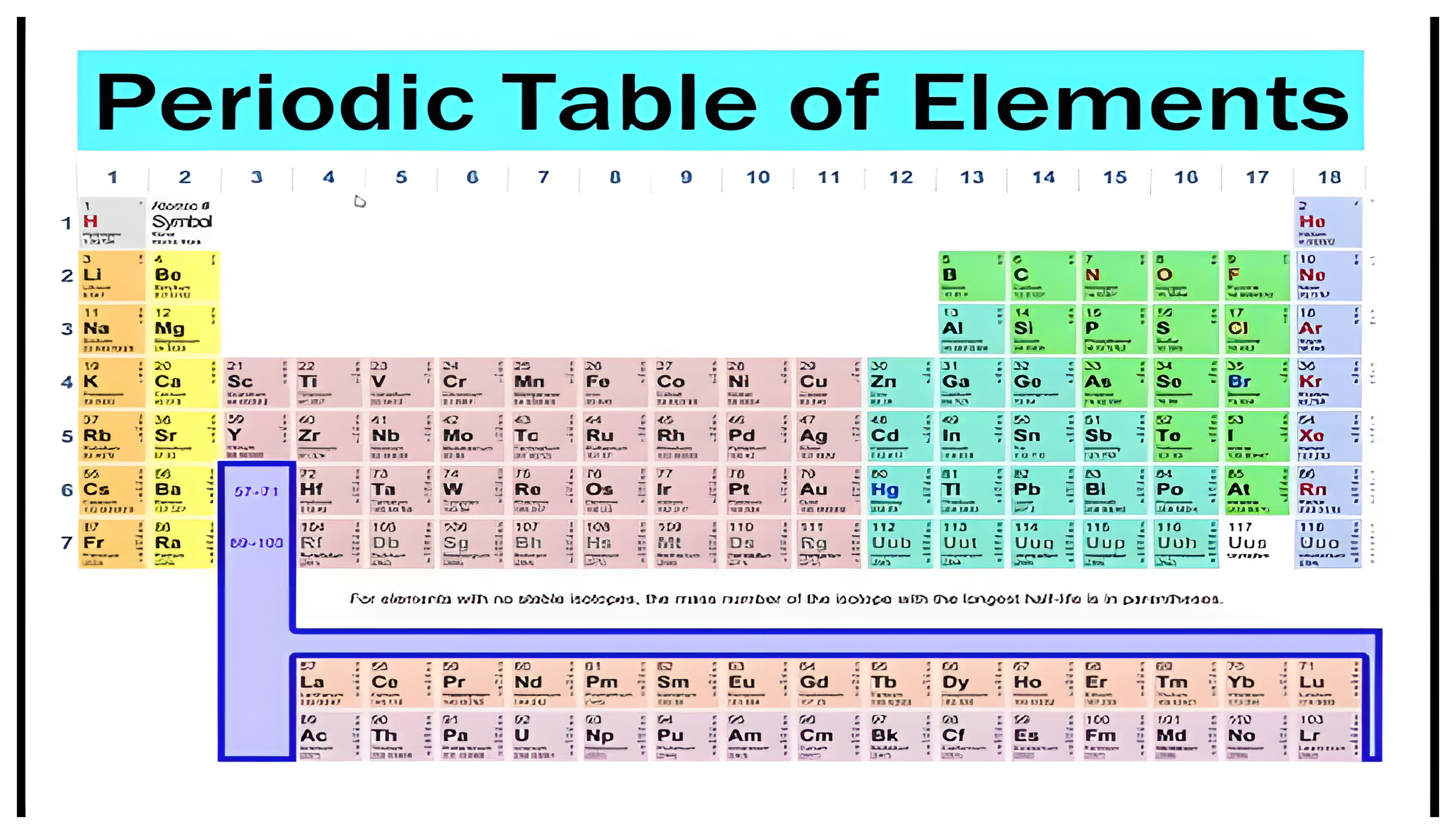
Orbitals and the Periodic Table
Azimuthal Quantum Number and Orbital Energy
Orbital Energies
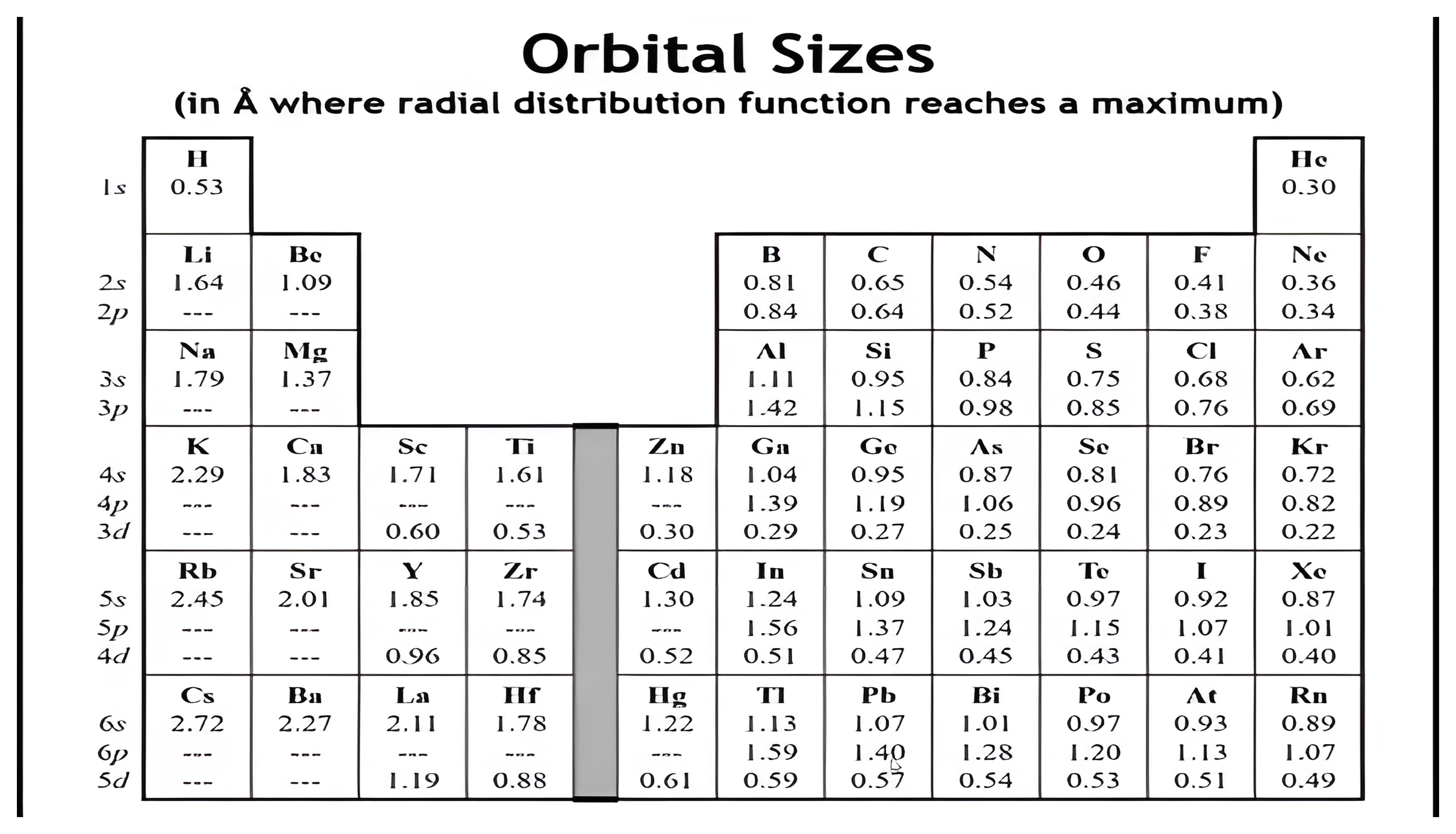
Orbital Sizes
Summary: Atomic Orbitals
Summary
- Electrons behave as standing waves described by wavefunctions (ψ).
- Wavefunctions separate into radial (distance-dependent) and angular (direction-dependent) parts.
- Each electron is defined by four quantum numbers (n, l, ml, ms).
- Nodes occur where ψ = 0:
- Radial nodes = n − l − 1
- Angular nodes = l
- Orbital types:
- s (spherical), p (two lobes), d (four lobes), f (complex, six lobes).
- Pauli Exclusion and Hund’s Rule determine electron configurations.
- Orbital energy depends on n, l, and electron shielding.
- Relativistic effects stabilize 6s orbitals in heavy elements, shaping their oxidation states.
- Orbital sizes and energies explain periodic trends and bonding behavior.
Check Your Understanding: Nodes and Quantum Numbers

Check Your Understanding: 4s versus 3d Energies

Check Your Understanding: The Inert-Pair Effect

Check Your Understanding: π Bonds in the Second Period

Learning Objectives: Molecular Orbital Theory
Molecular Orbital Theory
- Explain how atomic orbitals combine to form molecular orbitals.
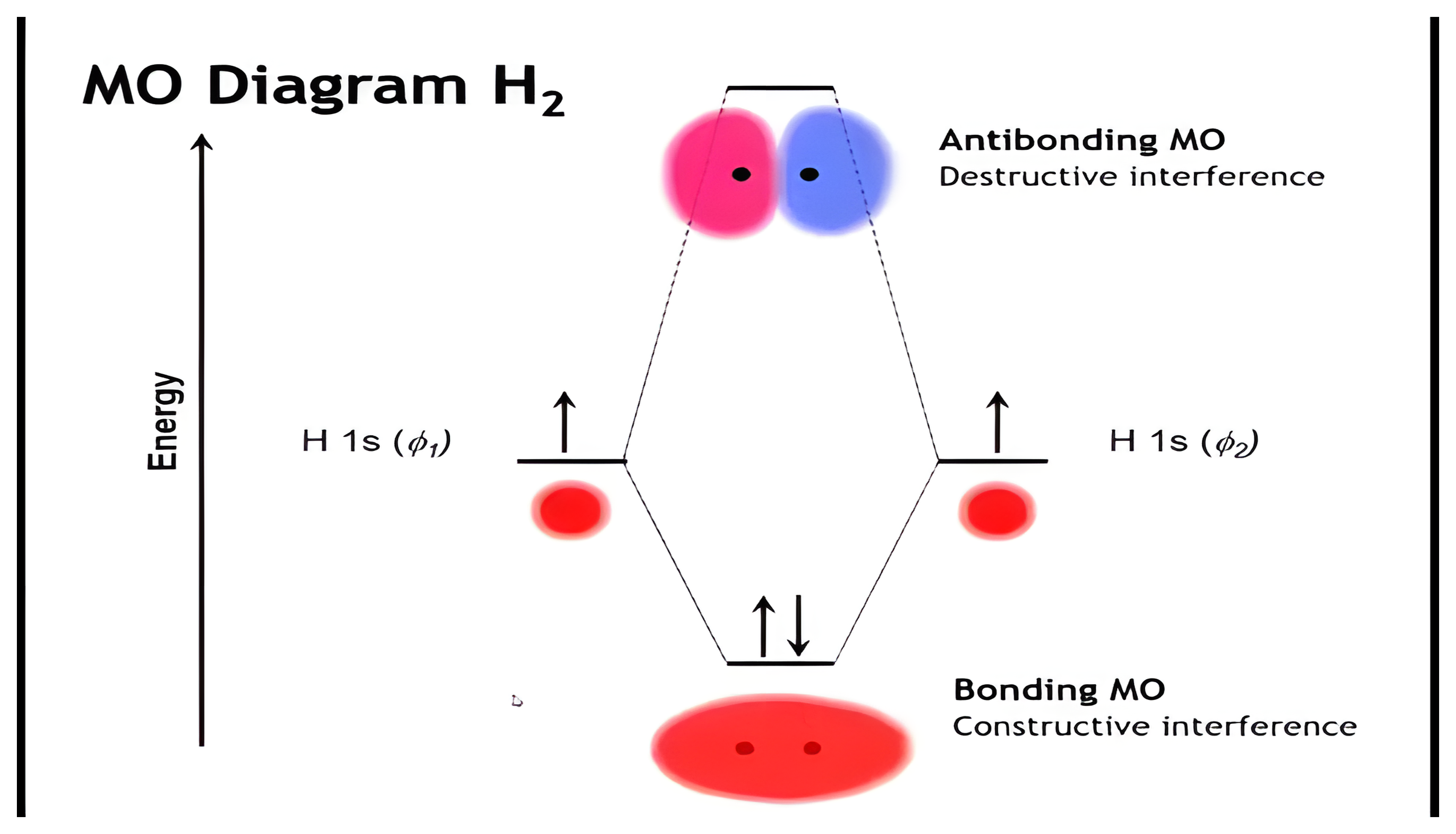
- Distinguish between bonding, antibonding, and nonbonding orbitals based on constructive and destructive interference.
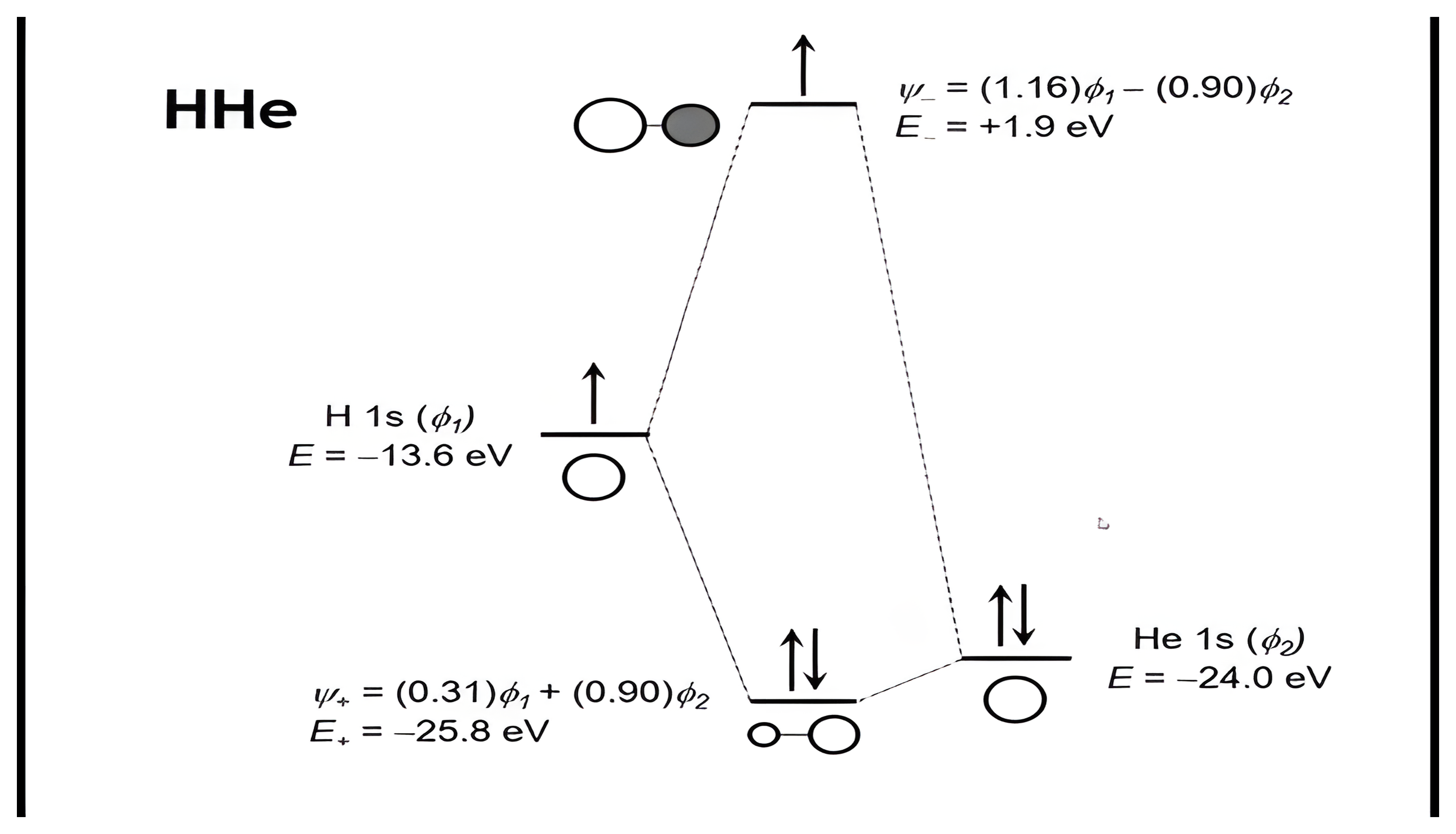
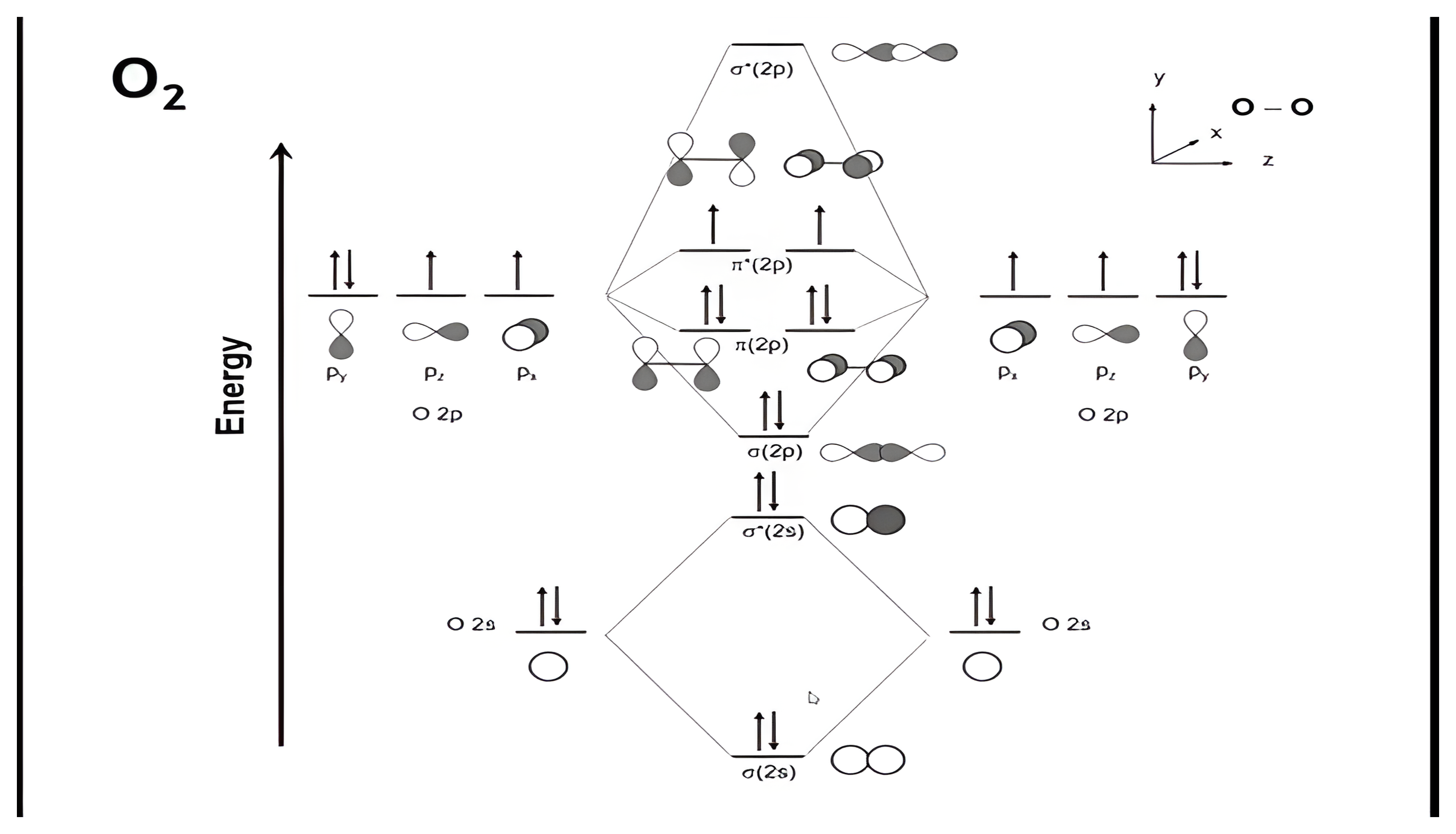
- Interpret simple MO diagrams (H₂, HeH⁺, O₂) and relate orbital overlap to bond order and stability.
- Describe how orbital energy differences influence covalent, polar covalent, and ionic bonding character.
- Understand σ vs. π interactions and how orbital symmetry governs overlap strength.
- Recognize s–p mixing and its effect on molecular orbital energy ordering.
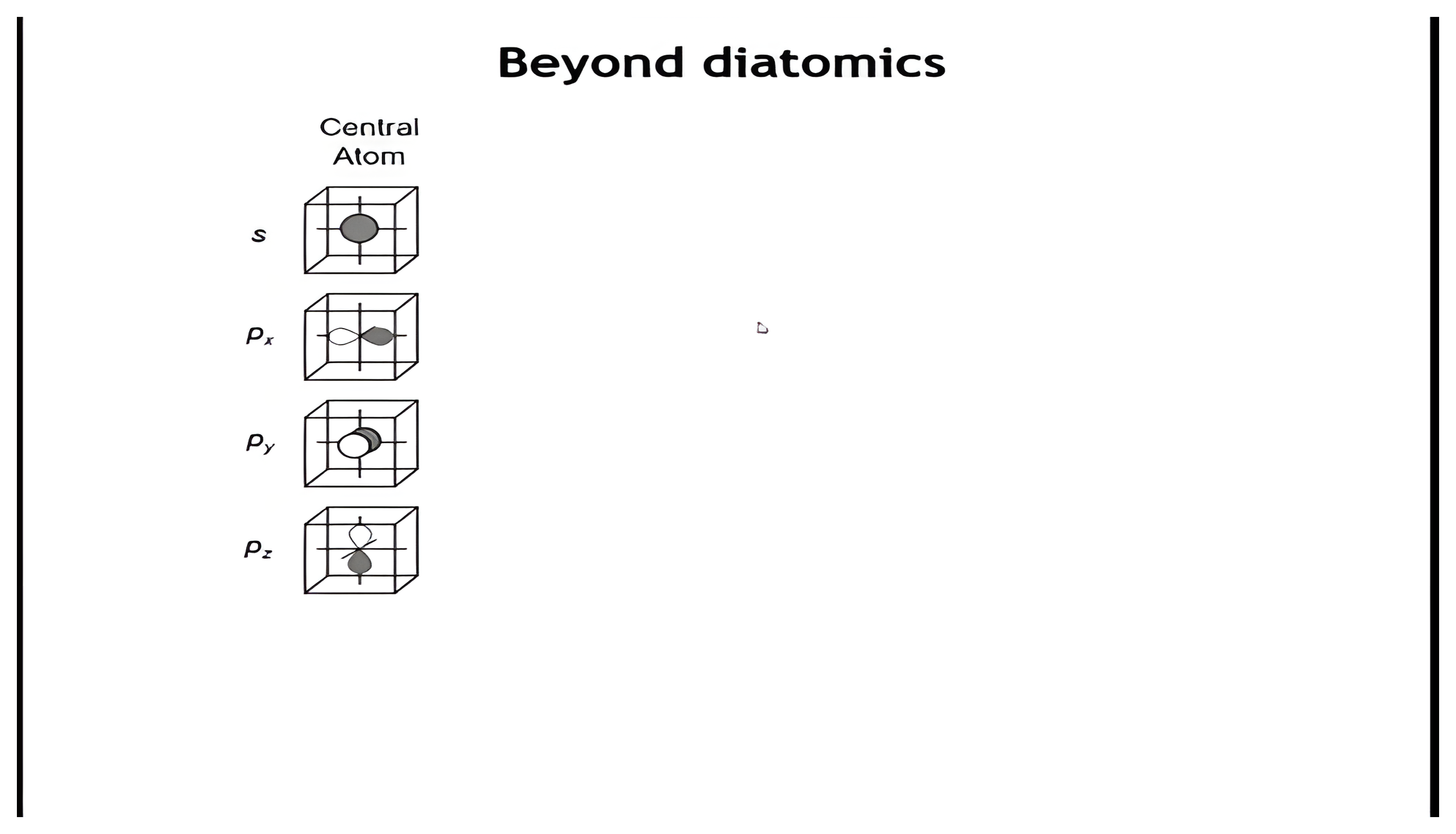
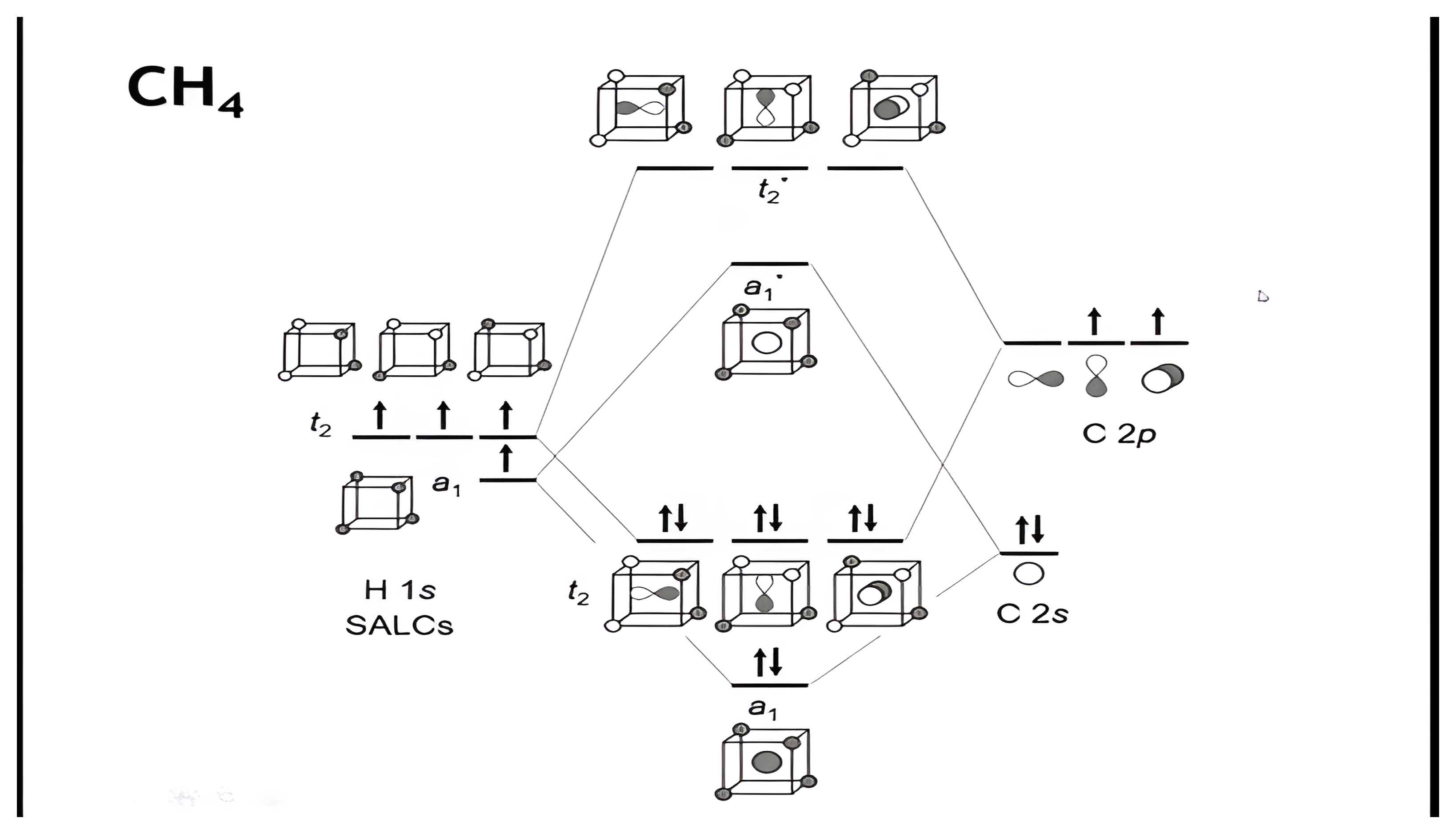
- Apply the concept of symmetry-adapted linear combinations (SALCs) to polyatomic molecules (e.g., BeH₂, CH₄).
- Define HOMO and LUMO and explain their importance in determining chemical reactivity.
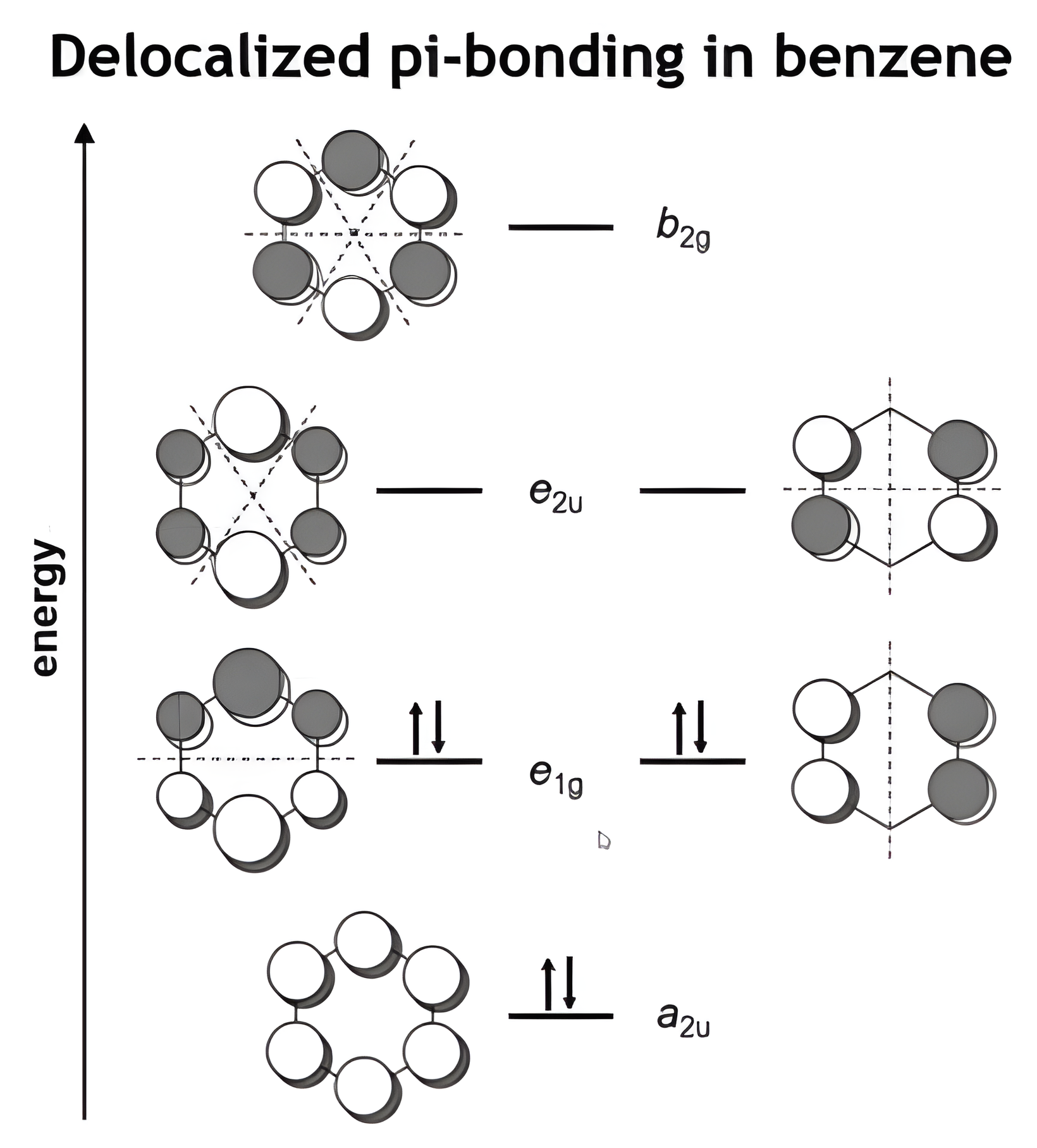
- Identify how conjugated π systems (e.g., benzene) generate delocalized bonding and characteristic energy levels.
Molecular Orbitals: LCAO
Molecular Orbitals
The electrons in an atom reside in atomic orbitals, each of which has a characteristic wavefunction.
When atoms combine to form molecules we need new orbitals, molecular orbitals, that have their own wavefunctions.
We will choose to describe molecular orbital wavefunctions as linear combination of atomic orbital wavefunctions (LCAO):
$\psi_{MO} = \sum c_1\psi_{AO(1)} + c_2\psi_{AO(2)} + \ldots c_i\psi_{AO(i)}$
MO Diagram: H₂
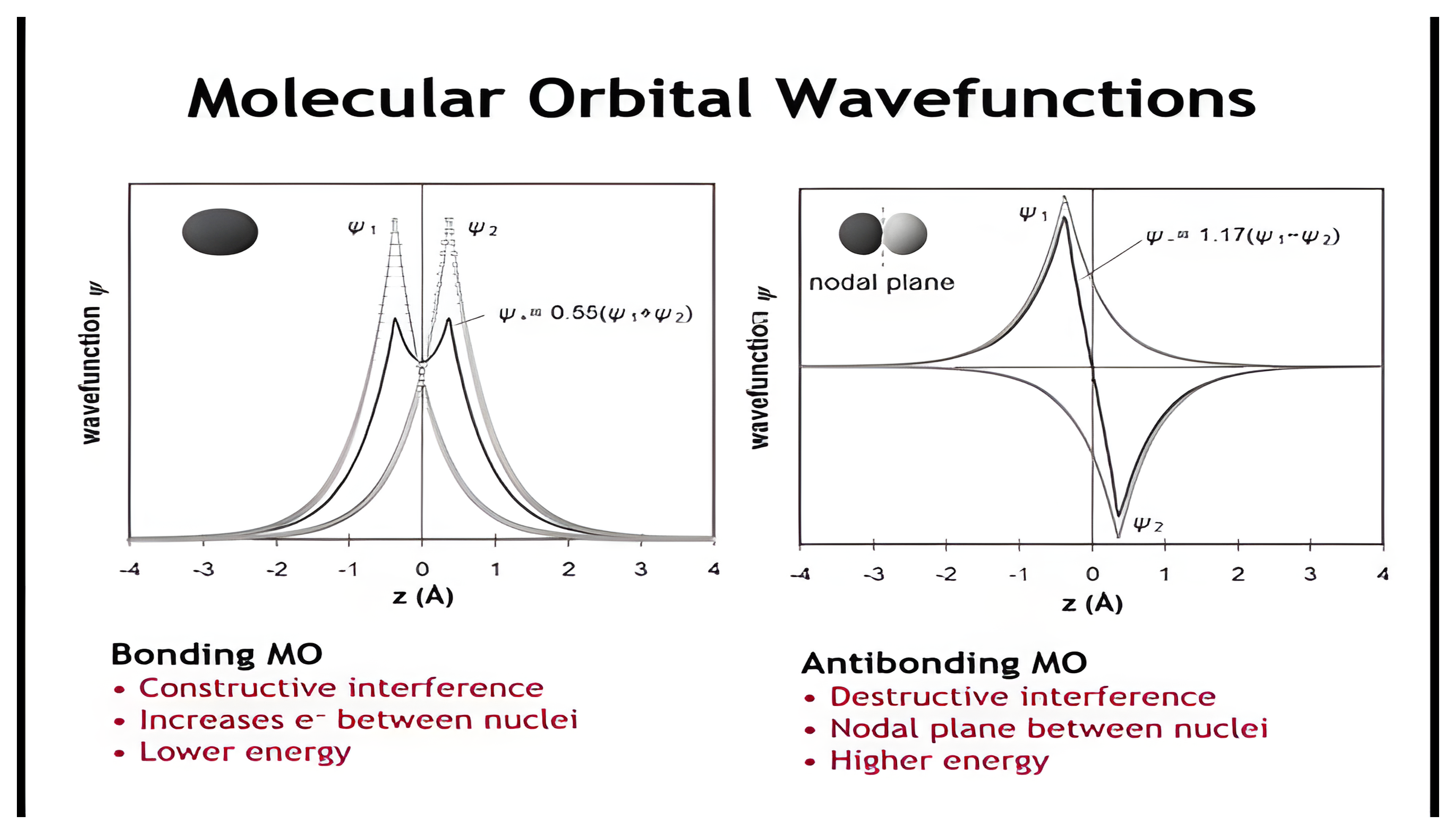
Molecular Orbital Wavefunctions
MO Diagram: HHe
O₂ and s-p Mixing
Beyond Diatomics: SALCs
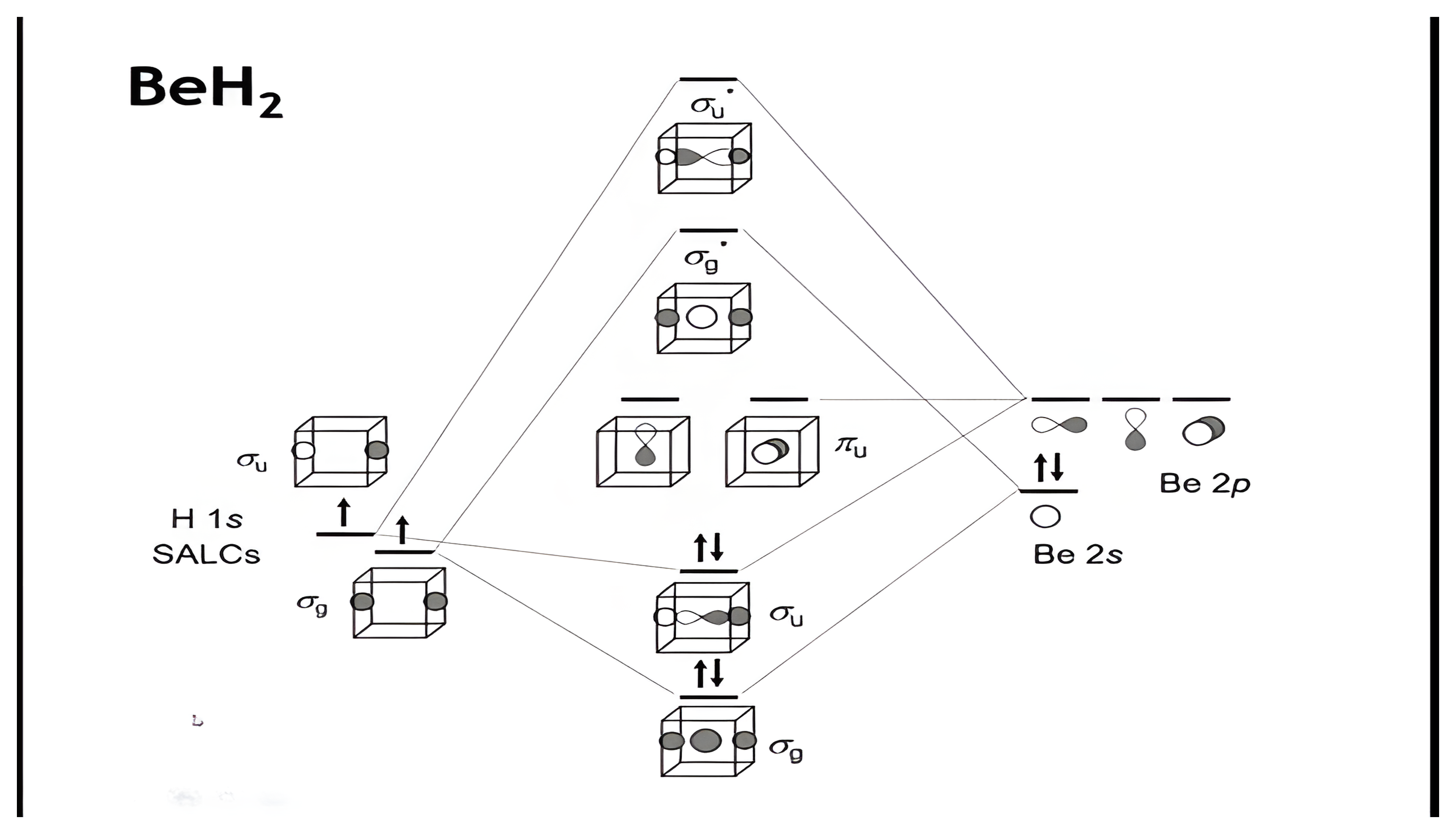
BeH₂: MO Diagram and Frontier Orbitals
CH₄ MO Diagram
Delocalized π Bonding in Benzene
Summary: Molecular Orbital Theory
Summary — Molecular Orbital Theory
- Molecular orbitals (MOs) form from linear combinations of atomic orbitals (LCAO); electrons are described by delocalized wave functions over the entire molecule.
- Bonding MOs arise from constructive interference (increased electron density between nuclei → stabilization).
- Antibonding MOs arise from destructive interference (nodal plane between nuclei → destabilization).
- Energy splitting between bonding and antibonding orbitals increases with orbital overlap and decreases with energy mismatch.
- Polarity arises when orbitals of unequal energy mix, giving partial ionic character.
- σ and π bonds differ by overlap geometry: σ bonds form along the internuclear axis, π bonds form side-on.
- s–p mixing alters MO energy ordering, notably in lighter diatomics (C₂, N₂).
- For polyatomic molecules, ligand orbitals combine into SALCs that mix with central-atom orbitals of matching symmetry.
- HOMO and LUMO define the frontier orbitals controlling reactivity and optical transitions.
- In conjugated π systems, delocalization spreads bonding over many atoms, producing evenly spaced energy levels (e.g., benzene).
Practice questions
Work the Lecture 12 practice questions before the next class. They cover orbital wavefunctions and the four quantum numbers, radial and angular nodes, orbital energies and sizes across the periodic table, and molecular orbital theory from LCAO and bonding versus antibonding through s–p mixing, SALCs, and frontier orbitals.
Open the Lecture 12 practice questions
Every question carries a worked explanation, so you can check your reasoning as you go.