CHEM 548: Materials Chemistry
Lecture 8: Intrinsic and Extrinsic Point Defects
Reading: Woodward, Karen, Evans, and Vogt, Solid State Materials Chemistry
Ch. 2 §§2.1–2.6; Ch. 3 §3.1
Intrinsic Defects: Learning Objectives
By the end of this lecture, you should be able to:
- Explain why real crystals always contain defects, even under equilibrium conditions.
- Identify and describe the major types of intrinsic point defects:
- Vacancies
- Interstitials
- Substitutions (intrinsic site-mixing)
- Schottky defects
- Frenkel defects
- Color centers
- Understand how configurational entropy drives the presence of defects in crystals.
- Relate defects to important material properties (optical, electronic, mechanical).
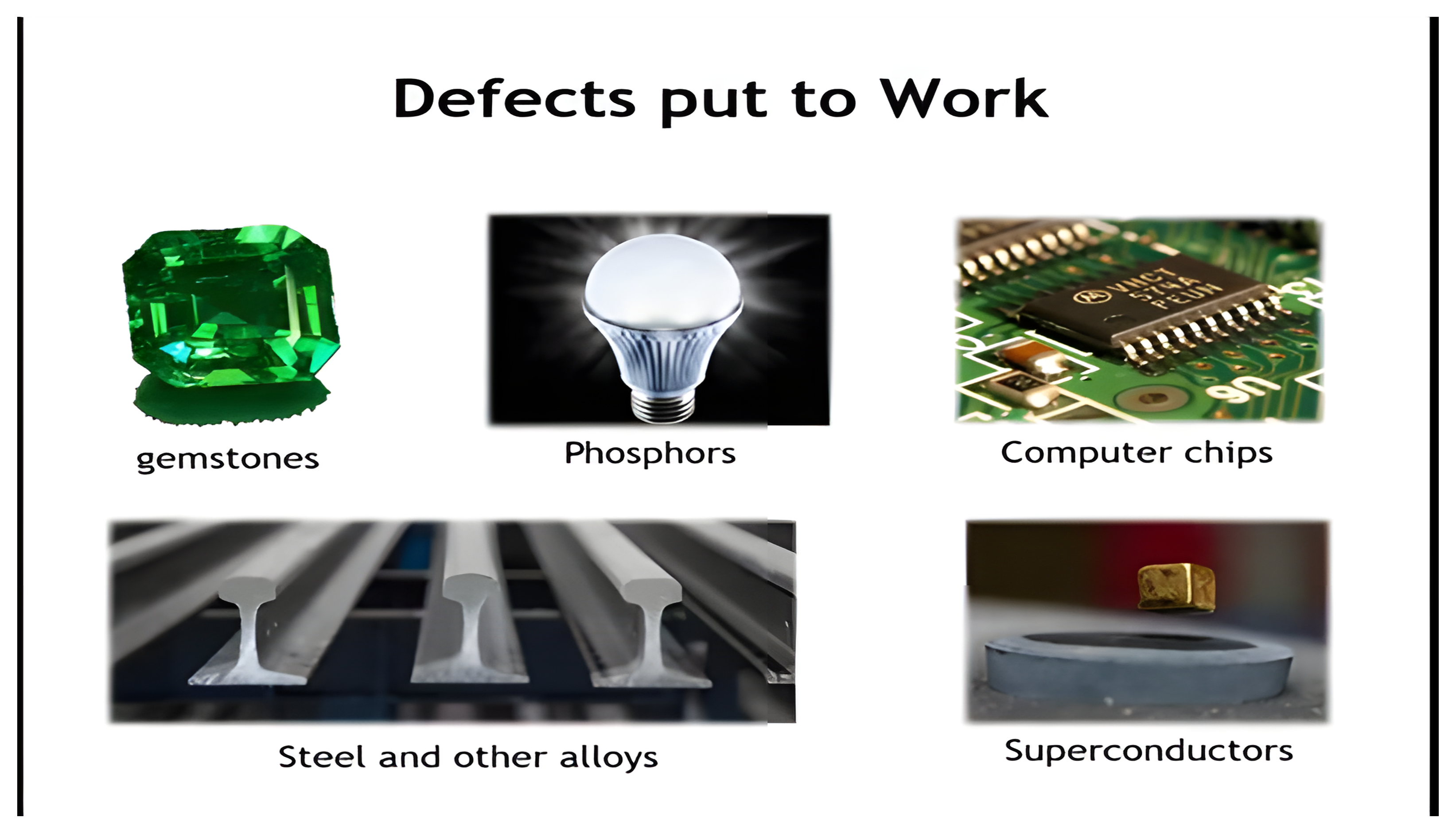
Defects Put to Work
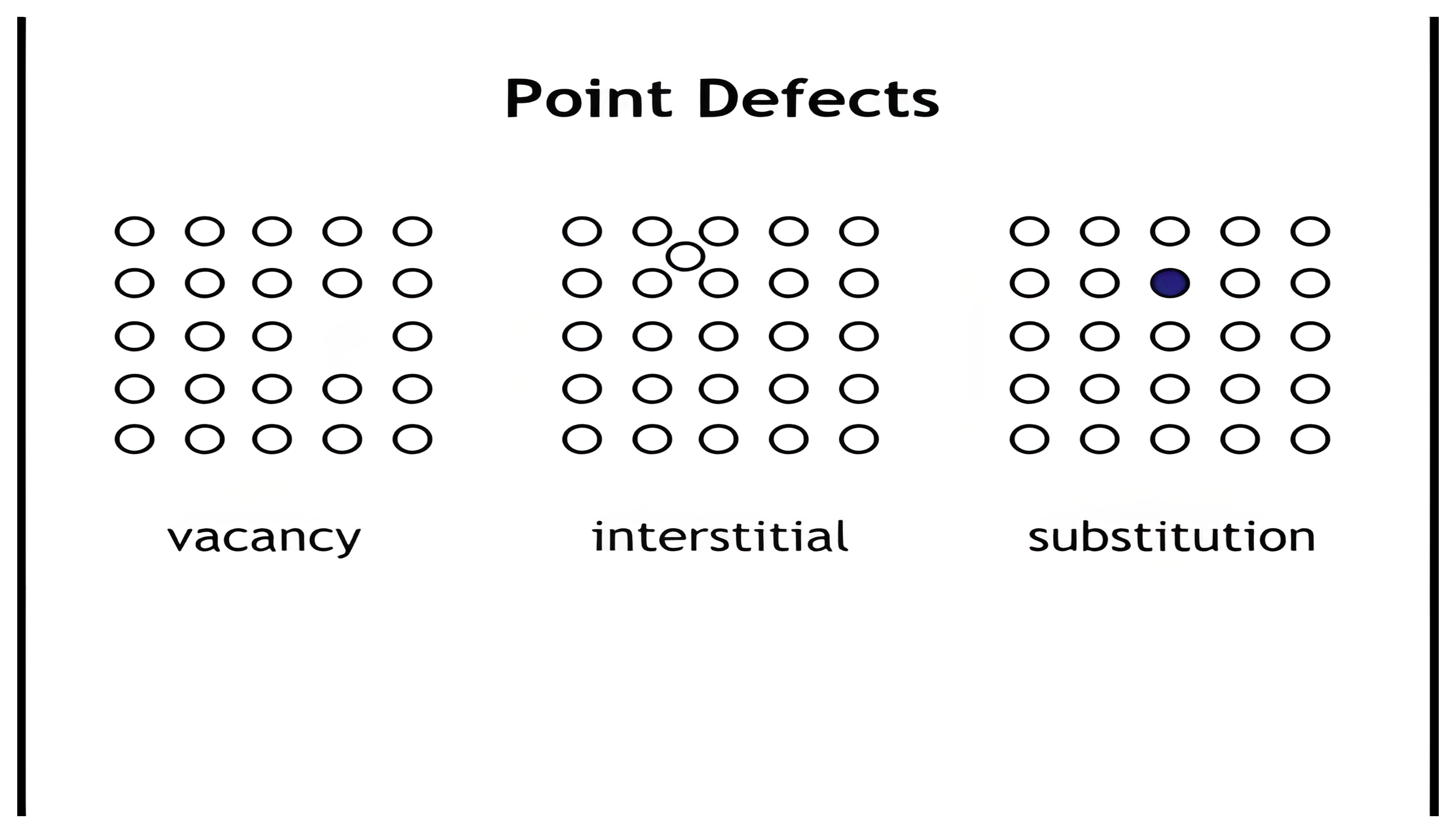
Point Defects
Intrinsic Point Defects in Ionic Compounds
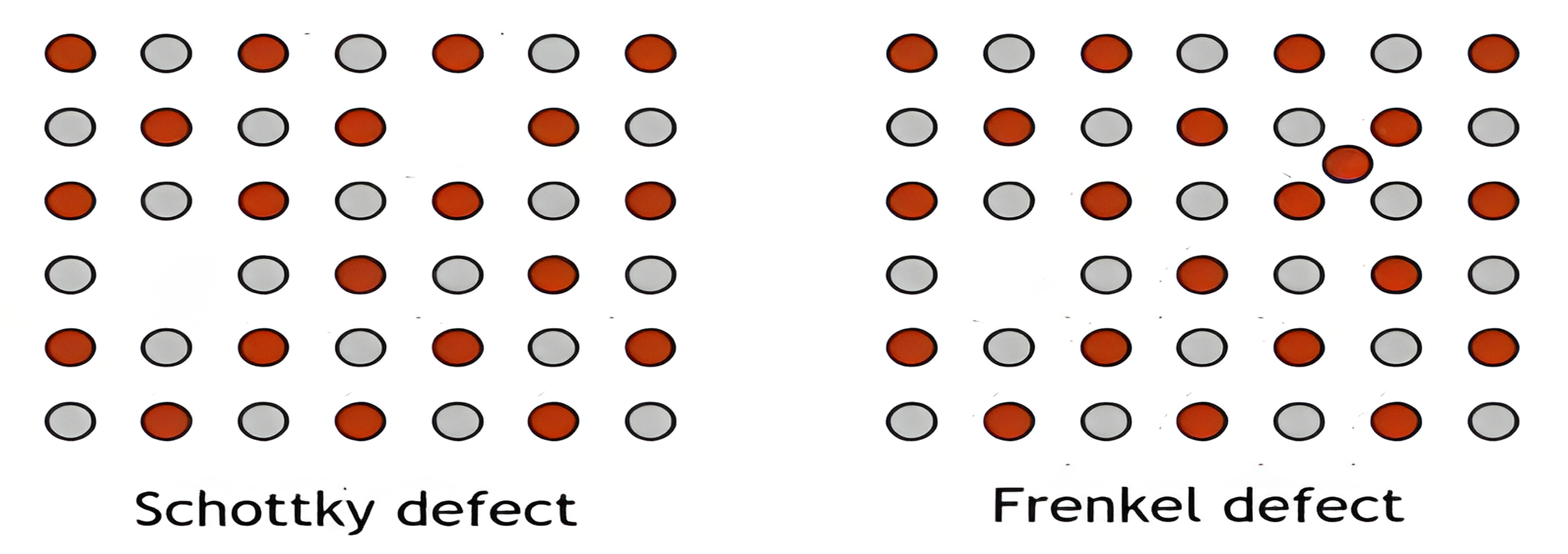
Schottky defect – Cation vacancy + anion vacancy
Frenkel defect – Vacancy + interstitial of the same element
Color Center – Electron trapped on an anion vacancy
Color Centers
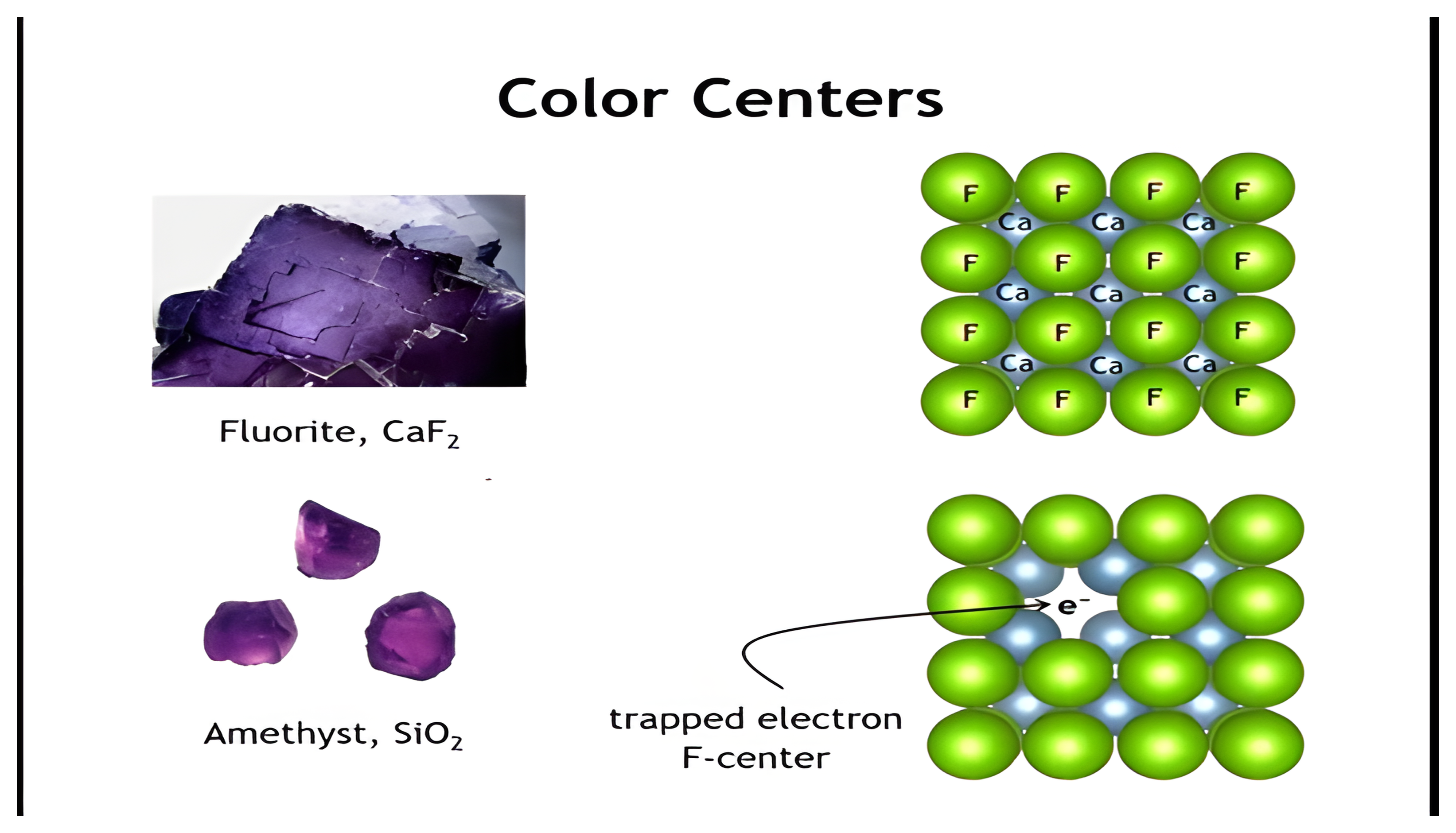
Amethyst is purple quartz colored by Fe³⁺ impurities, not a color-center example. Per Solid State Materials Chemistry, §2.2.
Thermodynamics of Defect Formation
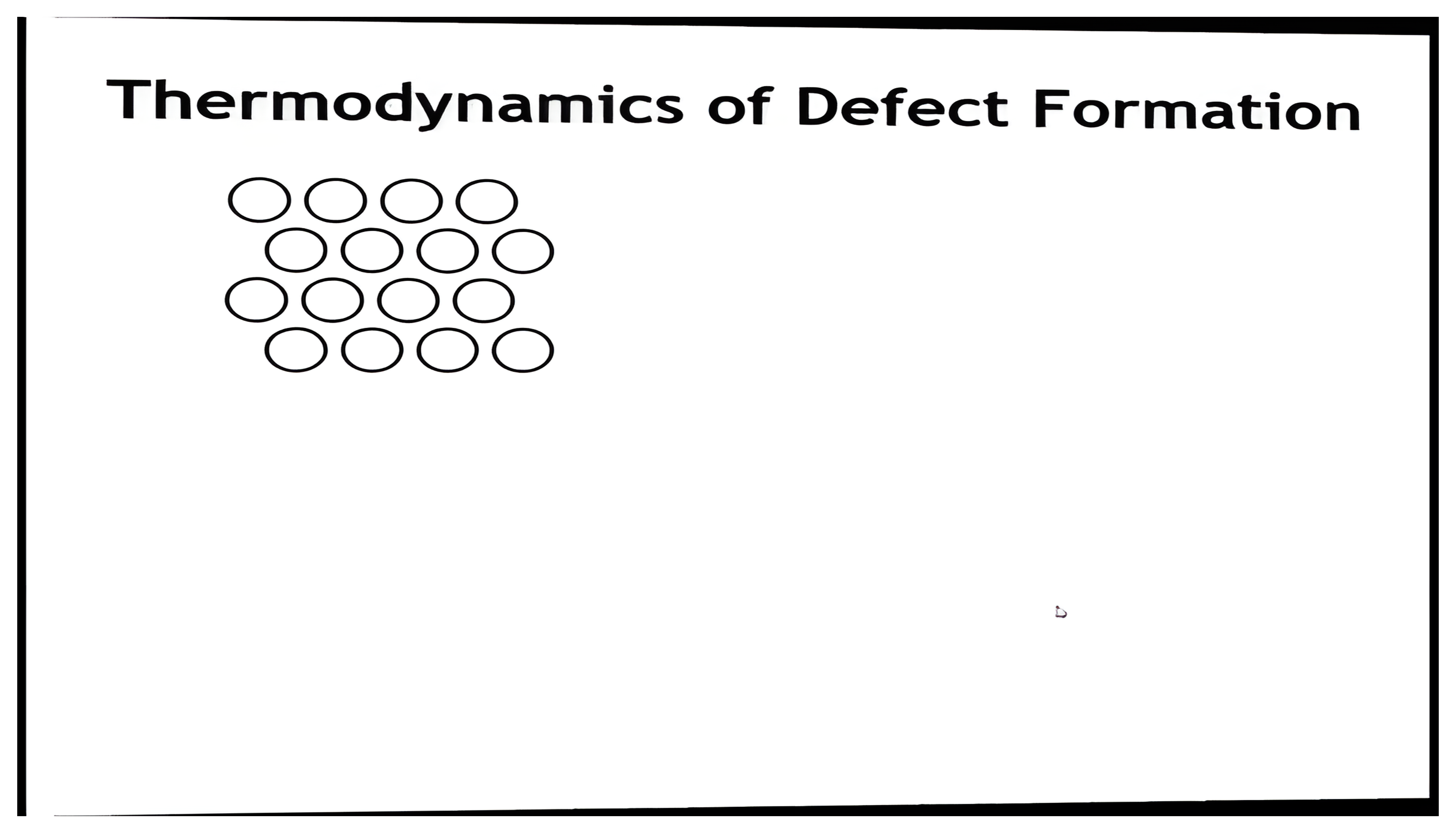
Counting arrangements
$\Omega = (N_0+n)!\,/\,(N_0!\,n!)$
$\Delta G = \Delta H - T\Delta S$
Vibrational and configurational entropy
The free-energy minimum
Equilibrium defect concentration
Per Solid State Materials Chemistry, §2.3.
Intrinsic Defects: Summary
- Perfect crystals are an idealization; real crystals always contain defects and surfaces.
- Defects can be beneficial: gemstone colors, phosphors in LEDs, semiconductor doping, and improved mechanical properties (steel vs. iron).
- Intrinsic point defects:
- Vacancy – missing atom.
- Interstitial – extra atom in normally empty site.
- Substitution – atom on the “wrong” site.
- Schottky defect – paired cation + anion vacancies (charge balance).
- Frenkel defect – ion displaced from lattice site into interstitial.
- Color centers – trapped electrons at anion sites, responsible for colors in minerals.
- Thermodynamic basis:
- Formation of defects costs enthalpy (bond breaking).
- Configurational entropy increases possible arrangements.
- Equilibrium defect concentration arises from the balance (ΔG = ΔH − TΔS).
- Defects are always present; concentration grows with higher T and lower ΔH.
Extrinsic Defects: Learning Objectives
- Define and distinguish extrinsic defects from intrinsic defects.
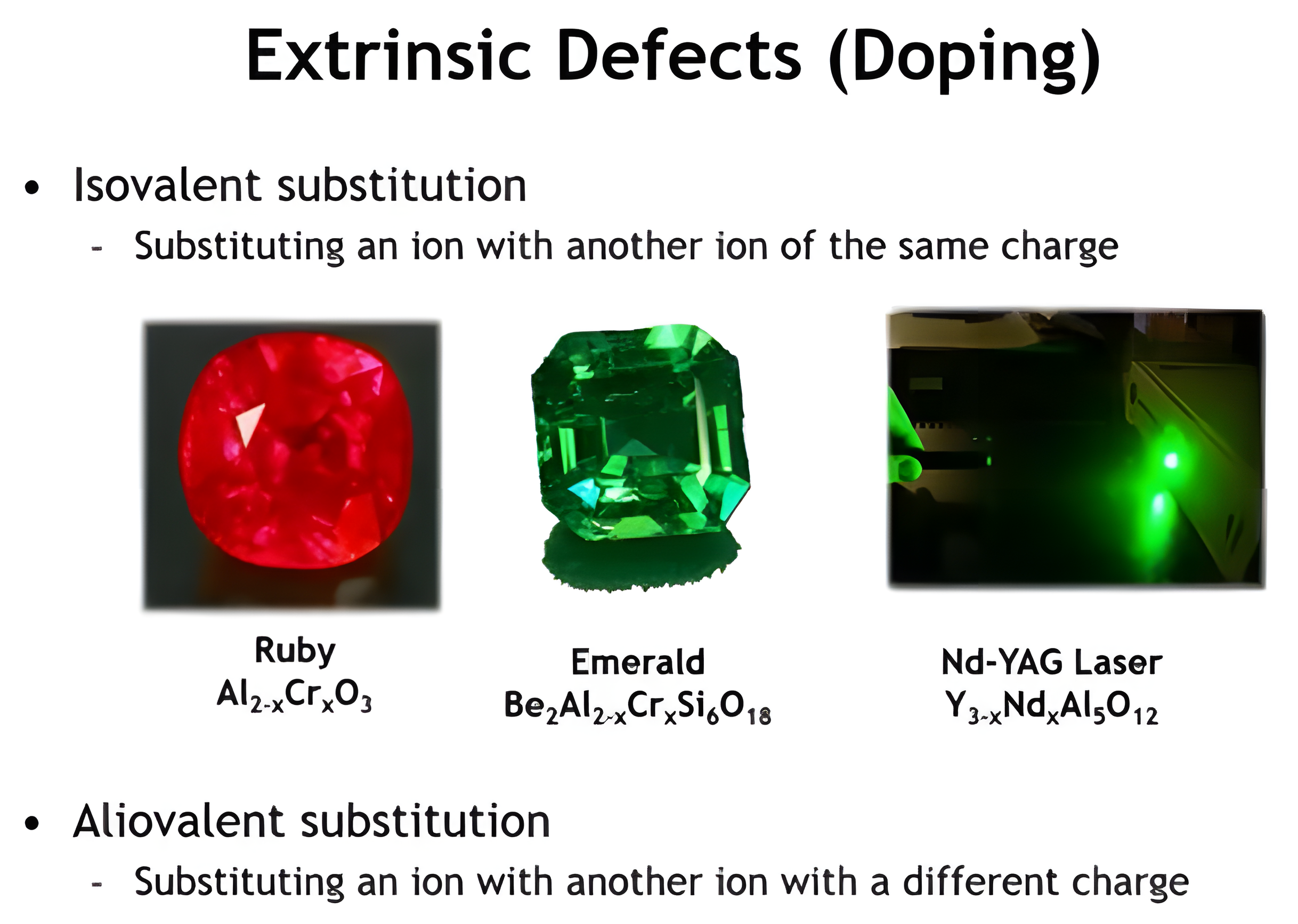
- Differentiate between isovalent substitution (e.g., ruby, emerald, YAG lasers) and alloeovalent substitution.
- Explain how charge balance is maintained in alloeovalent doping:
- Excess positive charge → anion interstitials or cation vacancies.
- Deficit of positive charge → cation interstitials or anion vacancies.
- Describe technological importance of doping:
- Yttria-stabilized zirconia (oxide ion conductor).
- Semiconductors (donor/electron doping vs. acceptor/hole doping).
- Transition metal oxides (variable oxidation states, batteries, superconductivity, magnetoresistance).
- Interpret Kröger–Vink notation to describe defect types, sites, and charges.
Extrinsic Defects (Doping)
Aliovalent Doping: Higher-Charge Cation
Substituting with a cation of higher charge
The crystal must compensate for the excess positive charge. If we don’t allow changes in the oxidation states of the ions, there are two charge compensation mechanisms:
1. Anion interstitials
CaF2 — Substitute Y3+ for Ca2+ → Ca1−xYxF2+x
2. Cation vacancies
NaCl — Substitute Ca2+ for Na+ → Na1−2xCax□xCl (□ = vacancy)
Aliovalent Doping: Lower-Charge Cation
Substituting with a cation of lower charge
The crystal must compensate for the excess negative charge. If we don’t allow changes in the oxidation states of the ions, there are two charge compensation mechanisms:
1. Cation interstitials
SiO2 — Substitute Al3+ for Si4+ → LixSi1−xAlxO2
2. Anion vacancies
ZrO2 — Substitute Y3+ for Zr4+ → Zr1−xYxO2−x/2□x/2 (□ = vacancy)
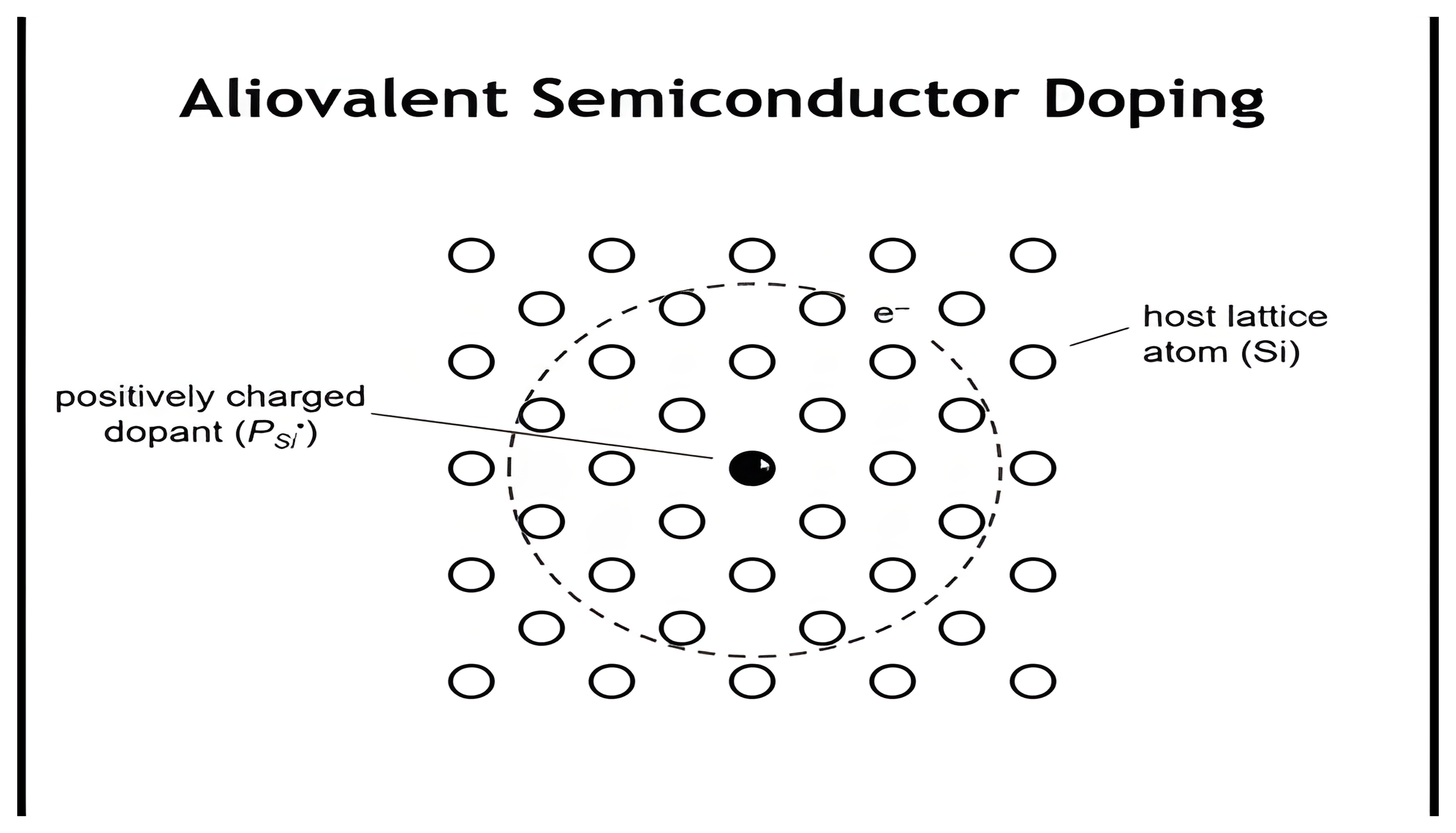
Aliovalent Semiconductor Doping
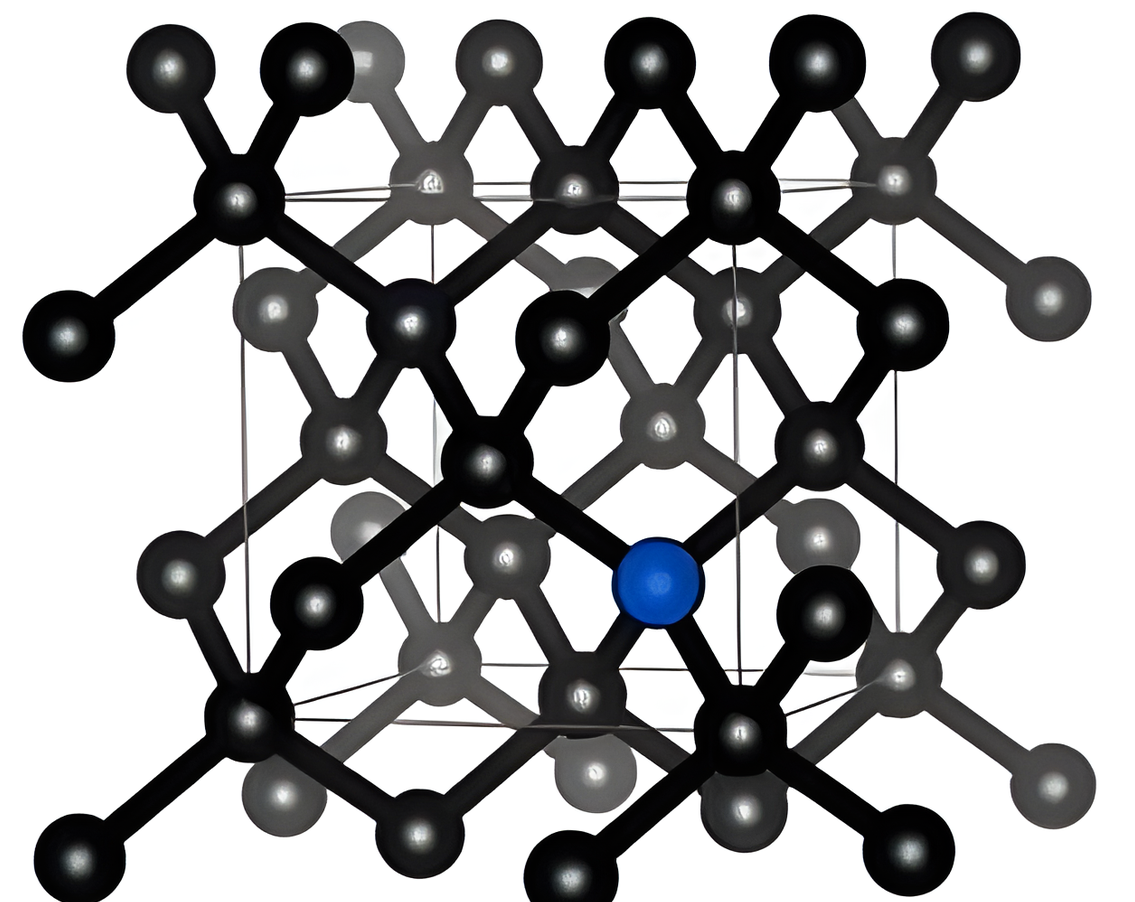
Donor (electron) doping
- Substitutional atom has more valence electrons than the host atom (i.e. P for Si).
- Equivalent of reduction
Acceptor (hole) doping
- Substitutional atom has fewer valence electrons than the host atom (i.e. B for Si).
- Equivalent of oxidation
Controlling Oxidation State: Oxidation
Compounds containing transition metal ions, are very sensitive to the oxidation state of the cation. By doping we can control the oxidation state, thereby controlling the properties.
Doping that leads to oxidation
Cation vacancies
LiCoO2 — Remove Li+ → Li1−xCoO2 [Co+3 → Co+(3+x)]
Anion interstitials
La2CuO4 — Add O2− → La2CuO4+x [Cu+2 → Cu+(2+2x)]
Aliovalent doping with lower valent cation
La2CuO4 — Sub. Sr2+ for La3+ → La2−xSrxCuO4 [Cu+2 → Cu+(2+x)]
Controlling Oxidation State: Reduction
Compounds containing transition metal ions, are very sensitive to the oxidation state of the cation. By doping we can control the oxidation state, thereby controlling the properties.
Doping that leads to reduction
Cation interstitials
TiS2 — Insert Li+ → LixTiS2 [Ti+4 → Ti+(4−x)]
Anion vacancies
WO3 — Remove O2− → WO3−x [W+6 → W+(6−2x)]
Aliovalent doping with higher valent cation
CaMnO3 — Sub. La3+ for Ca2+ → Ca1−xLaxMnO3 [Mn+4 → Mn+(4−x)]
Kröger–Vink Notation
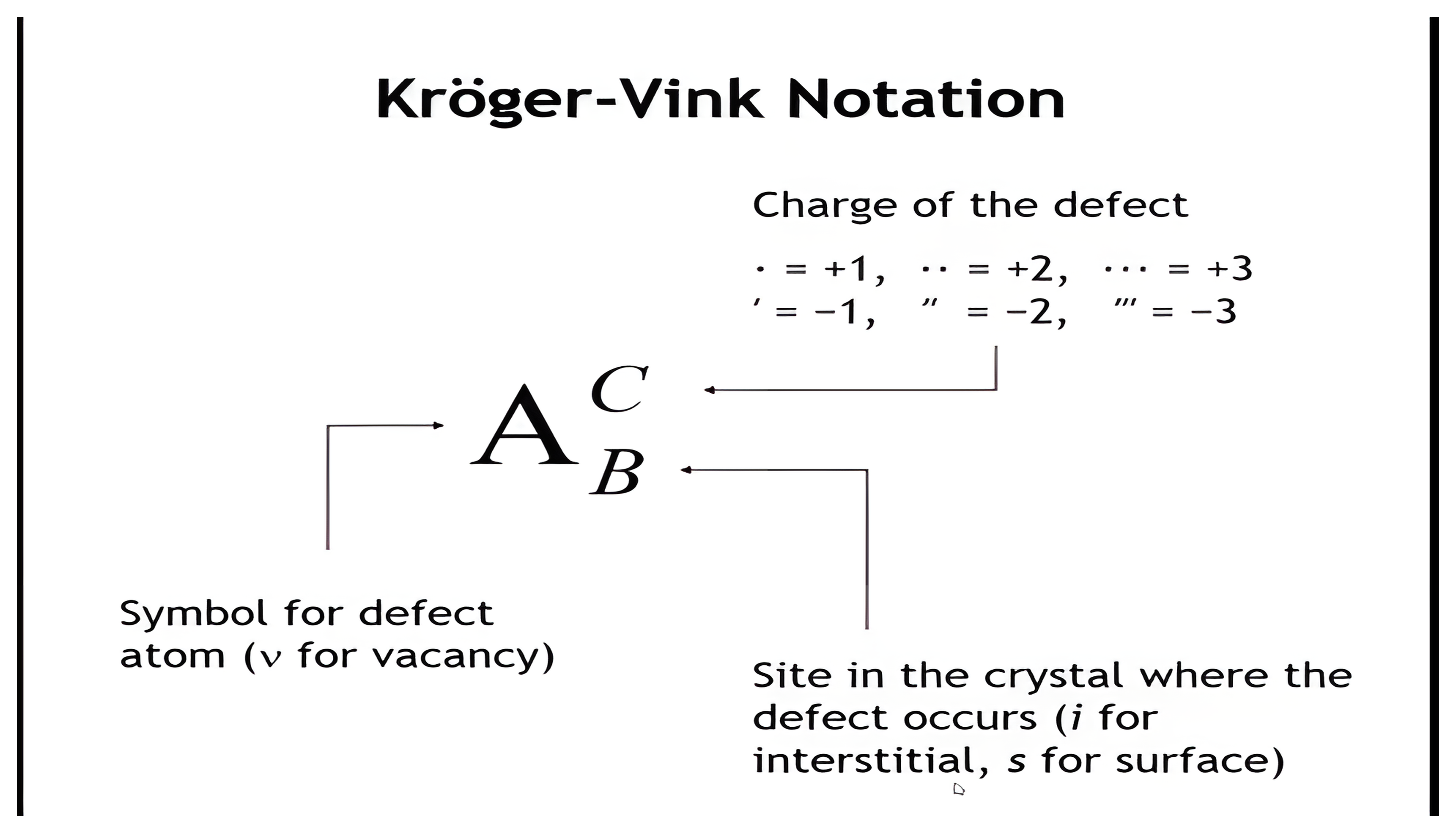
Kröger–Vink Examples: Oxidation
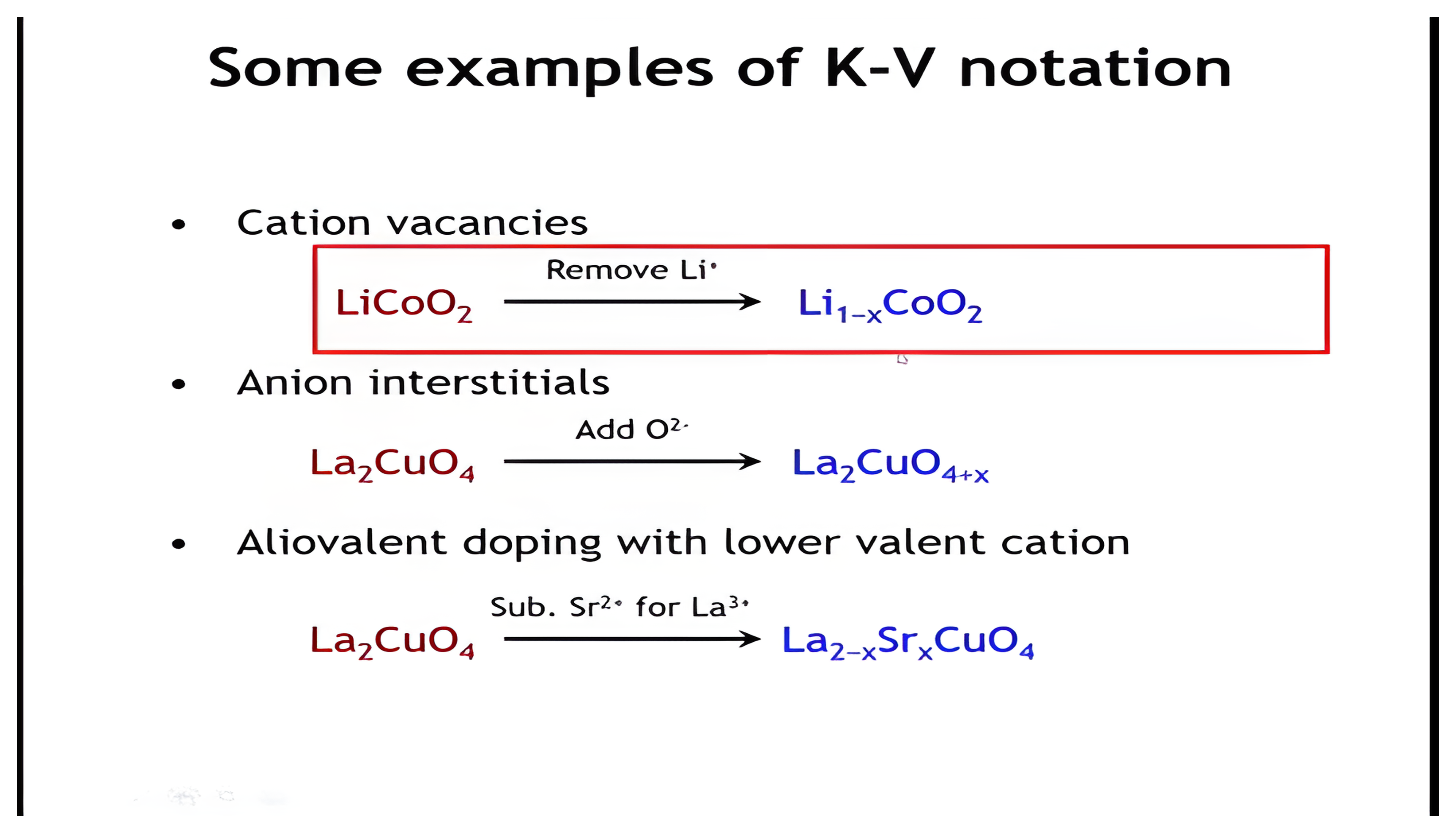
Lithium vacancy
Oxygen interstitial
Strontium on a lanthanum site
Per Solid State Materials Chemistry, §2.6.
Kröger–Vink Examples: Reduction
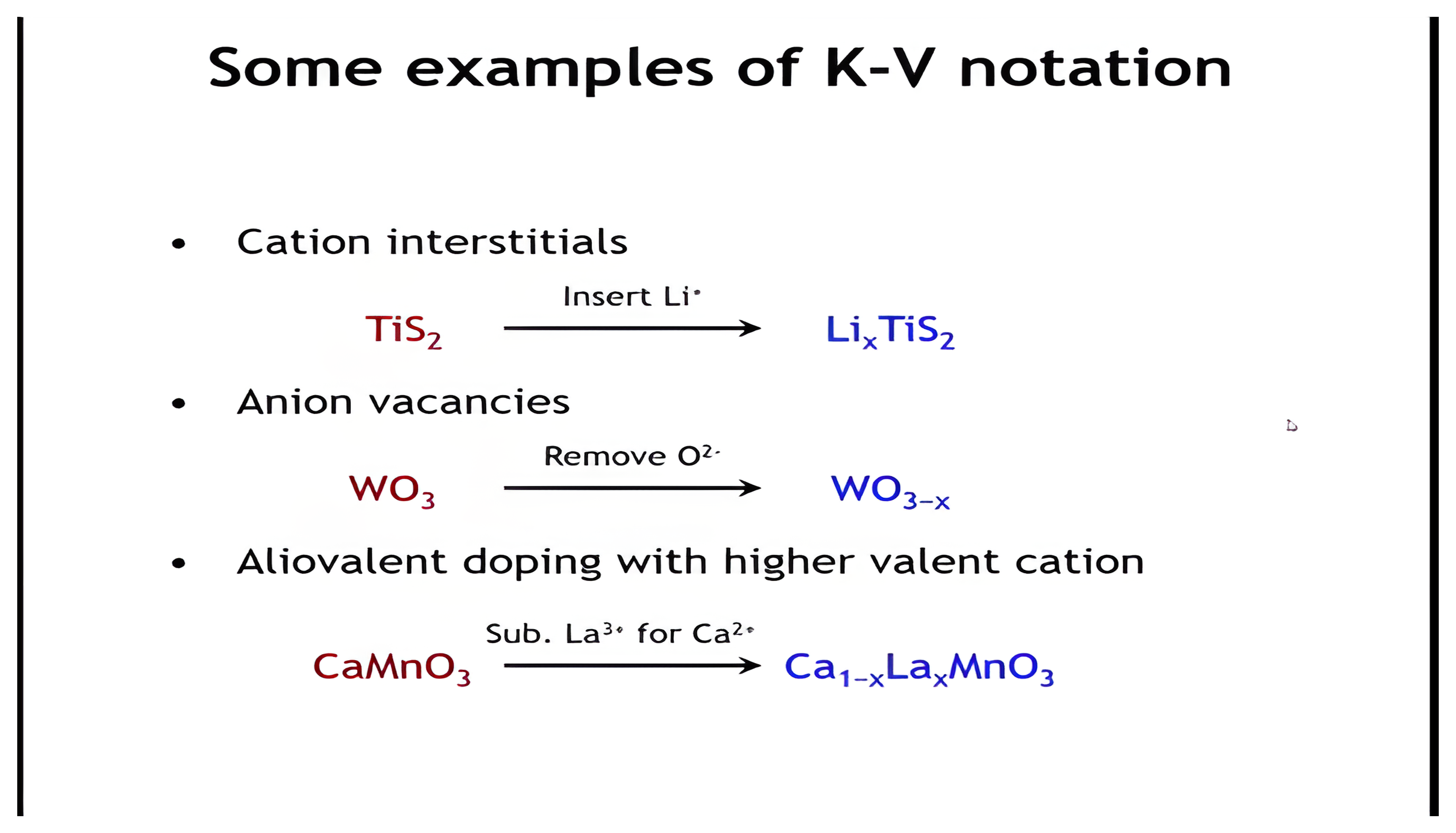
Lithium interstitial
Oxygen vacancy
Lanthanum on a calcium site
Donor Doping in Silicon
Extrinsic Defects: Summary
- Extrinsic defects arise from introducing foreign atoms into a lattice.
- Two substitution types:
- Isovalent substitution: no net charge imbalance.
- Alloeovalent substitution: different charge, requiring compensating defects.
- Compensation mechanisms include interstitials, vacancies, or oxidation state changes of transition metals.
- Key examples:
- Ruby/emerald coloration, YAG lasers.
- Y-stabilized ZrO2 for oxygen conduction.
- Semiconductor doping (n-type, p-type).
- Battery cathodes (LiCoO2), superconductors (La2CuO4), bronzes (WO3−x), colossal magnetoresistance oxides.
- Kröger–Vink notation provides a systematic language for defect chemistry.
Practice questions
Work the Lecture 8 practice questions before the next class. They cover equilibrium vacancy concentrations in metals, Schottky defect counts in ionic solids, oxidation states in mixed-valent oxides, and Kröger–Vink notation for point defects.
Open the Lecture 8 practice questions
Every question carries a worked explanation, so you can check your reasoning as you go.