CHEM 548: Materials Chemistry
Lecture 5: Electron Counting and Stoichiometry
Reading: Woodward, Karen, Evans, and Vogt, Solid State Materials Chemistry
Ch. 1 §1.3, §1.5.6
Learning Objectives
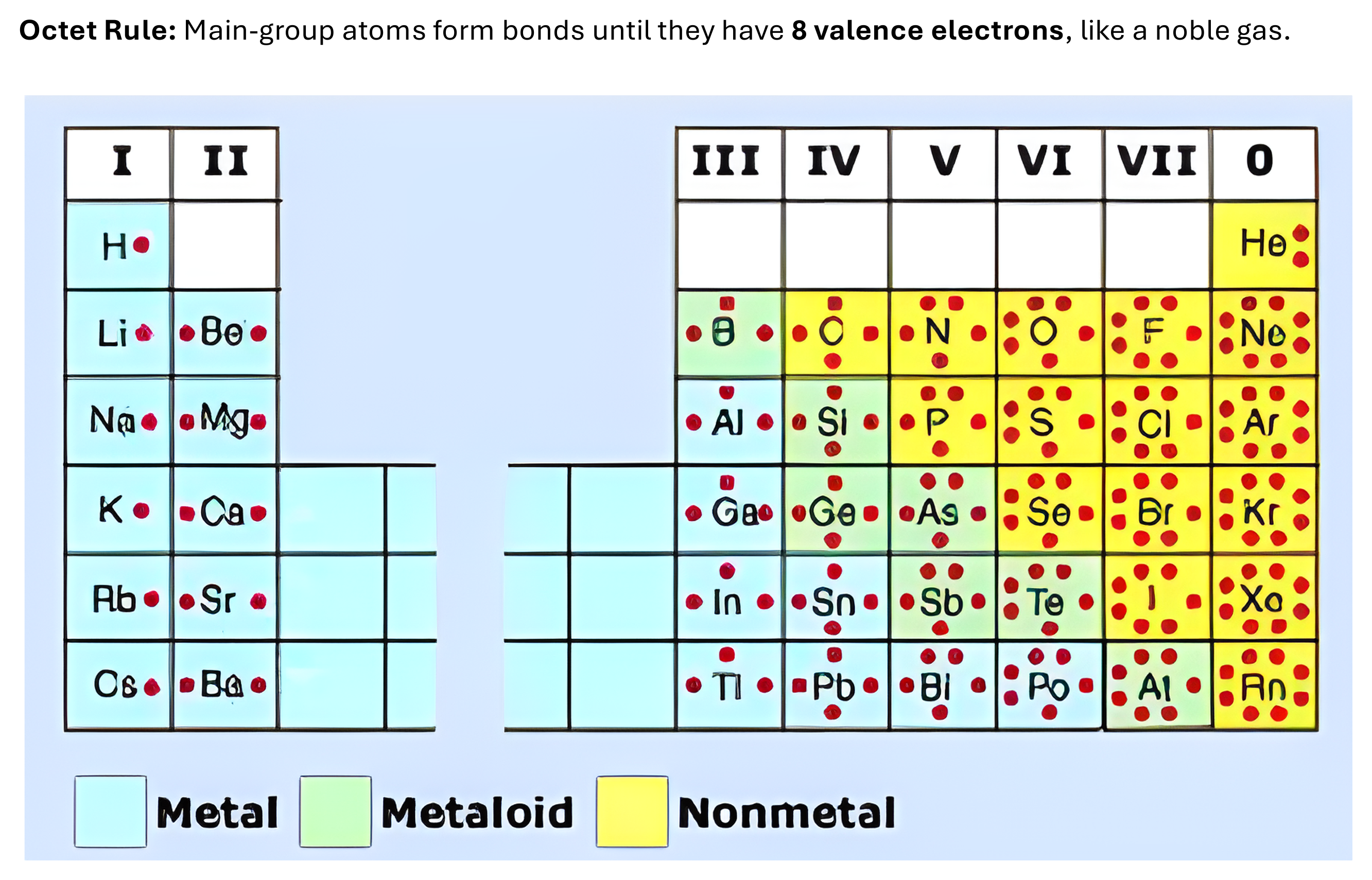
The octet rule
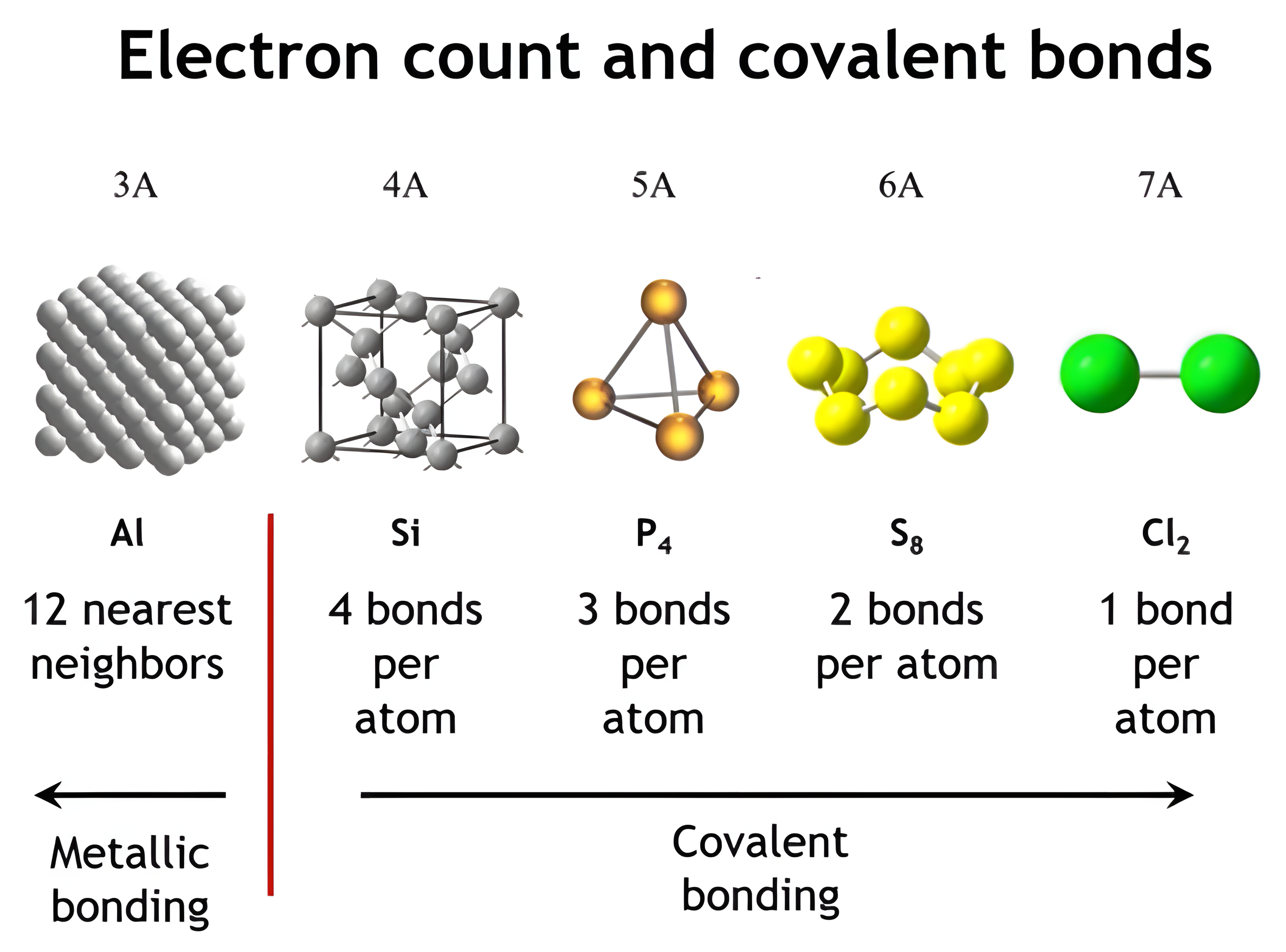
Electron count and covalent bonds
Valence Electron Count per Anion
Valence electrons per anion, against the octet
$\mathrm{VEC}_A = \dfrac{\textcolor{#ff5a5f}{e_C} \cdot \textcolor{#e0b060}{m} + \textcolor{#ff5a5f}{e_A} \cdot \textcolor{#e0b060}{n}}{\textcolor{#e0b060}{n}}$
valence electrons per cation valence electrons per anionThe generalized octet rule
SiO2
$\mathrm{VEC}_A = \dfrac{e_C \cdot m + e_A \cdot n}{n}$
Generalized 8−N Rule
Electrons missing or left over, per anion
$\mathrm{VEC}_A = 8 + \textcolor{#ff5a5f}{CC}(\textcolor{#e0b060}{m}/\textcolor{#e0b060}{n}) - \textcolor{#ff5a5f}{AA}$
CC: electrons left on each cation AA: anion–anion bonds per anion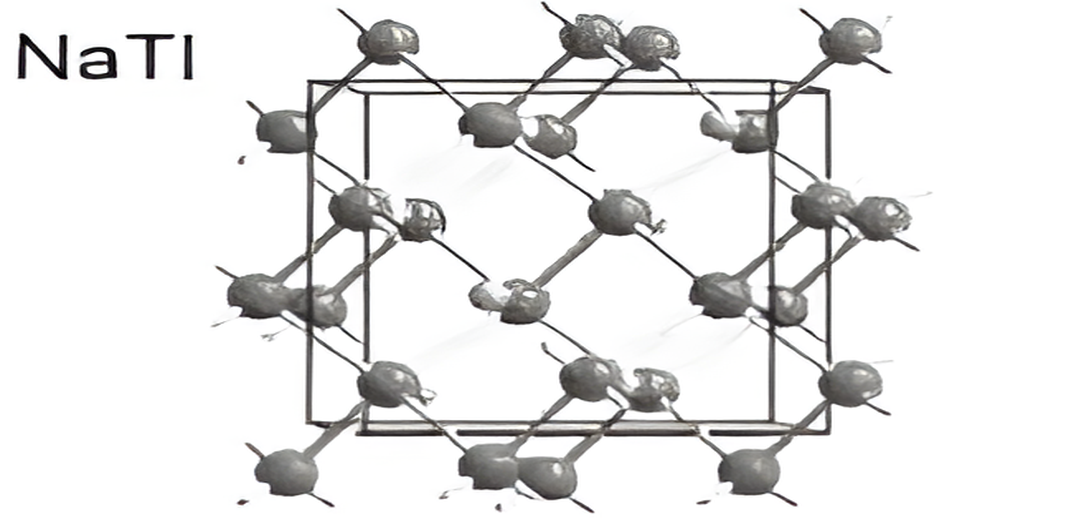
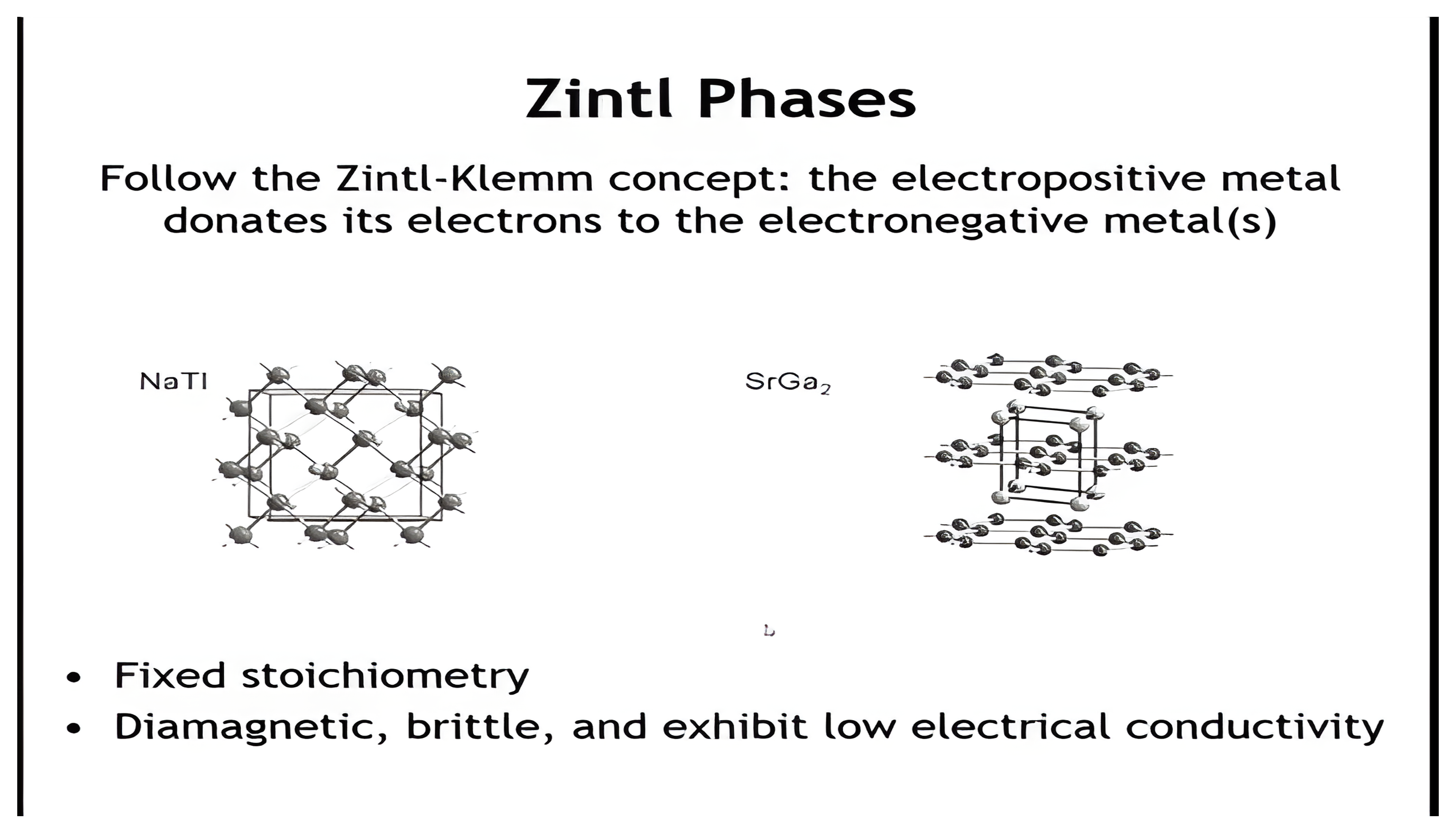
Zintl phases
Apply the generalized 8−N rule
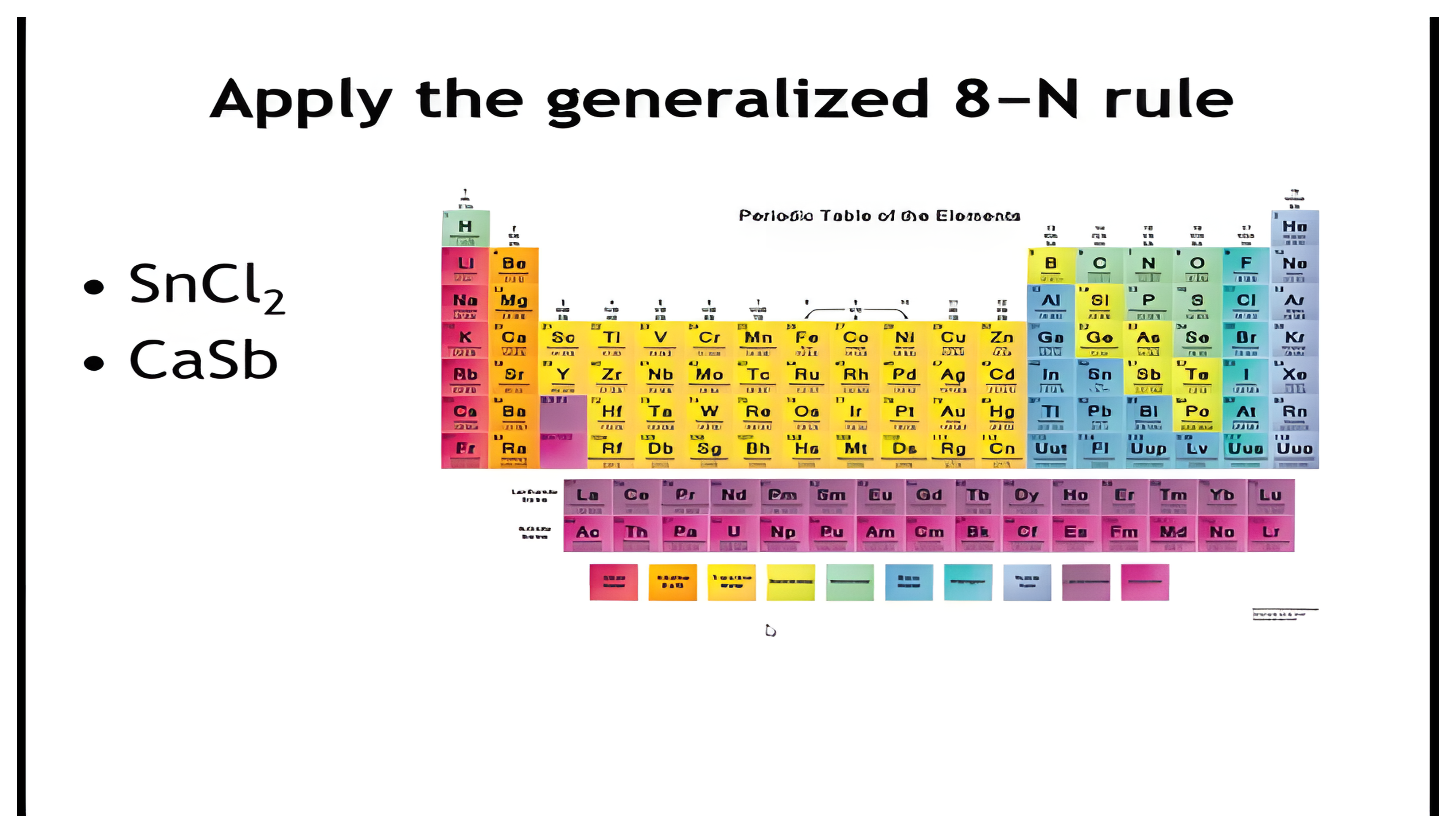
SnCl2 and CaSb
SnCl2
$\mathrm{VEC}_A = \dfrac{4 \cdot 1 + 7 \cdot 2}{2} = \dfrac{18}{2} = 9$
$\mathrm{VEC}_A = 8 + CC(m/n) - AA$
$9 = 8 + CC(1/2) -$ $AA$
There are 2 electrons localized on Sn2+ that form a lone pair$CC = 2$
Summary
Valence electrons per anion (VEC/A) counts what the cations donate and the anions accept. The octet then fixes the bond count across the p block: 7A (7e−) → 1 bond, 6A → 2, 5A → 3, 4A → 4 (diamond, Si, Ge); further left, bonding goes metallic through delocalized electrons.
| VEC/A | What the generalized 8−N rule says | Example |
|---|---|---|
| = 8 | The octet closes on the anion as drawn, even in a largely covalent solid | SiO2 |
| < 8 | Too few electrons: anion–anion bonds form | Tl–Tl in NaTl Sb24− in CaSb |
| > 8 | Too many: the excess stays on the cation as lone pairs or cation–cation bonds | Sn2+ in SnCl2 |
Zintl phases: an electropositive metal donates its electrons and the electronegative element builds the covalent structure — NaTl diamond-like, SrGa2 graphite-like sheets.
Learning Objectives
Structures follow stoichiometry
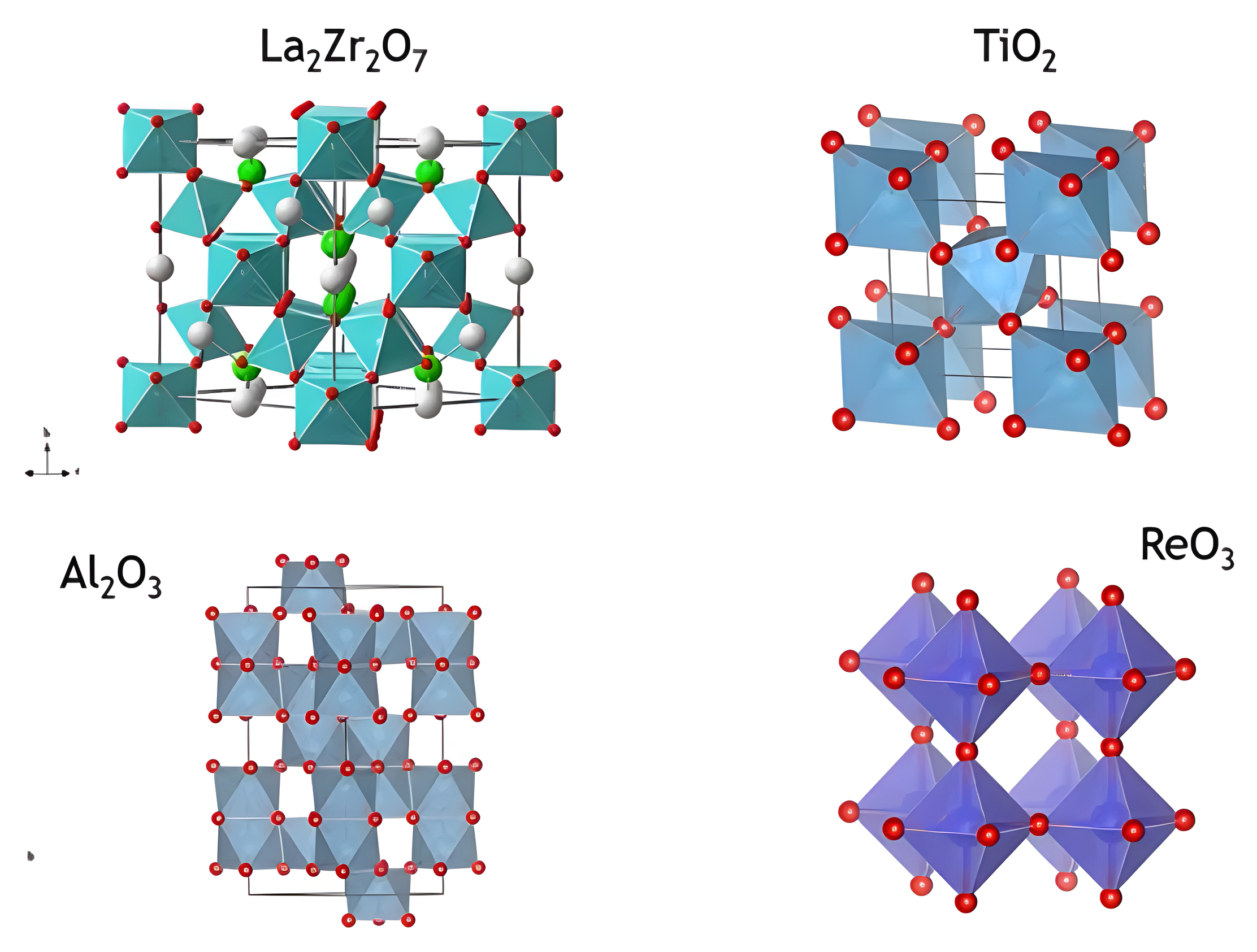
Stoichiometry Constraints
Three balances must hold
crystal chemical formula
$\mathrm{C}^{\textcolor{#ff5a5f}{c+}}_{\textcolor{#e0b060}{m}}\textcolor{#8d90e8}{[N]}\,\mathrm{A}^{\textcolor{#ff5a5f}{a-}}_{\textcolor{#e0b060}{n}}\textcolor{#8d90e8}{[M]}$
charge atoms in the formula coordination numberBond graphs
$\mathrm{Si}^{\textcolor{#ff5a5f}{4+}}\textcolor{#8d90e8}{[4]}\mathrm{O}^{\textcolor{#ff5a5f}{2-}}_2\textcolor{#8d90e8}{[2]}$
All things equal nature favors symmetric structures
Bond graphs: Al2O3 and Na3N
Summary
Crystal structures are not random. The crystal chemical formula records the oxidation states, coordination numbers, and bonding, and three balances have to close on it.
| Balance | What balances | Rule |
|---|---|---|
| Electroneutrality | Charges | Cation and anion charges sum to zero across the formula |
| Connectivity | Bond counts | Bonds leaving the cations equal the bonds arriving at the anions |
| Bond valence | Bond strength | Oxidation state ÷ coordination number; fractional values are allowed |
A bond graph draws that bookkeeping out; Pauling’s parsimony minimizes distinct environments and Brown’s maximum symmetry takes the most symmetric structure the stoichiometry allows.
SiO2, TiO2, CaF2, Al2O3, and Na3N all fall out of those rules, the rare ones included: Na3N was first synthesized in 2002 and is unstable at 360 K.
Practice questions
Work the Lecture 5 practice questions before the next class. They cover the valence electron count per anion, the generalized 8−N rule and Zintl phases, and the crystal chemical formula with its three balances.
Open the Lecture 5 practice questions
Every question carries a worked explanation, so you can check your reasoning as you go.